In progress
Essential Ornaments: a historical concordance
Signs, names, and realizations across European performance treatises, 1565–1828
An open, source-linked index of historical ornament vocabulary and notation, beginning with Liselotte Brändle’s comparative chart Die „Wesentlichen Manieren“.
Started · Updated
Role: Research, source verification, data modeling, transcription, and web development
Aim
This project turns a large comparative ornament chart into a research tool. Instead of reproducing a static sheet, the online edition separates its evidence into searchable records: historical source, ornament family, period name, written sign, notated realization, language, and verification history.
The starting artifact is Liselotte Brändle’s Die „Wesentlichen Manieren“ (Ornamente in der Musik): ihre Zeichen, Namen und Ausführung, first published in Vienna in 1974 and reprinted in 1985. It compares eighteen sources from Tomás de Santa María to Johann Nepomuk Hummel across seven broad ornament families.
Editorial method
The supplied scan is used as a finding aid, not as the final authority. Every chart cell will be checked against a digitized copy of the original treatise. Historical spelling is preserved in the diplomatic field; normalized names and modern cross-references live in separate fields. Unclear readings remain visibly provisional rather than being silently regularized.
The local working edition includes a lossless crop of every populated chart cell from the supplied scan, providing complete facsimile coverage so that omissions can be audited and no printed alternative silently disappears. Each crop is an untranscribed visual witness, not machine-readable notation or an accessible text substitute. Every audited item also has a stable identifier and a searchable diplomatic text description of its sign, relative contour, rhythm, confidence, and unresolved readings. These chart witnesses and descriptions remain visually and editorially distinct from the independent edition. Before the chart images are deployed publicly, reproduction permission should be confirmed. Independently transcribed notation is encoded in MEI and rendered as SVG; modern staff placement and standardized glyphs are identified as editorial normalizations.
Current release
The current implementation establishes the complete eighteen-source register, seven normalized ornament families, and all 106 populated source-family cells. A cell-by-cell audit accounts for 306 visible signs, realizations, alternative glyphs, and contextual placements. Every populated cell has a full-cell facsimile preserving all material printed in that area of the supplied PDF, and all 306 audited items are individually addressable and searchable through diplomatic descriptions. A separately labeled source-verified MEI layer currently includes Bach’s 1720 Trillo, Mordant, and Cadence. The facsimiles and descriptive records make the complete chart inspectable now; they are not a claim that all 306 items have already been independently engraved or checked against their original treatises.
Roadmap
- Verify the bibliography and locate the exact edition used for every row.
- Add page or folio citations for every ornament example.
- Add independently verified MEI to each variant record while retaining the complete-cell audit trail.
- Add faceted comparison by source, date, language, instrument, family, and starting-note convention.
- Publish the dataset with a version number, change log, and downloadable scholarly format.
Complete PDF facsimile coverage · independent transcription in progress
Search the historical ornament vocabulary
This edition indexes all 106 populated source–family cells from all 18 source rows in the chart. Every record includes a full-cell facsimile from the supplied PDF, preserving multiple alternatives printed within a cell. The audit accounts for 306 visible signs, realizations, alternative glyphs, and contextual placements. All 306 now have stable IDs and searchable diplomatic descriptions beneath their 106 source–family cells. Search names such as pincé, shake, Groppo, or Schneller, then narrow by ornament family and century.
Chart names remain a provisional diplomatic reading. PDF chart-cell facsimile coverage is complete; independently encoded, source-verified MEI currently covers 3 examples and is identified separately beneath the corresponding untranscribed visual witness.
106 indexed cells · 306 catalogued examples shown
No records match those filters.
-
Triller Trill
Quiebro (Triller) · Reyterado (wiederholter Triller) · Senzillo (kurzer Triller beim Abwärtsspielen)
PDF chart-cell facsimile untranscribed visual witness · all printed material in this cell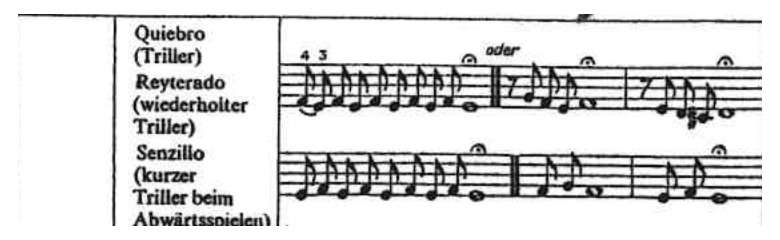
Untranscribed visual witness from Brändle’s chart, source row 1. The image preserves the printed marks in this cell but does not provide a text or machine-readable transcription of its musical contents. Open it to inspect the original-size facsimile. 6 individually catalogued examples show descriptions
These diplomatic descriptions make every audited item addressable and searchable. The chart-cell image above remains the notation witness; only entries explicitly labelled MEI are independent digital engravings.
-
Quiebro / Reyterado, upper-line long form
SM-TR-01Source sign: No separate glyph
Contour: [+1, 0] x 4 -> 0 (upper-main oscillation, final main)
Rhythm: Eight quick equal attacks followed by a sustained final
Reading note: High contour; exact repetition count may be one attack longer because of stem overlap
-
Quiebro / Reyterado, first oder
SM-TR-02Source sign: No separate glyph
Contour: Short upper-main alternation, approximately +1, 0, +1, 0 -> 0
Rhythm: Short unequal-looking group, then sustained final
Reading note: Medium; exact number of short notes is blurred
-
Quiebro / Reyterado, second short alternative
SM-TR-03Source sign: No separate glyph
Contour: Upper-main oscillation with a descending close; approximately +1, 0, +1, 0, -1?, 0
Rhythm: Four to six quick notes, then sustained final
Reading note: Low-medium; a central/lower pitch is obscured by print damage
-
Senzillo, lower-line long form
SM-TR-04Source sign: No separate glyph
Contour: [+1, 0] x 4 -> 0
Rhythm: Eight quick equal attacks followed by a sustained final
Reading note: High contour; the first member of the alternation may be the main rather than upper note
-
Senzillo, first short form after the double bar
SM-TR-05Source sign: No separate glyph
Contour: Brief upper-neighbor shake, approximately +1, 0, +1 -> 0
Rhythm: Two to three quick notes, then sustained final
Reading note: Medium
-
Senzillo, second short form
SM-TR-06Source sign: No separate glyph
Contour: Descending short trill/cadence into 0; approximately +1, 0, -1, 0
Rhythm: Three to four quick notes, then sustained final
Reading note: Low-medium; pitch order in the middle is not fully separable
Tomás de Santa María (c. 1510–1570)
Arte de tañer fantasía, Valladolid, 1565
6 variants catalogued · complete facsimile witness · MEI pending
-
-
Doppelschlag Turn / double cadence
Redoble
PDF chart-cell facsimile untranscribed visual witness · all printed material in this cell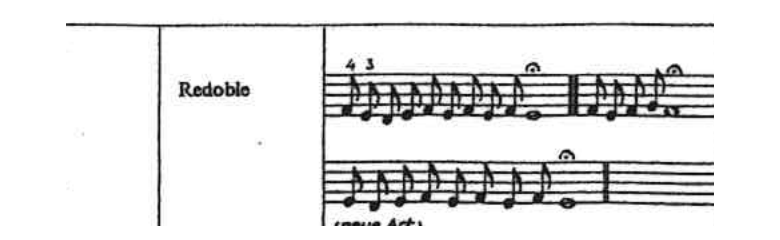
Untranscribed visual witness from Brändle’s chart, source row 1. The image preserves the printed marks in this cell but does not provide a text or machine-readable transcription of its musical contents. Open it to inspect the original-size facsimile. 3 individually catalogued examples show descriptions
These diplomatic descriptions make every audited item addressable and searchable. The chart-cell image above remains the notation witness; only entries explicitly labelled MEI are independent digital engravings.
-
Redoble, old form marked fingering 4 3
SM-DS-01Source sign: No separate glyph
Contour: Repeated upper-main alternation followed by a turn-like close, approximately [+1, 0] x 3, +1, 0, -1, 0
Rhythm: Long run of quick equal notes, then sustained 0
Reading note: Medium contour; exact final four pitches are partly merged
-
Redoble, short upper-line alternative
SM-DS-02Source sign: No separate glyph
Contour: Compact turn/shake around 0, approximately +1, 0, -1, 0
Rhythm: Four to five quick notes and sustained final
Reading note: Medium
-
Redoble, lower-line neue Art
SM-DS-03Source sign: No separate glyph
Contour: Longer upper-main shake with turn-like termination, approximately [+1, 0] x 3, -1, 0
Rhythm: Seven to eight quick notes, then sustained 0
Reading note: Medium; secure as a distinct alternative, less secure in the penultimate pitch
Tomás de Santa María (c. 1510–1570)
Arte de tañer fantasía, Valladolid, 1565
3 variants catalogued · complete facsimile witness · MEI pending
-
-
Mordent Mordent
Senzillo (aufwärts)
PDF chart-cell facsimile untranscribed visual witness · all printed material in this cell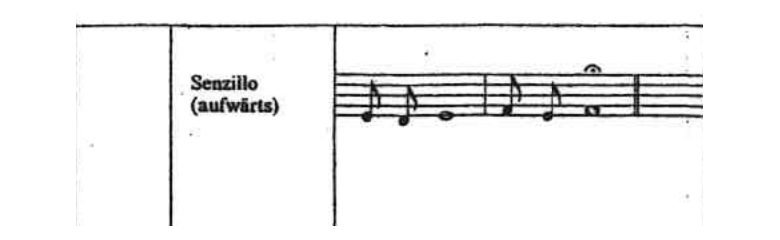
Untranscribed visual witness from Brändle’s chart, source row 1. The image preserves the printed marks in this cell but does not provide a text or machine-readable transcription of its musical contents. Open it to inspect the original-size facsimile. 2 individually catalogued examples show descriptions
These diplomatic descriptions make every audited item addressable and searchable. The chart-cell image above remains the notation witness; only entries explicitly labelled MEI are independent digital engravings.
-
Senzillo (aufwärts), first barred example
SM-MO-01Source sign: No separate glyph
Contour: Lower-note approach and resolution, approximately -1, 0 with a possible reiteration of -1
Rhythm: Two short attacks followed by a long 0
Reading note: Medium; chart clearly labels the motion upward
-
Senzillo (aufwärts), second barred example
SM-MO-02Source sign: No separate glyph
Contour: Short lower-neighbor figure into 0, approximately -1, 0, -1?, 0
Rhythm: Short pickup group followed by sustained 0
Reading note: Low-medium; middle note is unclear
Tomás de Santa María (c. 1510–1570)
Arte de tañer fantasía, Valladolid, 1565
2 variants catalogued · complete facsimile witness · MEI pending
-
-
Vorschlag Appoggiatura / grace note
Accento
PDF chart-cell facsimile untranscribed visual witness · all printed material in this cell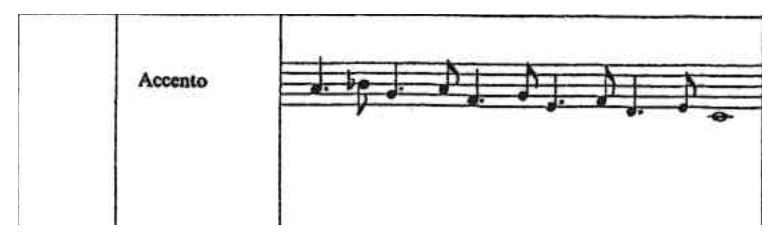
Untranscribed visual witness from Brändle’s chart, source row 2. The image preserves the printed marks in this cell but does not provide a text or machine-readable transcription of its musical contents. Open it to inspect the original-size facsimile. 1 individually catalogued example show descriptions
These diplomatic descriptions make every audited item addressable and searchable. The chart-cell image above remains the notation witness; only entries explicitly labelled MEI are independent digital engravings.
-
Accento, continuous exercise
DI-VO-01Source sign: No separate glyph
Contour: Stepwise descending line containing about six short accented neighbor/approach gestures; local cells are principally +1 -> 0 or -1 -> 0, but the chart does not isolate them
Rhythm: Alternation of longer structural notes and short single-note approaches, ending on a long final
Reading note: High as one composite example; low for a single exact relative sequence because the target changes at each step
Girolamo Diruta (c. 1554–after 1610)
Il Transilvano, Venezia, 1593
1 variants catalogued · complete facsimile witness · MEI pending
-
-
Triller Trill
Tremoli · Tremoletti
PDF chart-cell facsimile untranscribed visual witness · all printed material in this cell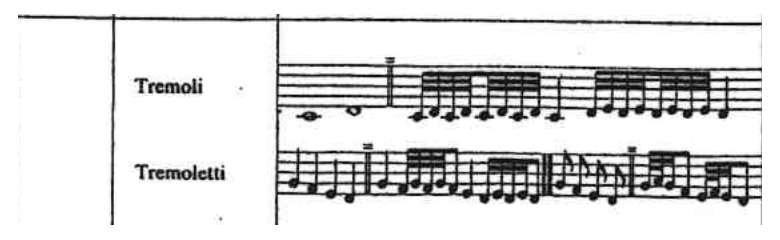
Untranscribed visual witness from Brändle’s chart, source row 2. The image preserves the printed marks in this cell but does not provide a text or machine-readable transcription of its musical contents. Open it to inspect the original-size facsimile. 3 individually catalogued examples show descriptions
These diplomatic descriptions make every audited item addressable and searchable. The chart-cell image above remains the notation witness; only entries explicitly labelled MEI are independent digital engravings.
-
Tremoli, upper-line exercise
DI-TR-01Source sign: No separate glyph
Contour: Two extended neighboring-note tremolo spans around successive targets: [+1, 0] x N, then the same cell at the next contextual pitch
Rhythm: Two dense, even repeated groups separated by a longer structural note
Reading note: Medium; noteheads confirm oscillation, exact N is not reliably countable
-
Tremoletti, first passage before the internal double bar
DI-TR-02Source sign: No separate glyph
Contour: Short turn cells applied to a descending line, approximately 0, +1, 0, -1 and transpositions thereof
Rhythm: Two compact beamed groups within a stepwise context
Reading note: Medium-low on exact pitch order; grouping is clear
-
Tremoletti, second passage after the internal double bar
DI-TR-03Source sign: No separate glyph
Contour: A second descending ornamented passage with alternating neighbor cells around changing targets
Rhythm: Several quick un-beamed attacks followed by two compact beamed groups
Reading note: Low-medium; separate passage is clear but inner pitch sequence is crowded
Girolamo Diruta (c. 1554–after 1610)
Il Transilvano, Venezia, 1593
3 variants catalogued · complete facsimile witness · MEI pending
-
-
Trillervarianten Trill variants
Groppi
PDF chart-cell facsimile untranscribed visual witness · all printed material in this cell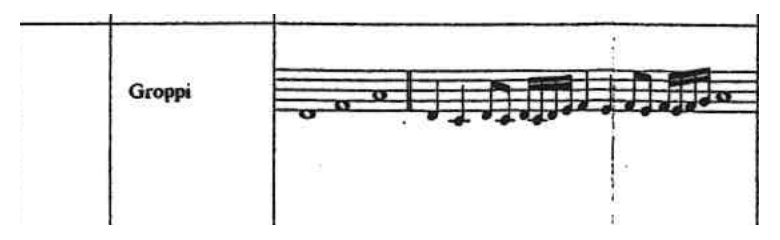
Untranscribed visual witness from Brändle’s chart, source row 2. The image preserves the printed marks in this cell but does not provide a text or machine-readable transcription of its musical contents. Open it to inspect the original-size facsimile. 1 individually catalogued example show descriptions
These diplomatic descriptions make every audited item addressable and searchable. The chart-cell image above remains the notation witness; only entries explicitly labelled MEI are independent digital engravings.
-
Groppi, continuous exercise
DI-TV-01Source sign: No separate glyph
Contour: Ascending scalar preparation leading to successive turn/group cells around 0; approximately a rise from -3, -2, -1 into repeated 0, -1, 0, +1-type groups
Rhythm: Begins in long values, accelerates through medium values into two dense beamed groups, then resolves long
Reading note: Medium on overall contour; low on exact interior ordering
Girolamo Diruta (c. 1554–after 1610)
Il Transilvano, Venezia, 1593
1 variants catalogued · complete facsimile witness · MEI pending
-
-
Doppelschlag Turn / double cadence
Minuta
PDF chart-cell facsimile untranscribed visual witness · all printed material in this cell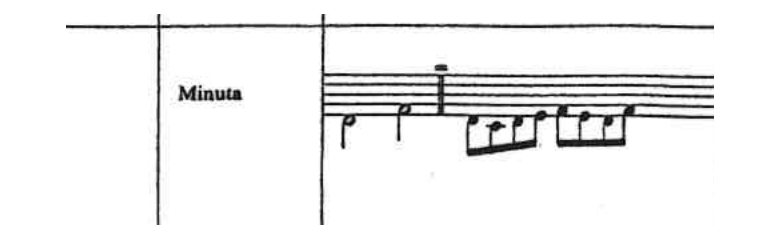
Untranscribed visual witness from Brändle’s chart, source row 2. The image preserves the printed marks in this cell but does not provide a text or machine-readable transcription of its musical contents. Open it to inspect the original-size facsimile. 1 individually catalogued example show descriptions
These diplomatic descriptions make every audited item addressable and searchable. The chart-cell image above remains the notation witness; only entries explicitly labelled MEI are independent digital engravings.
-
Minuta
DI-DS-01Source sign: No separate glyph
Contour: Two adjacent four-note turn groups around changing targets, approximately 0, -1, 0, +1, then 0, +1, 0, -1
Rhythm: Two groups of four quick equal notes after two longer contextual notes
Reading note: Medium-low; the two four-note groups are clear, their exact first directions are not
Girolamo Diruta (c. 1554–after 1610)
Il Transilvano, Venezia, 1593
1 variants catalogued · complete facsimile witness · MEI pending
-
-
Schleifer Slide
Clamationi
PDF chart-cell facsimile untranscribed visual witness · all printed material in this cell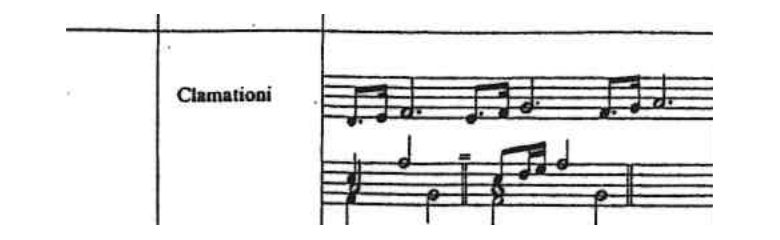
Untranscribed visual witness from Brändle’s chart, source row 2. The image preserves the printed marks in this cell but does not provide a text or machine-readable transcription of its musical contents. Open it to inspect the original-size facsimile. 1 individually catalogued example show descriptions
These diplomatic descriptions make every audited item addressable and searchable. The chart-cell image above remains the notation witness; only entries explicitly labelled MEI are independent digital engravings.
-
Clamationi, two-voice excerpt
DI-SL-01Source sign: No separate glyph
Contour: Upper voice contains three short two-note approach figures into successive targets while the lower voice supplies sustained counterpoint
Rhythm: Three paired short notes in the upper voice against longer lower-voice notes
Reading note: High as a polyphonic composite; local intervals appear mostly rising seconds, but exact absolute/relative degrees need clef recovery
Girolamo Diruta (c. 1554–after 1610)
Il Transilvano, Venezia, 1593
1 variants catalogued · complete facsimile witness · MEI pending
-
-
Vorschlag Appoggiatura / grace note
Accentus
PDF chart-cell facsimile untranscribed visual witness · all printed material in this cell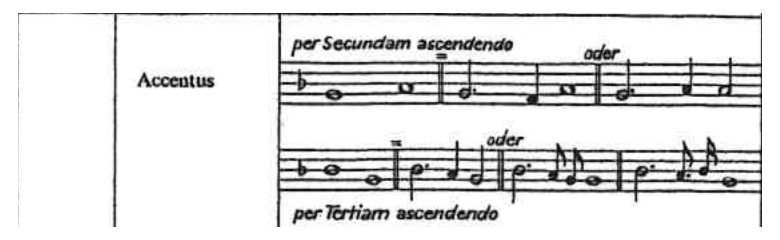
Untranscribed visual witness from Brändle’s chart, source row 3. The image preserves the printed marks in this cell but does not provide a text or machine-readable transcription of its musical contents. Open it to inspect the original-size facsimile. 5 individually catalogued examples show descriptions
These diplomatic descriptions make every audited item addressable and searchable. The chart-cell image above remains the notation witness; only entries explicitly labelled MEI are independent digital engravings.
-
Accentus per Secundam ascendendo, first realization
PR-VO-01Source sign: No separate glyph
Contour: Ascending-second approach -1 -> 0, with the lower note reiterated or prolonged before 0
Rhythm: Two moderate notes followed by a longer resolution
Reading note: Medium; precise tie/value is unclear
-
Accentus per Secundam ascendendo, oder
PR-VO-02Source sign: No separate glyph
Contour: Alternative ascending-second approach, -1, 0, 0?
Rhythm: Three more evenly divided attacks rather than the longer first form
Reading note: Medium-low; final pair may be two notated values on the same pitch
-
Accentus per Tertiam ascendendo, first realization
PR-VO-03Source sign: No separate glyph
Contour: Fills the third stepwise: -2, -1, 0
Rhythm: Long first note, then two shorter notes into 0
Reading note: High contour, medium rhythm
-
Accentus per Tertiam ascendendo, first form after oder
PR-VO-04Source sign: No separate glyph
Contour: Stepwise third filling with a quicker middle: -2, -1, 0
Rhythm: One longer attack, two short attacks, sustained 0
Reading note: High contour
-
Accentus per Tertiam ascendendo, final barred alternative
PR-VO-05Source sign: No separate glyph
Contour: Another rhythmic realization of -2, -1, 0
Rhythm: Dotted or prolonged first attack, then two quick attacks and sustained 0
Reading note: High contour; dot/value partly blurred
Michael Praetorius (1571–1621)
Syntagma Musicum, Wolfenbüttel, 1619
The chart's source is Syntagmatis musici tomus tertius (1619).
5 variants catalogued · complete facsimile witness · MEI pending
-
-
Triller Trill
Tremulus ascendens · Tremulus descendens · Tremoletti
PDF chart-cell facsimile untranscribed visual witness · all printed material in this cell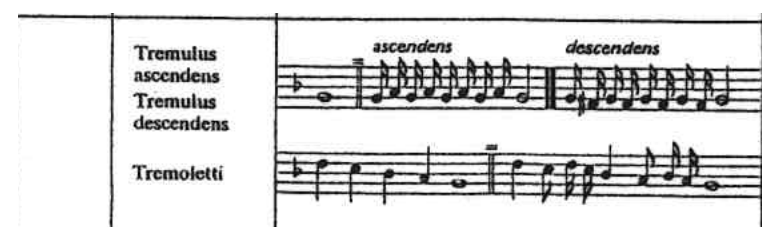
Untranscribed visual witness from Brändle’s chart, source row 3. The image preserves the printed marks in this cell but does not provide a text or machine-readable transcription of its musical contents. Open it to inspect the original-size facsimile. 3 individually catalogued examples show descriptions
These diplomatic descriptions make every audited item addressable and searchable. The chart-cell image above remains the notation witness; only entries explicitly labelled MEI are independent digital engravings.
-
Tremulus ascendens
PR-TR-01Source sign: No separate glyph
Contour: Ascending-context shake: [0, +1] x 4 -> 0
Rhythm: About eight quick equal attacks after a long contextual pitch, ending on a longer 0
Reading note: High contour
-
Tremulus descendens
PR-TR-02Source sign: No separate glyph
Contour: Descending-context shake: [+1, 0] x 4 -> 0
Rhythm: About eight quick equal attacks, then longer 0
Reading note: High contour; one accidental is visible but not retained in relative-degree normalization
-
Tremoletti, comparison line
PR-TR-03Source sign: No separate glyph
Contour: Plain four-note descending contour on the left, then an ornamented version on the right in which interior steps receive quick neighbor/reiteration figures
Rhythm: Left in long values; right mixes single attacks with two- and three-note quick groups
Reading note: Medium; treat as one source-versus-realization example, not two alternatives
Michael Praetorius (1571–1621)
Syntagma Musicum, Wolfenbüttel, 1619
The chart's source is Syntagmatis musici tomus tertius (1619).
3 variants catalogued · complete facsimile witness · MEI pending
-
-
Trillervarianten Trill variants
Groppi · Gruppo
PDF chart-cell facsimile untranscribed visual witness · all printed material in this cell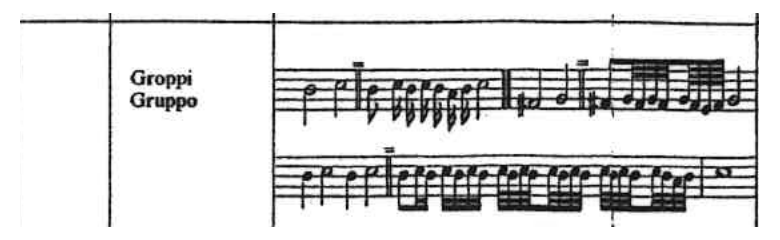
Untranscribed visual witness from Brändle’s chart, source row 3. The image preserves the printed marks in this cell but does not provide a text or machine-readable transcription of its musical contents. Open it to inspect the original-size facsimile. 3 individually catalogued examples show descriptions
These diplomatic descriptions make every audited item addressable and searchable. The chart-cell image above remains the notation witness; only entries explicitly labelled MEI are independent digital engravings.
-
Groppi / Gruppo, upper-line first example
PR-TV-01Source sign: No separate glyph
Contour: A contextual note leads into several lower-neighbor turn cells, approximately [0, -1, 0, +1] x N, then resolution
Rhythm: Repeated short groups under one broad slur
Reading note: Medium-low on exact pitch order
-
Groppi / Gruppo, upper-line second example after the double bar
PR-TV-02Source sign: No separate glyph
Contour: Short ascending preparation followed by two dense group cells and a long target
Rhythm: Two medium contextual notes, then two four-note fast groups
Reading note: Medium on contour
-
Groppi / Gruppo, lower-line extended example
PR-TV-03Source sign: No separate glyph
Contour: Long sequence of transposed four-note group cells around a moving line
Rhythm: Four or more dense beamed groups, ending on a long note
Reading note: Medium as a sequential pattern; exact note-by-note degrees remain uncertain
Michael Praetorius (1571–1621)
Syntagma Musicum, Wolfenbüttel, 1619
The chart's source is Syntagmatis musici tomus tertius (1619).
3 variants catalogued · complete facsimile witness · MEI pending
-
-
Vorschlag Appoggiatura / grace note
Beat · Backfall
PDF chart-cell facsimile untranscribed visual witness · all printed material in this cell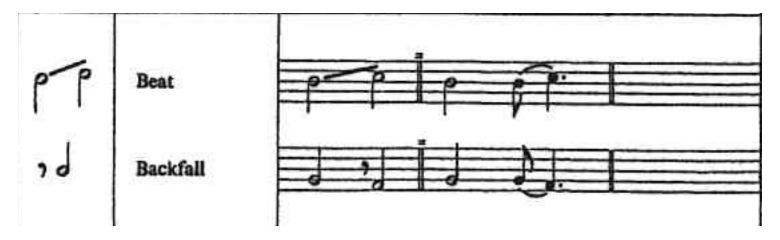
Untranscribed visual witness from Brändle’s chart, source row 4. The image preserves the printed marks in this cell but does not provide a text or machine-readable transcription of its musical contents. Open it to inspect the original-size facsimile. 2 individually catalogued examples show descriptions
These diplomatic descriptions make every audited item addressable and searchable. The chart-cell image above remains the notation witness; only entries explicitly labelled MEI are independent digital engravings.
-
Beat
PL-VO-01Source sign: Two stemmed open-note forms connected by a rising slur
Contour: Lower approach into main: -1 -> 0
Rhythm: Appoggiatura-like first note taking a substantial part of the written value, then resolution
Reading note: High contour; exact proportional split unclear
-
Backfall
PL-VO-02Source sign: Comma-like mark followed by a stemmed open-note form
Contour: Upper approach into main: +1 -> 0
Rhythm: Short or moderate upper appoggiatura, then sustained 0
Reading note: High contour
John Playford (1623–1686/7)
An Introduction to the Skill of Musick, London, first published 1654
2 variants catalogued · complete facsimile witness · MEI pending
-
-
Triller Trill
Backfall shaked
PDF chart-cell facsimile untranscribed visual witness · all printed material in this cell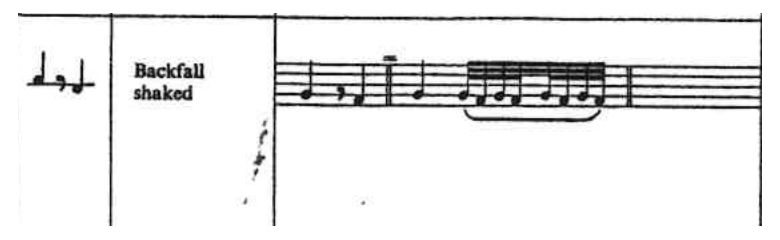
Untranscribed visual witness from Brändle’s chart, source row 4. The image preserves the printed marks in this cell but does not provide a text or machine-readable transcription of its musical contents. Open it to inspect the original-size facsimile. 1 individually catalogued example show descriptions
These diplomatic descriptions make every audited item addressable and searchable. The chart-cell image above remains the notation witness; only entries explicitly labelled MEI are independent digital engravings.
-
Backfall shaked
PL-TR-01Source sign: Compound backfall-like black-note graphic with a horizontal stroke and adjacent small marks
Contour: Upper appoggiatura/preparation, then an upper-main shake: +1 -> [ +1, 0 ] x 3-4 -> 0
Rhythm: Context notes, then one dense beamed oscillation under a slur, sustained resolution
Reading note: Medium-high contour; exact start of the oscillation is crowded
John Playford (1623–1686/7)
An Introduction to the Skill of Musick, London, first published 1654
1 variants catalogued · complete facsimile witness · MEI pending
-
-
Trillervarianten Trill variants
Elevation · Cadent · Double Relish
PDF chart-cell facsimile untranscribed visual witness · all printed material in this cell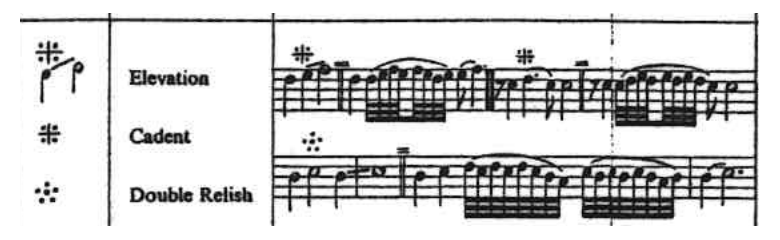
Untranscribed visual witness from Brändle’s chart, source row 4. The image preserves the printed marks in this cell but does not provide a text or machine-readable transcription of its musical contents. Open it to inspect the original-size facsimile. 3 individually catalogued examples show descriptions
These diplomatic descriptions make every audited item addressable and searchable. The chart-cell image above remains the notation witness; only entries explicitly labelled MEI are independent digital engravings.
-
Elevation
PL-TV-01Source sign: Two stemmed open-note signs connected upward, with a hash/rosette above the first
Contour: Rising preparation into a shake, approximately -1, 0, [ +1, 0 ] x 3 -> 0
Rhythm: Initial approach followed by a dense slurred oscillation
Reading note: Medium; shares a continuous line with Cadent
-
Cadent
PL-TV-02Source sign: Hash-like ornament sign
Contour: Cadential upper-main shake with a short terminal turn, approximately [+1, 0] x 3, -1, 0
Rhythm: Dense slurred group followed by contextual exit notes
Reading note: Medium; exact division from PL-TV-01 is at the middle sign
-
Double Relish
PL-TV-03Source sign: Six-dot rosette
Contour: Two consecutive relish/turn groups around successive main notes, each approximately +1, 0, -1, 0
Rhythm: Two dense slurred groups in one passage
Reading note: Medium; encode both groups in the single printed example
John Playford (1623–1686/7)
An Introduction to the Skill of Musick, London, first published 1654
3 variants catalogued · complete facsimile witness · MEI pending
-
-
Doppelschlag Turn / double cadence
Single Relish
PDF chart-cell facsimile untranscribed visual witness · all printed material in this cell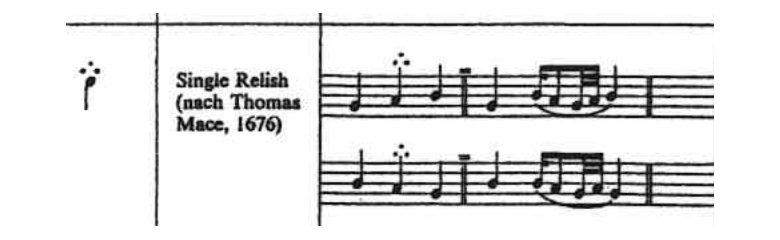
Untranscribed visual witness from Brändle’s chart, source row 4. The image preserves the printed marks in this cell but does not provide a text or machine-readable transcription of its musical contents. Open it to inspect the original-size facsimile. 2 individually catalogued examples show descriptions
These diplomatic descriptions make every audited item addressable and searchable. The chart-cell image above remains the notation witness; only entries explicitly labelled MEI are independent digital engravings.
-
Single Relish (after Thomas Mace, 1676), upper line
PL-DS-01Source sign: Four-dot diamond/rosette over a stemmed note
Contour: Turn around 0, approximately +1, 0, -1, 0
Rhythm: Four quick beamed notes under a slur, then structural note
Reading note: Medium-high
-
Single Relish, lower-line alternative
PL-DS-02Source sign: Same four-dot sign
Contour: Opposite-context or inverted turn, approximately -1, 0, +1, 0
Rhythm: Four quick beamed notes under a slur, then structural note
Reading note: Medium-low; first direction is visually less secure than in the upper line
John Playford (1623–1686/7)
An Introduction to the Skill of Musick, London, first published 1654
2 variants catalogued · complete facsimile witness · MEI pending
-
-
Mordent mit Vorhalt · Schneller · Battement Compound mordent / battement
a shaked Beat
PDF chart-cell facsimile untranscribed visual witness · all printed material in this cell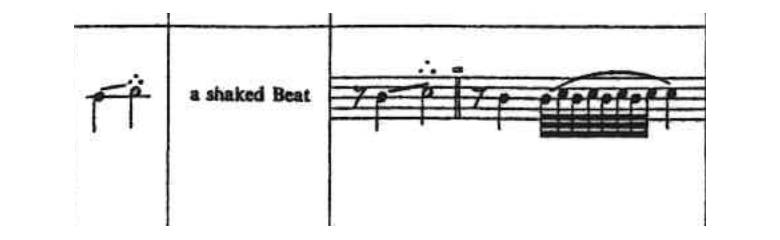
Untranscribed visual witness from Brändle’s chart, source row 4. The image preserves the printed marks in this cell but does not provide a text or machine-readable transcription of its musical contents. Open it to inspect the original-size facsimile. 1 individually catalogued example show descriptions
These diplomatic descriptions make every audited item addressable and searchable. The chart-cell image above remains the notation witness; only entries explicitly labelled MEI are independent digital engravings.
-
a shaked Beat
PL-MF-01Source sign: Beat's rising two-note/slur sign with a four-dot cluster above the destination
Contour: Lower appoggiatura followed by a shake: -1 -> [0, +1] x 3-4 -> 0
Rhythm: Longer preparation, then one dense beamed oscillation under a slur
Reading note: Medium-high contour
John Playford (1623–1686/7)
An Introduction to the Skill of Musick, London, first published 1654
1 variants catalogued · complete facsimile witness · MEI pending
-
-
Schleifer Slide
Elevation · Double Backfall
PDF chart-cell facsimile untranscribed visual witness · all printed material in this cell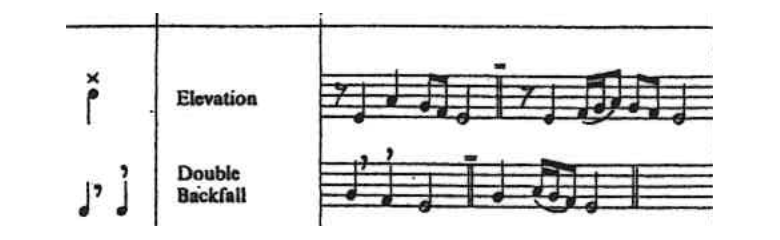
Untranscribed visual witness from Brändle’s chart, source row 4. The image preserves the printed marks in this cell but does not provide a text or machine-readable transcription of its musical contents. Open it to inspect the original-size facsimile. 2 individually catalogued examples show descriptions
These diplomatic descriptions make every audited item addressable and searchable. The chart-cell image above remains the notation witness; only entries explicitly labelled MEI are independent digital engravings.
-
Elevation
PL-SL-01Source sign: Stemmed note-like sign with x above
Contour: Two-note rising slide into main, approximately -2, -1, 0; the line applies it twice
Rhythm: Each occurrence uses two short rising notes before a longer target
Reading note: High contour; retain both occurrences in the example
-
Double Backfall
PL-SL-02Source sign: Pair of note-like glyphs with comma/apostrophe auxiliaries
Contour: Two-step descending approach, approximately +2, +1, 0
Rhythm: Two quick descending notes into a sustained target
Reading note: High contour
John Playford (1623–1686/7)
An Introduction to the Skill of Musick, London, first published 1654
2 variants catalogued · complete facsimile witness · MEI pending
-
-
Vorschlag Appoggiatura / grace note
Port de voix
PDF chart-cell facsimile untranscribed visual witness · all printed material in this cell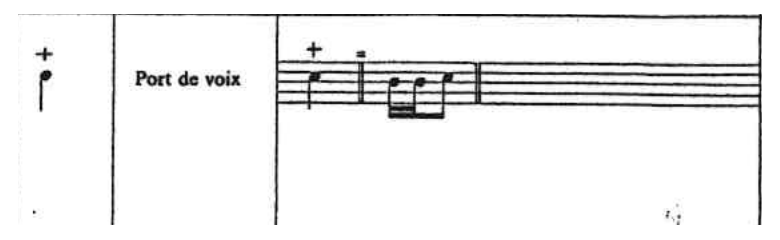
Untranscribed visual witness from Brändle’s chart, source row 5. The image preserves the printed marks in this cell but does not provide a text or machine-readable transcription of its musical contents. Open it to inspect the original-size facsimile. 1 individually catalogued example show descriptions
These diplomatic descriptions make every audited item addressable and searchable. The chart-cell image above remains the notation witness; only entries explicitly labelled MEI are independent digital engravings.
-
Port de voix
CH-VO-01Source sign: Stemmed filled-note-like sign with a plus above
Contour: Lower appoggiatura with lower-neighbor finish, approximately -1, 0, -1, 0
Rhythm: Four quick beamed notes, then sustained 0
Reading note: High contour; opening source/context note appears before =
Jacques Champion de Chambonnières (c. 1601/2–1672)
Pièces de Clavecin, Paris, 1670
1 variants catalogued · complete facsimile witness · MEI pending
-
-
Triller Trill
Cadence
PDF chart-cell facsimile untranscribed visual witness · all printed material in this cell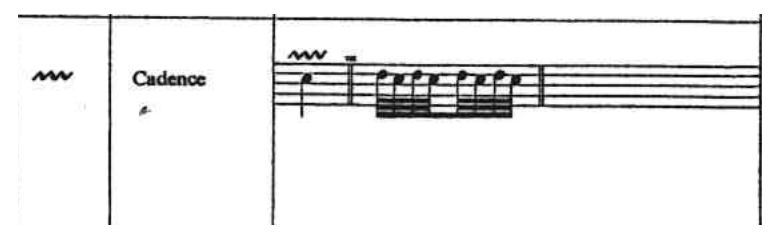
Untranscribed visual witness from Brändle’s chart, source row 5. The image preserves the printed marks in this cell but does not provide a text or machine-readable transcription of its musical contents. Open it to inspect the original-size facsimile. 1 individually catalogued example show descriptions
These diplomatic descriptions make every audited item addressable and searchable. The chart-cell image above remains the notation witness; only entries explicitly labelled MEI are independent digital engravings.
-
Cadence
CH-TR-01Source sign: Short horizontal three-wave sign
Contour: Upper-main trill: [+1, 0] x 4 -> 0
Rhythm: Eight quick equal notes in two beamed subgroups, then resolution
Reading note: High
Jacques Champion de Chambonnières (c. 1601/2–1672)
Pièces de Clavecin, Paris, 1670
1 variants catalogued · complete facsimile witness · MEI pending
-
-
Doppelschlag Turn / double cadence
Double Cadence
PDF chart-cell facsimile untranscribed visual witness · all printed material in this cell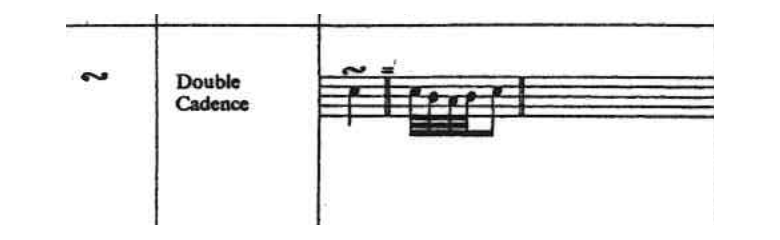
Untranscribed visual witness from Brändle’s chart, source row 5. The image preserves the printed marks in this cell but does not provide a text or machine-readable transcription of its musical contents. Open it to inspect the original-size facsimile. 1 individually catalogued example show descriptions
These diplomatic descriptions make every audited item addressable and searchable. The chart-cell image above remains the notation witness; only entries explicitly labelled MEI are independent digital engravings.
-
Double Cadence
CH-DS-01Source sign: Short horizontal tilde / reversed-wave sign
Contour: Turn-like five-note cell around 0, approximately +1, 0, -1, 0, +1? -> 0
Rhythm: Four to five quick notes, then sustained target
Reading note: Medium; one upper return before the final is not fully distinct
Jacques Champion de Chambonnières (c. 1601/2–1672)
Pièces de Clavecin, Paris, 1670
1 variants catalogued · complete facsimile witness · MEI pending
-
-
Mordent Mordent
Pincement
PDF chart-cell facsimile untranscribed visual witness · all printed material in this cell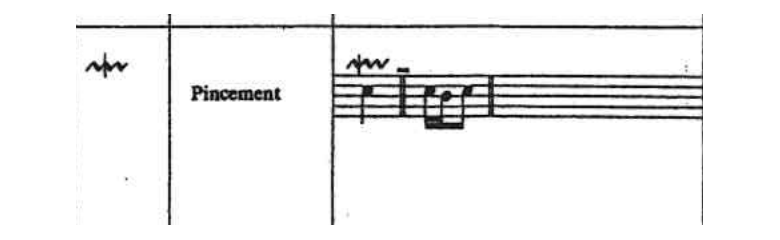
Untranscribed visual witness from Brändle’s chart, source row 5. The image preserves the printed marks in this cell but does not provide a text or machine-readable transcription of its musical contents. Open it to inspect the original-size facsimile. 1 individually catalogued example show descriptions
These diplomatic descriptions make every audited item addressable and searchable. The chart-cell image above remains the notation witness; only entries explicitly labelled MEI are independent digital engravings.
-
Pincement
CH-MO-01Source sign: Jagged mordent-like double wave
Contour: Lower mordent 0, -1, 0
Rhythm: Three quick notes, then sustained 0
Reading note: High
Jacques Champion de Chambonnières (c. 1601/2–1672)
Pièces de Clavecin, Paris, 1670
1 variants catalogued · complete facsimile witness · MEI pending
-
-
Schleifer Slide
Coulé
PDF chart-cell facsimile untranscribed visual witness · all printed material in this cell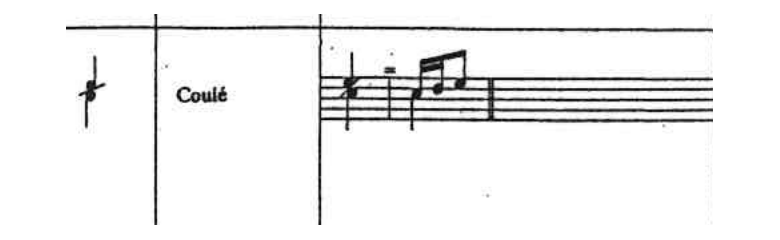
Untranscribed visual witness from Brändle’s chart, source row 5. The image preserves the printed marks in this cell but does not provide a text or machine-readable transcription of its musical contents. Open it to inspect the original-size facsimile. 1 individually catalogued example show descriptions
These diplomatic descriptions make every audited item addressable and searchable. The chart-cell image above remains the notation witness; only entries explicitly labelled MEI are independent digital engravings.
-
Coulé
CH-SL-01Source sign: Stemmed sign crossed by a diagonal stroke
Contour: Rising two-note slide into main: -2, -1, 0
Rhythm: Two quick beamed notes into a sustained 0
Reading note: High
Jacques Champion de Chambonnières (c. 1601/2–1672)
Pièces de Clavecin, Paris, 1670
1 variants catalogued · complete facsimile witness · MEI pending
-
-
Vorschlag Appoggiatura / grace note
Chute ou port-de-voix en montant · Chute en descendant
PDF chart-cell facsimile untranscribed visual witness · all printed material in this cell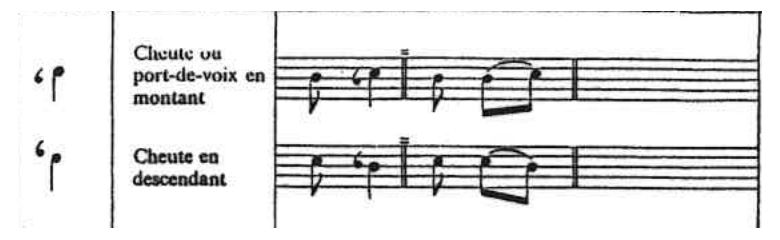
Untranscribed visual witness from Brändle’s chart, source row 6. The image preserves the printed marks in this cell but does not provide a text or machine-readable transcription of its musical contents. Open it to inspect the original-size facsimile. 2 individually catalogued examples show descriptions
These diplomatic descriptions make every audited item addressable and searchable. The chart-cell image above remains the notation witness; only entries explicitly labelled MEI are independent digital engravings.
-
Chute ou port-de-voix en montant
DA-VO-01Source sign: Small left-curving comma beside a stemmed filled-note sign
Contour: Rising appoggiatura -1 -> 0
Rhythm: Lower approach takes a substantial value, then resolves/slurs to 0
Reading note: High contour; exact duration split unclear
-
Chute en descendant
DA-VO-02Source sign: Similar comma-and-stem sign at a different vertical placement
Contour: Falling appoggiatura +1 -> 0
Rhythm: Upper approach followed by a slurred resolution
Reading note: High contour
Jean-Henry d’Anglebert (1629–1691)
Pièces de Clavecin — Marques des Agréments et leur signification, Paris, 1689
2 variants catalogued · complete facsimile witness · MEI pending
-
-
Triller Trill
Tremblement simple · Tremblement et pincé · Tremblement appuyé
PDF chart-cell facsimile untranscribed visual witness · all printed material in this cell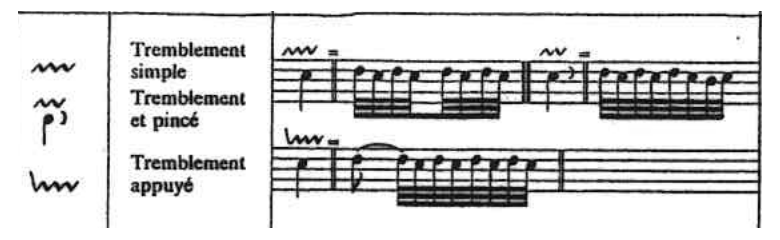
Untranscribed visual witness from Brändle’s chart, source row 6. The image preserves the printed marks in this cell but does not provide a text or machine-readable transcription of its musical contents. Open it to inspect the original-size facsimile. 3 individually catalogued examples show descriptions
These diplomatic descriptions make every audited item addressable and searchable. The chart-cell image above remains the notation witness; only entries explicitly labelled MEI are independent digital engravings.
-
Tremblement simple
DA-TR-01Source sign: Short horizontal wavy line
Contour: Upper-main shake [+1, 0] x 4 -> 0
Rhythm: Two beamed groups of four rapid notes after a structural onset
Reading note: High
-
Tremblement et pincé
DA-TR-02Source sign: Wavy line combined with a stemmed-note / hooked pincé element
Contour: Shake followed by a lower mordent close: [+1, 0] x 3, 0, -1, 0
Rhythm: Dense even trill stream with a three-note terminal figure
Reading note: Medium-high; trill count may vary by one pair
-
Tremblement appuyé
DA-TR-03Source sign: Longer wavy line with an initial hook / extended lower curve
Contour: Prepared trill: sustained +1, then [+1, 0] x 4 -> 0
Rhythm: Appoggiatura-like upper preparation under a slur, followed by a dense beamed shake
Reading note: High contour
Jean-Henry d’Anglebert (1629–1691)
Pièces de Clavecin — Marques des Agréments et leur signification, Paris, 1689
3 variants catalogued · complete facsimile witness · MEI pending
-
-
Trillervarianten Trill variants
Cadence · Double Cadence
PDF chart-cell facsimile untranscribed visual witness · all printed material in this cell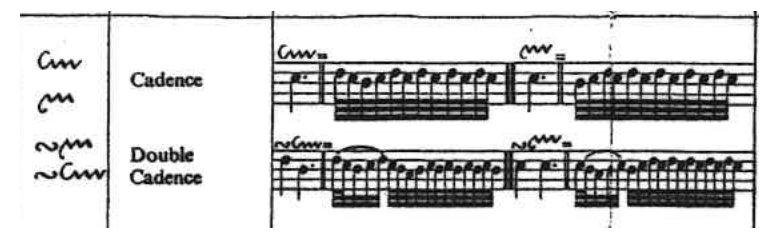
Untranscribed visual witness from Brändle’s chart, source row 6. The image preserves the printed marks in this cell but does not provide a text or machine-readable transcription of its musical contents. Open it to inspect the original-size facsimile. 4 individually catalogued examples show descriptions
These diplomatic descriptions make every audited item addressable and searchable. The chart-cell image above remains the notation witness; only entries explicitly labelled MEI are independent digital engravings.
-
Cadence, first form
DA-TV-01Source sign: C-like prefix joined to a wavy trill line
Contour: Cadential preparation into a long upper-main shake, with a short turn-like close
Rhythm: One long stream of rapid equal notes after the prefix
Reading note: Medium; exact prefix pitches are unclear
-
Cadence, second form
DA-TV-02Source sign: Smaller C-like curve joined to waves
Contour: Alternate cadential preparation into the same upper-main shake type
Rhythm: One long rapid stream, rhythmically parallel to DA-TV-01
Reading note: Medium; distinguish by sign and starting context rather than a securely different inner sequence
-
Double Cadence, first form
DA-TV-03Source sign: Two-part/stacked curve plus wavy line
Contour: Double preparatory turn followed by an upper-main shake, approximately -1, 0, +1, 0 then [+1, 0] x N
Rhythm: Short opening group followed by a long dense trill stream
Reading note: Medium-low on exact prefix order
-
Double Cadence, second form
DA-TV-04Source sign: Alternate stacked / doubled cadence sign
Contour: Alternate double preparation followed by an upper-main shake
Rhythm: Short opening group plus long rapid stream
Reading note: Medium-low; exact difference from DA-TV-03 is clearest in the sign and contextual onset
Jean-Henry d’Anglebert (1629–1691)
Pièces de Clavecin — Marques des Agréments et leur signification, Paris, 1689
4 variants catalogued · complete facsimile witness · MEI pending
-
-
Doppelschlag Turn / double cadence
Cadence sans tremblement (Double)
PDF chart-cell facsimile untranscribed visual witness · all printed material in this cell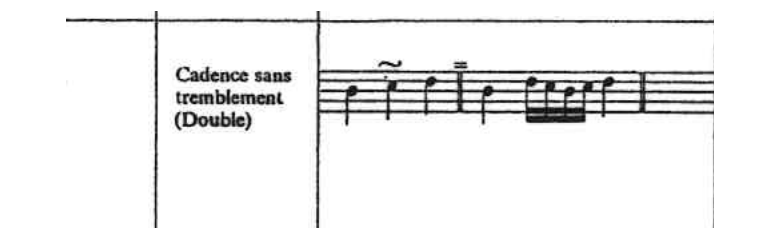
Untranscribed visual witness from Brändle’s chart, source row 6. The image preserves the printed marks in this cell but does not provide a text or machine-readable transcription of its musical contents. Open it to inspect the original-size facsimile. 1 individually catalogued example show descriptions
These diplomatic descriptions make every audited item addressable and searchable. The chart-cell image above remains the notation witness; only entries explicitly labelled MEI are independent digital engravings.
-
Cadence sans tremblement (Double)
DA-DS-01Source sign: Short tilde / turn-like sign
Contour: Turn without prolonged oscillation, approximately +1, 0, -1, 0
Rhythm: Context notes followed by one compact four-note beamed turn and a sustained exit
Reading note: High contour
Jean-Henry d’Anglebert (1629–1691)
Pièces de Clavecin — Marques des Agréments et leur signification, Paris, 1689
1 variants catalogued · complete facsimile witness · MEI pending
-
-
Mordent Mordent
Pincé · Pincé autre
PDF chart-cell facsimile untranscribed visual witness · all printed material in this cell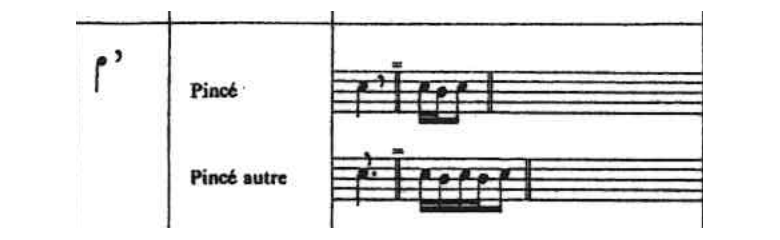
Untranscribed visual witness from Brändle’s chart, source row 6. The image preserves the printed marks in this cell but does not provide a text or machine-readable transcription of its musical contents. Open it to inspect the original-size facsimile. 2 individually catalogued examples show descriptions
These diplomatic descriptions make every audited item addressable and searchable. The chart-cell image above remains the notation witness; only entries explicitly labelled MEI are independent digital engravings.
-
Pincé
DA-MO-01Source sign: Stemmed filled-note-like sign with an apostrophe/right hook
Contour: Lower mordent 0, -1, 0
Rhythm: Three quick notes, then sustained 0
Reading note: High
-
Pincé autre
DA-MO-02Source sign: No clearly separate glyph beyond the Pincé family sign
Contour: Extended lower-neighbor figure, approximately 0, -1, 0, -1, 0
Rhythm: Four to five quick equal notes, then sustained 0
Reading note: Medium; exact note count is obscured by joined beams
Jean-Henry d’Anglebert (1629–1691)
Pièces de Clavecin — Marques des Agréments et leur signification, Paris, 1689
2 variants catalogued · complete facsimile witness · MEI pending
-
-
Mordent mit Vorhalt · Schneller · Battement Compound mordent / battement
Chute et pincé
PDF chart-cell facsimile untranscribed visual witness · all printed material in this cell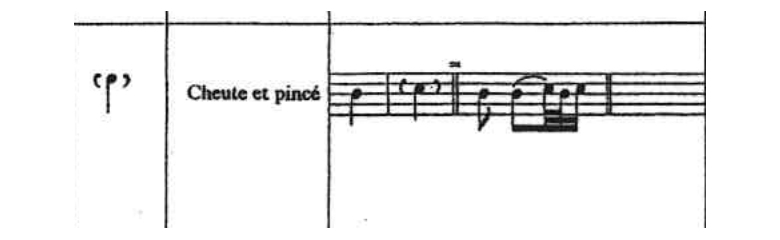
Untranscribed visual witness from Brändle’s chart, source row 6. The image preserves the printed marks in this cell but does not provide a text or machine-readable transcription of its musical contents. Open it to inspect the original-size facsimile. 1 individually catalogued example show descriptions
These diplomatic descriptions make every audited item addressable and searchable. The chart-cell image above remains the notation witness; only entries explicitly labelled MEI are independent digital engravings.
-
Chute et pincé
DA-MF-01Source sign: Compound parenthesized / apostrophe p-like stem sign
Contour: Falling appoggiatura plus lower mordent: +1 -> 0, -1, 0
Rhythm: Longer upper preparation, then a compact three-note beamed mordent and sustained target
Reading note: High contour
Jean-Henry d’Anglebert (1629–1691)
Pièces de Clavecin — Marques des Agréments et leur signification, Paris, 1689
1 variants catalogued · complete facsimile witness · MEI pending
-
-
Schleifer Slide
Coulé sur une tierce · Coulé sur deux notes de suite
PDF chart-cell facsimile untranscribed visual witness · all printed material in this cell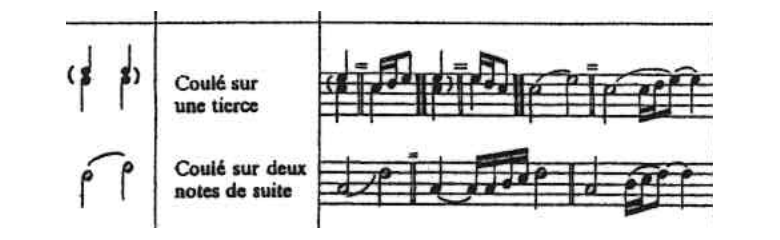
Untranscribed visual witness from Brändle’s chart, source row 6. The image preserves the printed marks in this cell but does not provide a text or machine-readable transcription of its musical contents. Open it to inspect the original-size facsimile. 5 individually catalogued examples show descriptions
These diplomatic descriptions make every audited item addressable and searchable. The chart-cell image above remains the notation witness; only entries explicitly labelled MEI are independent digital engravings.
-
Coulé sur une tierce, first isolated orientation
DA-SL-01Source sign: Stemmed double-lobed sign with left parenthesis
Contour: Rising fill of a third: -2, -1, 0
Rhythm: Two quick beamed approach notes into 0
Reading note: High contour
-
Coulé sur une tierce, second isolated orientation
DA-SL-02Source sign: Mirrored stemmed double-lobed sign with right parenthesis
Contour: Falling fill of a third: +2, +1, 0
Rhythm: Two quick beamed approach notes into 0
Reading note: High contour
-
Coulé sur une tierce, contextual equation on right
DA-SL-03Source sign: One of the two parenthesized tierce signs applied in a tied/slurred melodic context
Contour: A two-note stepwise slide fills the third into the second contextual note; direction depends on the written interval
Rhythm: Sustained contextual onset, two quick approach notes, then sustained destination
Reading note: Medium; the context is readable but its clef/absolute direction is not preserved securely
-
Coulé sur deux notes de suite, first contextual equation
DA-SL-04Source sign: Two stemmed note-like signs joined by an arch/slur
Contour: Two consecutive rising slides, each locally -2, -1, 0, across a moving line
Rhythm: Sustained notes alternate with a four-note ascending beamed run
Reading note: Medium-high contour
-
Coulé sur deux notes de suite, second contextual equation
DA-SL-05Source sign: Same two-note arch sign
Contour: Second rhythmic/contextual realization of consecutive slides; two quick approach notes lead into each of two successive targets
Rhythm: Short beamed approach followed by two slurred/sustained destinations
Reading note: Medium; exact separation of the two local cells is partly obscured
Jean-Henry d’Anglebert (1629–1691)
Pièces de Clavecin — Marques des Agréments et leur signification, Paris, 1689
5 variants catalogued · complete facsimile witness · MEI pending
-
-
Vorschlag Appoggiatura / grace note
Fore-fall · Back-fall
PDF chart-cell facsimile untranscribed visual witness · all printed material in this cell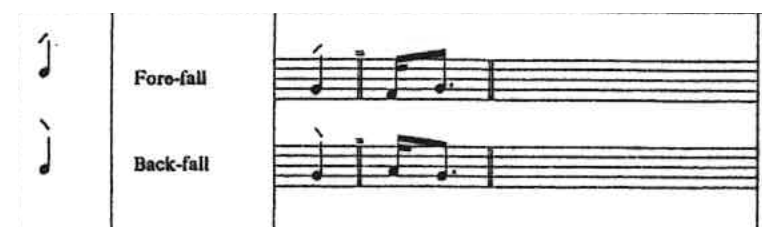
Untranscribed visual witness from Brändle’s chart, source row 7. The image preserves the printed marks in this cell but does not provide a text or machine-readable transcription of its musical contents. Open it to inspect the original-size facsimile. 2 individually catalogued examples show descriptions
These diplomatic descriptions make every audited item addressable and searchable. The chart-cell image above remains the notation witness; only entries explicitly labelled MEI are independent digital engravings.
-
Fore-fall
r07-f01-aSource sign: Main-note stem with a short diagonal stroke rising to the right above it.
Contour: L1 -> M
Rhythm: A short lower auxiliary joined to the principal; the principal appears lengthened/dotted.
Reading note: H contour; M exact duration.
-
Back-fall
r07-f01-bSource sign: Main-note stem with a short diagonal stroke falling to the right.
Contour: U1 -> M
Rhythm: A short upper auxiliary joined to the principal; the principal appears lengthened/dotted.
Reading note: H contour; M exact duration.
Henry Purcell (1659–1695)
Lessons for the Harpsichord or Spinet — Rules for Graces, London, 1696
2 variants catalogued · complete facsimile witness · MEI pending
-
-
Triller Trill
Shake · Plain note and shake
PDF chart-cell facsimile untranscribed visual witness · all printed material in this cell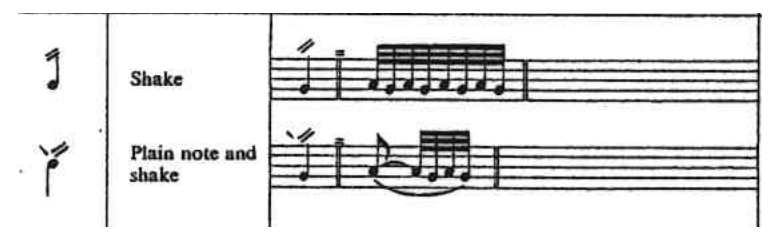
Untranscribed visual witness from Brändle’s chart, source row 7. The image preserves the printed marks in this cell but does not provide a text or machine-readable transcription of its musical contents. Open it to inspect the original-size facsimile. 2 individually catalogued examples show descriptions
These diplomatic descriptions make every audited item addressable and searchable. The chart-cell image above remains the notation witness; only entries explicitly labelled MEI are independent digital engravings.
-
Shake
r07-f02-aSource sign: Two short parallel diagonal strokes above the principal.
Contour: (U1,M)x4, ending on M
Rhythm: One compact, three-beam rapid group (about eight equal notes), then release/sustain.
Reading note: H alternation; M exact note count (the scan supports about eight).
-
Plain note and shake
r07-f02-bSource sign: Falling stroke plus the two-stroke shake sign over a stemmed note.
Contour: M held, then approximately (U1,M)x2
Rhythm: Sustained/tied plain principal followed by a four-note rapid shake under a long slur/tie.
Reading note: H concept; M exact alternation count.
Henry Purcell (1659–1695)
Lessons for the Harpsichord or Spinet — Rules for Graces, London, 1696
2 variants catalogued · complete facsimile witness · MEI pending
-
-
Doppelschlag Turn / double cadence
Turn · Shake turned
PDF chart-cell facsimile untranscribed visual witness · all printed material in this cell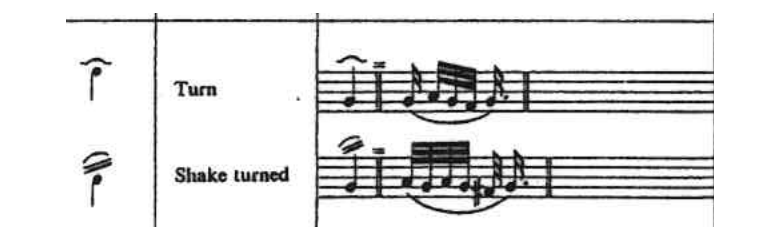
Untranscribed visual witness from Brändle’s chart, source row 7. The image preserves the printed marks in this cell but does not provide a text or machine-readable transcription of its musical contents. Open it to inspect the original-size facsimile. 2 individually catalogued examples show descriptions
These diplomatic descriptions make every audited item addressable and searchable. The chart-cell image above remains the notation witness; only entries explicitly labelled MEI are independent digital engravings.
-
Turn
r07-f04-aSource sign: Curved cap/arc above a main-note stem.
Contour: U1,M,L1,M
Rhythm: Four rapid notes under a slur, followed by a sustained/released principal.
Reading note: H.
-
Shake turned
r07-f04-bSource sign: Three short slant strokes above a main-note stem.
Contour: Approximately (U1,M)x3,L1,M
Rhythm: Longer rapid shake group followed by a two-note turn termination, all slurred.
Reading note: M; the terminal lower-neighbor return is clear, exact number of pre-terminal alternations is less certain.
Henry Purcell (1659–1695)
Lessons for the Harpsichord or Spinet — Rules for Graces, London, 1696
2 variants catalogued · complete facsimile witness · MEI pending
-
-
Mordent Mordent
Beat
PDF chart-cell facsimile untranscribed visual witness · all printed material in this cell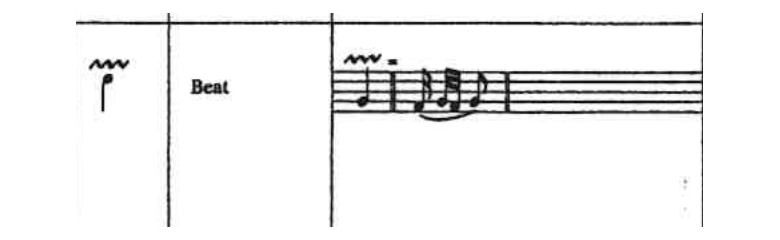
Untranscribed visual witness from Brändle’s chart, source row 7. The image preserves the printed marks in this cell but does not provide a text or machine-readable transcription of its musical contents. Open it to inspect the original-size facsimile. 1 individually catalogued example show descriptions
These diplomatic descriptions make every audited item addressable and searchable. The chart-cell image above remains the notation witness; only entries explicitly labelled MEI are independent digital engravings.
-
Beat
r07-f05-aSource sign: Short horizontal wavy line over a main-note stem.
Contour: M,L1,M
Rhythm: Three quick notes under a slur, last note sustained.
Reading note: H.
Henry Purcell (1659–1695)
Lessons for the Harpsichord or Spinet — Rules for Graces, London, 1696
1 variants catalogued · complete facsimile witness · MEI pending
-
-
Schleifer Slide
Slur
PDF chart-cell facsimile untranscribed visual witness · all printed material in this cell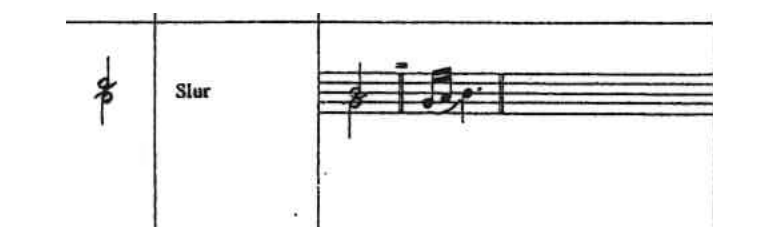
Untranscribed visual witness from Brändle’s chart, source row 7. The image preserves the printed marks in this cell but does not provide a text or machine-readable transcription of its musical contents. Open it to inspect the original-size facsimile. 1 individually catalogued example show descriptions
These diplomatic descriptions make every audited item addressable and searchable. The chart-cell image above remains the notation witness; only entries explicitly labelled MEI are independent digital engravings.
-
Slur
r07-f07-aSource sign: Tall stem crossed by a small loop/diagonal knot.
Contour: Likely L2,L1,M
Rhythm: Two short rising notes beamed into a longer arrival, under a slur.
Reading note: M contour; the scan clearly shows a three-note rising fill, but the exact starting interval is not labeled by a clef.
Henry Purcell (1659–1695)
Lessons for the Harpsichord or Spinet — Rules for Graces, London, 1696
1 variants catalogued · complete facsimile witness · MEI pending
-
-
Vorschlag Appoggiatura / grace note
Port de voix · Coulement · Accent
PDF chart-cell facsimile untranscribed visual witness · all printed material in this cell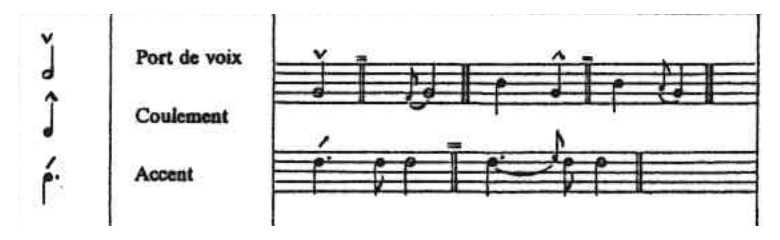
Untranscribed visual witness from Brändle’s chart, source row 8. The image preserves the printed marks in this cell but does not provide a text or machine-readable transcription of its musical contents. Open it to inspect the original-size facsimile. 3 individually catalogued examples show descriptions
These diplomatic descriptions make every audited item addressable and searchable. The chart-cell image above remains the notation witness; only entries explicitly labelled MEI are independent digital engravings.
-
Port de voix
r08-f01-aSource sign: Small downward-pointing v over an open main note.
Contour: L1 -> M
Rhythm: Lower appoggiatura resolving upward into the principal; shown in context with a following rest.
Reading note: H.
-
Coulement
r08-f01-bSource sign: Small upward-pointing caret over a filled main note.
Contour: U1 -> M
Rhythm: Upper appoggiatura resolving downward into the principal; shown in context with a following rest.
Reading note: H.
-
Accent
r08-f01-cSource sign: Diagonal stroke above a dotted/stemmed main note.
Contour: Probably M held -> U1 short -> M
Rhythm: Delayed after-note gesture at the end of a held/dotted note, under a curved tie/slur.
Reading note: L-M: the after-note is visible, but its exact return and duration are hard to separate from the staff in this scan. Preserve a crop for editorial checking.
Jacques-Martin Hotteterre le Romain (1673–1763)
Premier livre de pièces pour la flûte traversière et autres instruments avec la basse, œuvre 2, Paris, 1708
The chart cites the work's 1708 date; the ornament table appears in the revised 1715 edition linked here.
3 variants catalogued · complete facsimile witness · MEI pending
-
-
Triller Trill
Tremblement · Demie Cadence appuyée
PDF chart-cell facsimile untranscribed visual witness · all printed material in this cell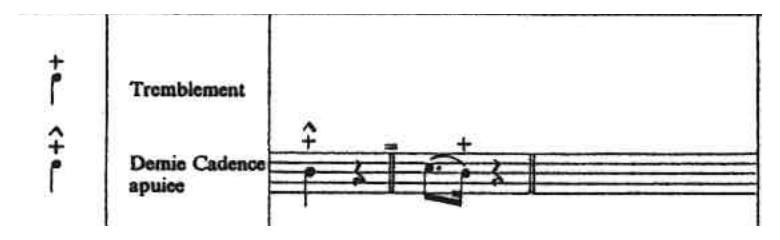
Untranscribed visual witness from Brändle’s chart, source row 8. The image preserves the printed marks in this cell but does not provide a text or machine-readable transcription of its musical contents. Open it to inspect the original-size facsimile. 2 individually catalogued examples show descriptions
These diplomatic descriptions make every audited item addressable and searchable. The chart-cell image above remains the notation witness; only entries explicitly labelled MEI are independent digital engravings.
-
Tremblement
r08-f02-aSource sign: Plus sign above a main-note stem.
Contour: Not supplied on the sheet.
Rhythm: Sign only; the realization staff area is blank.
Reading note: H sign; realization must not be invented.
-
Demie Cadence apuiée
r08-f02-bSource sign: Caret stacked above a plus sign over the main note.
Contour: Likely U1 -> M
Rhythm: Two short, beamed/slurred notes followed by a rest; the first is the supported/appoggiatura note.
Reading note: M-H.
Jacques-Martin Hotteterre le Romain (1673–1763)
Premier livre de pièces pour la flûte traversière et autres instruments avec la basse, œuvre 2, Paris, 1708
The chart cites the work's 1708 date; the ornament table appears in the revised 1715 edition linked here.
2 variants catalogued · complete facsimile witness · MEI pending
-
-
Trillervarianten Trill variants
Double cadence · Double cadence coupée · Tour de chant
PDF chart-cell facsimile untranscribed visual witness · all printed material in this cell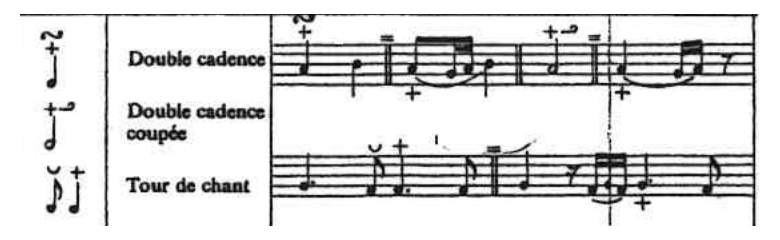
Untranscribed visual witness from Brändle’s chart, source row 8. The image preserves the printed marks in this cell but does not provide a text or machine-readable transcription of its musical contents. Open it to inspect the original-size facsimile. 3 individually catalogued examples show descriptions
These diplomatic descriptions make every audited item addressable and searchable. The chart-cell image above remains the notation witness; only entries explicitly labelled MEI are independent digital engravings.
-
Double cadence
r08-f03-aSource sign: Wavy turn-like stroke stacked above a plus sign.
Contour: Probably U1,M,L1,M
Rhythm: Compact slurred four-note turn/cadential figure.
Reading note: M: contour fits the visible note levels and the term; exact first note should be checked against Hotteterre.
-
Double cadence coupée
r08-f03-bSource sign: Plus sign with a small curled/rightward tail.
Contour: Same core contour as the double cadence, probably U1,M,L1,M, but cut off
Rhythm: A compact figure bounded by rests / detached termination rather than a continuous release.
Reading note: M contour; H that the articulation is explicitly "cut" and graphically separated.
-
Tour de chant
r08-f03-cSource sign: A lower-note v/port-de-voix sign combined with a plus over the following note.
Contour: Likely L1,M,U1,M,L1,M
Rhythm: Lower appoggiatura into a cadential turn/trill, displayed inside a short phrase with rests.
Reading note: L-M exact sequence; preserve the full contextual panel.
Jacques-Martin Hotteterre le Romain (1673–1763)
Premier livre de pièces pour la flûte traversière et autres instruments avec la basse, œuvre 2, Paris, 1708
The chart cites the work's 1708 date; the ornament table appears in the revised 1715 edition linked here.
3 variants catalogued · complete facsimile witness · MEI pending
-
-
Doppelschlag Turn / double cadence
Tour de gosier
PDF chart-cell facsimile untranscribed visual witness · all printed material in this cell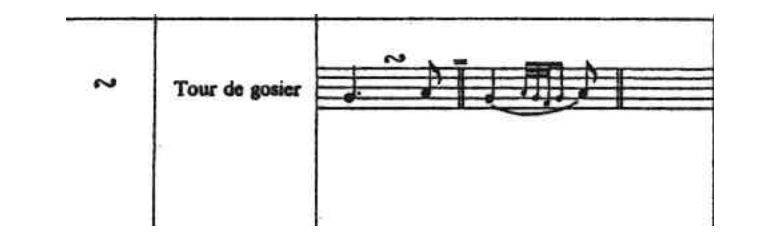
Untranscribed visual witness from Brändle’s chart, source row 8. The image preserves the printed marks in this cell but does not provide a text or machine-readable transcription of its musical contents. Open it to inspect the original-size facsimile. 1 individually catalogued example show descriptions
These diplomatic descriptions make every audited item addressable and searchable. The chart-cell image above remains the notation witness; only entries explicitly labelled MEI are independent digital engravings.
-
Tour de gosier
r08-f04-aSource sign: Small horizontal turn-like ~.
Contour: U1,M,L1,M
Rhythm: Four rapid notes under a slur after a contextual lead-in.
Reading note: H contour; M exact note values.
Jacques-Martin Hotteterre le Romain (1673–1763)
Premier livre de pièces pour la flûte traversière et autres instruments avec la basse, œuvre 2, Paris, 1708
The chart cites the work's 1708 date; the ornament table appears in the revised 1715 edition linked here.
1 variants catalogued · complete facsimile witness · MEI pending
-
-
Mordent Mordent
Battement
PDF chart-cell facsimile untranscribed visual witness · all printed material in this cell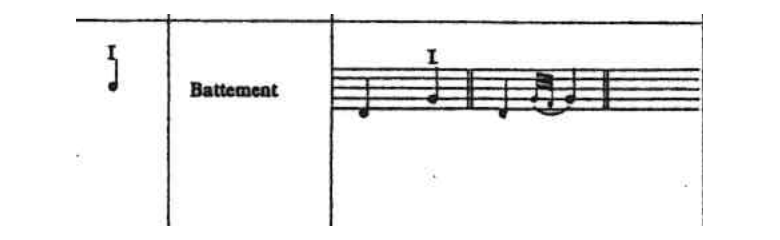
Untranscribed visual witness from Brändle’s chart, source row 8. The image preserves the printed marks in this cell but does not provide a text or machine-readable transcription of its musical contents. Open it to inspect the original-size facsimile. 1 individually catalogued example show descriptions
These diplomatic descriptions make every audited item addressable and searchable. The chart-cell image above remains the notation witness; only entries explicitly labelled MEI are independent digital engravings.
-
Battement
r08-f05-aSource sign: Roman-capital-like I above a main-note stem.
Contour: M,L1,M
Rhythm: Principal, rapid lower neighbor, return; last principal sustained.
Reading note: H.
Jacques-Martin Hotteterre le Romain (1673–1763)
Premier livre de pièces pour la flûte traversière et autres instruments avec la basse, œuvre 2, Paris, 1708
The chart cites the work's 1708 date; the ornament table appears in the revised 1715 edition linked here.
1 variants catalogued · complete facsimile witness · MEI pending
-
-
Schleifer Slide
Port de voix double
PDF chart-cell facsimile untranscribed visual witness · all printed material in this cell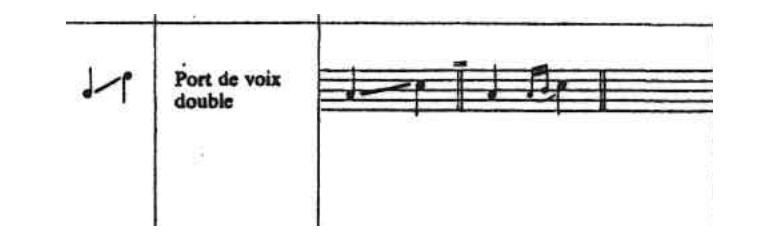
Untranscribed visual witness from Brändle’s chart, source row 8. The image preserves the printed marks in this cell but does not provide a text or machine-readable transcription of its musical contents. Open it to inspect the original-size facsimile. 1 individually catalogued example show descriptions
These diplomatic descriptions make every audited item addressable and searchable. The chart-cell image above remains the notation witness; only entries explicitly labelled MEI are independent digital engravings.
-
Port de voix double
r08-f07-aSource sign: Two noteheads joined by a rising diagonal stroke.
Contour: Probably L1,M,L1,M
Rhythm: A lower appoggiatura followed by a short lower-neighbor beat, ending on the principal.
Reading note: M; the four-stage reading matches the visible beamed realization and conventional compound form, but verify from the 1708 source.
Jacques-Martin Hotteterre le Romain (1673–1763)
Premier livre de pièces pour la flûte traversière et autres instruments avec la basse, œuvre 2, Paris, 1708
The chart cites the work's 1708 date; the ornament table appears in the revised 1715 edition linked here.
1 variants catalogued · complete facsimile witness · MEI pending
-
-
Vorschlag Appoggiatura / grace note
Port de voix coulé
PDF chart-cell facsimile untranscribed visual witness · all printed material in this cell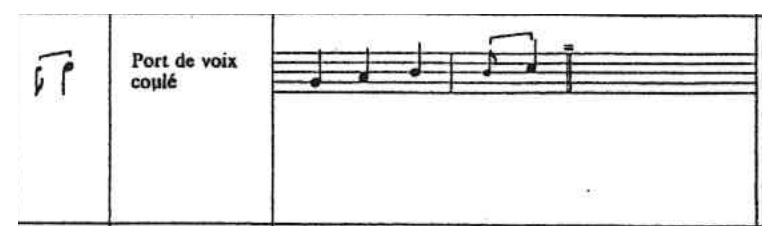
Untranscribed visual witness from Brändle’s chart, source row 9. The image preserves the printed marks in this cell but does not provide a text or machine-readable transcription of its musical contents. Open it to inspect the original-size facsimile. 1 individually catalogued example show descriptions
These diplomatic descriptions make every audited item addressable and searchable. The chart-cell image above remains the notation witness; only entries explicitly labelled MEI are independent digital engravings.
-
Port de voix coulé
r09-f01-aSource sign: Two opposed grace-like hooked stems joined by an over-bracket/slur.
Contour: L1 -> M, within a longer stepwise context
Rhythm: The final approach is shown as an evenly beamed/slurred pair; preceding quarter-note context is part of the demonstration.
Reading note: M-H contour; exact segmentation from the preceding phrase should be retained in a source-faithful view.
François Couperin (1668–1733)
Pièces de Clavecin, Livre premier, Paris, 1713
1 variants catalogued · complete facsimile witness · MEI pending
-
-
Triller Trill
Tremblement continu · Tremblement détaché · Tremblement lié sans être appuyé
PDF chart-cell facsimile untranscribed visual witness · all printed material in this cell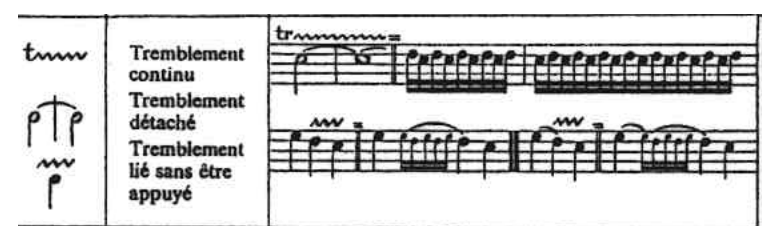
Untranscribed visual witness from Brändle’s chart, source row 9. The image preserves the printed marks in this cell but does not provide a text or machine-readable transcription of its musical contents. Open it to inspect the original-size facsimile. 3 individually catalogued examples show descriptions
These diplomatic descriptions make every audited item addressable and searchable. The chart-cell image above remains the notation witness; only entries explicitly labelled MEI are independent digital engravings.
-
Tremblement continu
r09-f02-aSource sign: tr followed by a long wavy extension.
Contour: (U1,M) repeated continuously
Rhythm: Two long groups of equal rapid notes across the full written duration; no break between groups.
Reading note: H.
-
Tremblement détaché
r09-f02-bSource sign: Two tall opposed hooked stems joined by an arch.
Contour: Approximately (U1,M)x3, beginning with a separately attacked upper note
Rhythm: Rapid oscillation after a detached/articulated onset; first of the two lower contextual panels.
Reading note: M contour; H that articulation, not pitch content, is the defining distinction.
-
Tremblement lié sans être appuyé
r09-f02-cSource sign: Short wavy line over a stemmed note.
Contour: Approximately (U1,M)x3
Rhythm: Slurred-in, unaccented trill in the second contextual panel; rapid group lies under a long slur.
Reading note: M contour/count; H slurred/unaccented distinction.
François Couperin (1668–1733)
Pièces de Clavecin, Livre premier, Paris, 1713
3 variants catalogued · complete facsimile witness · MEI pending
-
-
Trillervarianten Trill variants
Tremblement ouvert · Tremblement fermé
PDF chart-cell facsimile untranscribed visual witness · all printed material in this cell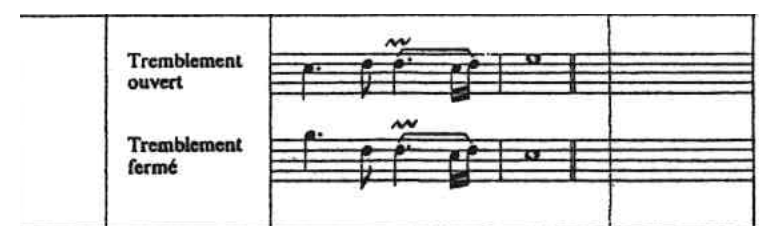
Untranscribed visual witness from Brändle’s chart, source row 9. The image preserves the printed marks in this cell but does not provide a text or machine-readable transcription of its musical contents. Open it to inspect the original-size facsimile. 2 individually catalogued examples show descriptions
These diplomatic descriptions make every audited item addressable and searchable. The chart-cell image above remains the notation witness; only entries explicitly labelled MEI are independent digital engravings.
-
Tremblement ouvert
r09-f03-aSource sign: Short wavy line over the ornamented note.
Contour: Upper-neighbor trill (U1,M)xN, with an open/non-closing release toward the following context
Rhythm: The written panel has a short rapid termination and a rest; it does not close identically to the lower example.
Reading note: L-M exact terminal pitch; the open-vs-closed distinction is clear, but the scan is not sufficient for a confident terminal degree.
-
Tremblement fermé
r09-f03-bSource sign: Short wavy line over the ornamented note.
Contour: Upper-neighbor trill (U1,M)xN, closing on M before the following rest/context
Rhythm: Compact rapid termination, visually closed back onto the principal.
Reading note: M.
François Couperin (1668–1733)
Pièces de Clavecin, Livre premier, Paris, 1713
2 variants catalogued · complete facsimile witness · MEI pending
-
-
Doppelschlag Turn / double cadence
Doublé
PDF chart-cell facsimile untranscribed visual witness · all printed material in this cell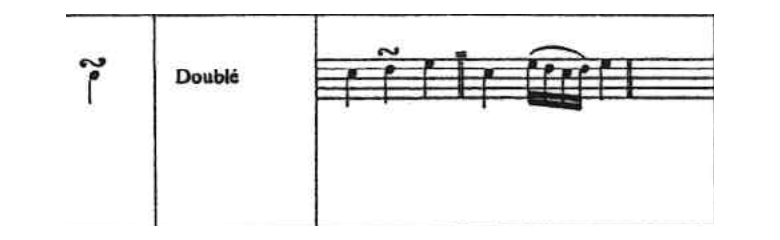
Untranscribed visual witness from Brändle’s chart, source row 9. The image preserves the printed marks in this cell but does not provide a text or machine-readable transcription of its musical contents. Open it to inspect the original-size facsimile. 1 individually catalogued example show descriptions
These diplomatic descriptions make every audited item addressable and searchable. The chart-cell image above remains the notation witness; only entries explicitly labelled MEI are independent digital engravings.
-
Doublé
r09-f04-aSource sign: Small horizontal turn sign over a main-note stem.
Contour: U1,M,L1,M
Rhythm: Four rapid notes under a slur between contextual notes.
Reading note: H.
François Couperin (1668–1733)
Pièces de Clavecin, Livre premier, Paris, 1713
1 variants catalogued · complete facsimile witness · MEI pending
-
-
Mordent Mordent
Pincé simple · Pincé double · Pincé continu
PDF chart-cell facsimile untranscribed visual witness · all printed material in this cell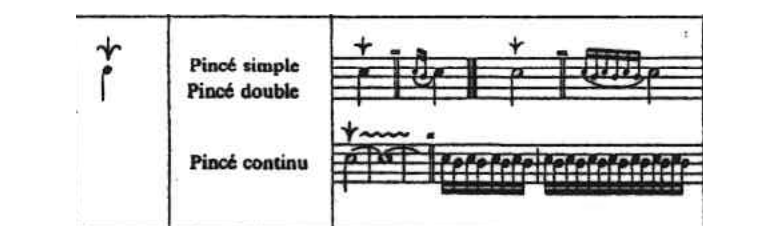
Untranscribed visual witness from Brändle’s chart, source row 9. The image preserves the printed marks in this cell but does not provide a text or machine-readable transcription of its musical contents. Open it to inspect the original-size facsimile. 3 individually catalogued examples show descriptions
These diplomatic descriptions make every audited item addressable and searchable. The chart-cell image above remains the notation witness; only entries explicitly labelled MEI are independent digital engravings.
-
Pincé simple
r09-f05-aSource sign: Fork/vertical-mordent sign above the main note.
Contour: M,L1,M
Rhythm: Three rapid notes under a short slur; last principal sustained.
Reading note: H.
-
Pincé double
r09-f05-bSource sign: Same fork-like sign.
Contour: M,L1,M,L1,M
Rhythm: Five equal rapid notes under a longer slur; last principal sustained.
Reading note: H.
-
Pincé continu
r09-f05-cSource sign: Fork sign followed by a long wavy extension.
Contour: (M,L1)xN, ending on M
Rhythm: Continuous, evenly repeated lower-neighbor oscillation across two beamed groups.
Reading note: H.
François Couperin (1668–1733)
Pièces de Clavecin, Livre premier, Paris, 1713
3 variants catalogued · complete facsimile witness · MEI pending
-
-
Mordent mit Vorhalt · Schneller · Battement Compound mordent / battement
Port de voix simple · Port de voix double
PDF chart-cell facsimile untranscribed visual witness · all printed material in this cell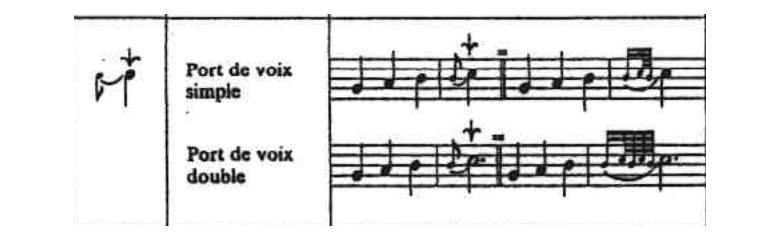
Untranscribed visual witness from Brändle’s chart, source row 9. The image preserves the printed marks in this cell but does not provide a text or machine-readable transcription of its musical contents. Open it to inspect the original-size facsimile. 2 individually catalogued examples show descriptions
These diplomatic descriptions make every audited item addressable and searchable. The chart-cell image above remains the notation witness; only entries explicitly labelled MEI are independent digital engravings.
-
Port de voix simple
r09-f06-aSource sign: Lower appoggiatura/hook leading into the fork-like pincé sign.
Contour: L1,M,L1,M
Rhythm: Lower appoggiatura followed by a single lower-neighbor beat.
Reading note: M-H.
-
Port de voix double
r09-f06-bSource sign: Same compound sign.
Contour: L1,M,L1,M,L1,M
Rhythm: Lower appoggiatura followed by a double/extended pincé, shown as a longer equal rapid group.
Reading note: M-H.
François Couperin (1668–1733)
Pièces de Clavecin, Livre premier, Paris, 1713
2 variants catalogued · complete facsimile witness · MEI pending
-
-
Schleifer Slide
Tierce coulée en montant · Tierce coulée en descendant
PDF chart-cell facsimile untranscribed visual witness · all printed material in this cell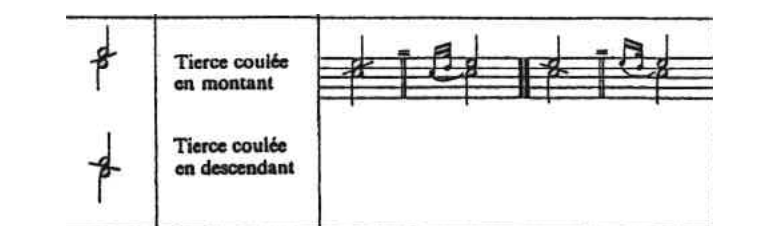
Untranscribed visual witness from Brändle’s chart, source row 9. The image preserves the printed marks in this cell but does not provide a text or machine-readable transcription of its musical contents. Open it to inspect the original-size facsimile. 2 individually catalogued examples show descriptions
These diplomatic descriptions make every audited item addressable and searchable. The chart-cell image above remains the notation witness; only entries explicitly labelled MEI are independent digital engravings.
-
Tierce coulée en montant
r09-f07-aSource sign: Tall stem crossed by an upward-slanting short stroke.
Contour: L2,L1,M
Rhythm: The middle degree fills an ascending third; the last two notes appear beamed/slurred into the arrival.
Reading note: H contour.
-
Tierce coulée en descendant
r09-f07-bSource sign: Tall stem crossed by a downward-slanting short stroke.
Contour: U2,U1,M
Rhythm: The middle degree fills a descending third; last two notes beamed/slurred into the arrival.
Reading note: H contour.
François Couperin (1668–1733)
Pièces de Clavecin, Livre premier, Paris, 1713
2 variants catalogued · complete facsimile witness · MEI pending
-
-
Vorschlag Appoggiatura / grace note
Accent fallend · Accent steigend
PDF chart-cell facsimile untranscribed visual witness · all printed material in this cell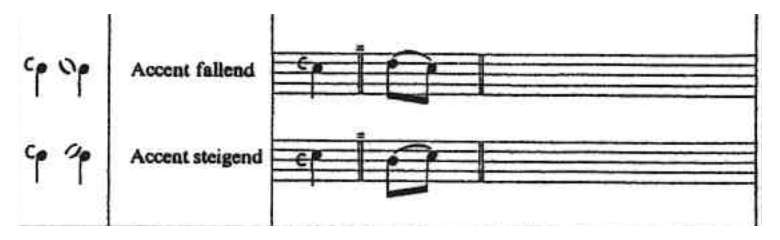
Untranscribed visual witness from Brändle’s chart, source row 10. The image preserves the printed marks in this cell but does not provide a text or machine-readable transcription of its musical contents. Open it to inspect the original-size facsimile. 4 individually catalogued examples show descriptions
These diplomatic descriptions make every audited item addressable and searchable. The chart-cell image above remains the notation witness; only entries explicitly labelled MEI are independent digital engravings.
-
Accent fallend
r10-f01-a1Source sign: Left-facing c/hook attached to the note stem.
Contour: U1 -> M
Rhythm: Two beamed notes under a slur, descending into the principal.
Reading note: H. Shares realization with a2.
-
Accent fallend
r10-f01-a2Source sign: Oval/diagonal falling stroke attached to the notehead/stem.
Contour: Same U1 -> M realization as a1.
Rhythm: Same.
Reading note: H graphical alternative.
-
Accent steigend
r10-f01-b1Source sign: Left-facing c/hook attached to the stem.
Contour: L1 -> M
Rhythm: Two beamed notes under a slur, ascending into the principal.
Reading note: H. Shares realization with b2.
-
Accent steigend
r10-f01-b2Source sign: Rising double-stroke/oval mark attached to the notehead/stem.
Contour: Same L1 -> M realization as b1.
Rhythm: Same.
Reading note: H graphical alternative.
Johann Sebastian Bach (1685–1750)
Clavierbüchlein für Wilhelm Friedemann Bach, Köthen, 1720
The ornament explanation is in the autograph Clavier-Büchlein, folio 3v.
4 variants catalogued · complete facsimile witness · MEI pending
-
-
Triller Trill
Trillo · Accent und Trillo
PDF chart-cell facsimile untranscribed visual witness · all printed material in this cell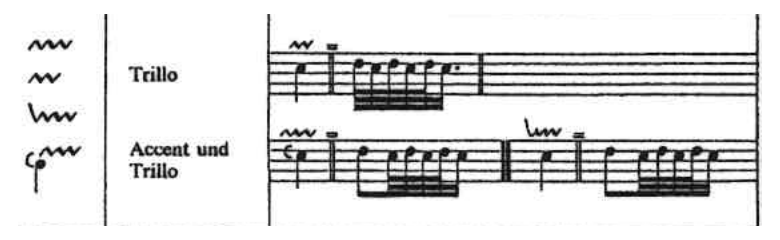
Untranscribed visual witness from Brändle’s chart, source row 10. The image preserves the printed marks in this cell but does not provide a text or machine-readable transcription of its musical contents. Open it to inspect the original-size facsimile. 5 individually catalogued examples show descriptions
These diplomatic descriptions make every audited item addressable and searchable. The chart-cell image above remains the notation witness; only entries explicitly labelled MEI are independent digital engravings.
-
Trillo
r10-f02-a1Source sign: Short horizontal wavy line.
Contour: (U1,M)x3
Rhythm: Six equal rapid notes (three-beam group), with final principal lengthened/dotted in the chart transcription.
Reading note: H sequence; shares realization with a2/a3.
-
Trillo
r10-f02-a2Source sign: Slightly longer/reversed wavy line.
Contour: Same as a1.
Rhythm: Same.
Reading note: H graphical alternative.
-
Trillo
r10-f02-a3Source sign: Wavy line with a pronounced descending initial hook.
Contour: Same as a1.
Rhythm: Same.
Reading note: H graphical alternative.
-
Accent und Trillo
r10-f02-b1Source sign: Composite accent hook plus wavy trill, upper/falling orientation.
Contour: U1 (accented/lengthened) -> M, then approximately (U1,M)x2
Rhythm: The accent onset is longer than the following rapid trill notes.
Reading note: M-H; first of two direction/context realizations.
-
Accent und Trillo
r10-f02-b2Source sign: Composite sign with a pronounced descending-left hook before the wavy trill.
Contour: L1 (accented/lengthened) -> M, then approximately (U1,M)x2
Rhythm: Lower/rising accent onset followed by a rapid upper-neighbor trill.
Reading note: M-H; second direction variant.
Trillo
顫音Encoded source sign
Written-out realization
Upper neighbor - main note, repeated three times.
Modern treble-clef transcription. Relative pitch and the six-note alternation follow Bach's table; the final note retains its dot.
Checked against autograph ornament table, fol. 3v. View autograph Catalogue record
Johann Sebastian Bach, Beinecke Rare Book and Manuscript Library, Yale University, Music Deposit 31 (public domain)
Johann Sebastian Bach (1685–1750)
Clavierbüchlein für Wilhelm Friedemann Bach, Köthen, 1720
The ornament explanation is in the autograph Clavier-Büchlein, folio 3v.
5 variants catalogued · source-verified MEI available
-
-
Trillervarianten Trill variants
Doppelt-Cadence · Doppelt-Cadence und Mordant
PDF chart-cell facsimile untranscribed visual witness · all printed material in this cell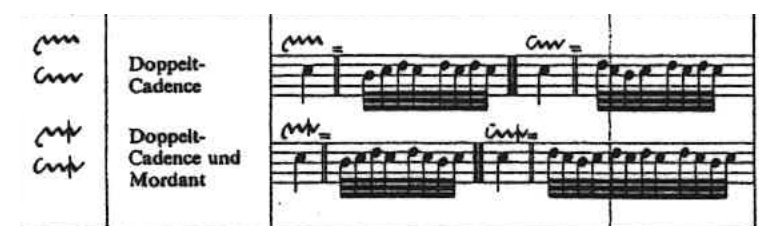
Untranscribed visual witness from Brändle’s chart, source row 10. The image preserves the printed marks in this cell but does not provide a text or machine-readable transcription of its musical contents. Open it to inspect the original-size facsimile. 4 individually catalogued examples show descriptions
These diplomatic descriptions make every audited item addressable and searchable. The chart-cell image above remains the notation witness; only entries explicitly labelled MEI are independent digital engravings.
-
Doppelt-Cadence
r10-f03-a1Source sign: Wavy line with an upper/left opening hook.
Contour: Likely U1,M,L1,M,(U1,M)x2
Rhythm: One continuous equal rapid group, beginning with a four-note turn and continuing as a trill.
Reading note: M; upper-start variant.
-
Doppelt-Cadence
r10-f03-a2Source sign: Wavy line with a lower/left opening hook.
Contour: Likely L1,M,U1,M,(U1,M)x2
Rhythm: Same rapid grouping, lower-start mirror.
Reading note: M; lower-start variant.
-
Doppelt-Cadence und Mordant
r10-f03-b1Source sign: Upper-start double-cadence sign ending with a vertical mordent stroke.
Contour: U1,M,L1,M,(U1,M)x2,L1,M
Rhythm: Continuous equal rapid group; lower-neighbor mordent appended to the double cadence.
Reading note: M.
-
Doppelt-Cadence und Mordant
r10-f03-b2Source sign: Lower-start mirror sign ending with a vertical mordent stroke.
Contour: L1,M,U1,M,(U1,M)x2,L1,M
Rhythm: Longer equal rapid group; same mordent termination.
Reading note: M.
Johann Sebastian Bach (1685–1750)
Clavierbüchlein für Wilhelm Friedemann Bach, Köthen, 1720
The ornament explanation is in the autograph Clavier-Büchlein, folio 3v.
4 variants catalogued · complete facsimile witness · MEI pending
-
-
Doppelschlag Turn / double cadence
Cadence
PDF chart-cell facsimile untranscribed visual witness · all printed material in this cell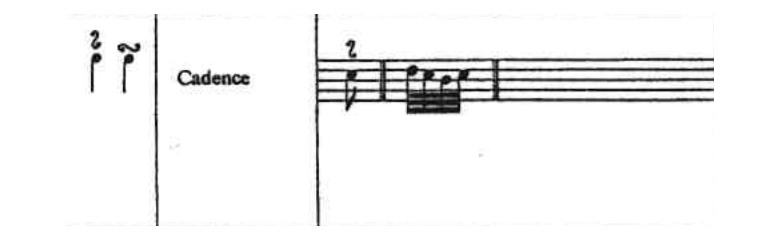
Untranscribed visual witness from Brändle’s chart, source row 10. The image preserves the printed marks in this cell but does not provide a text or machine-readable transcription of its musical contents. Open it to inspect the original-size facsimile. 2 individually catalogued examples show descriptions
These diplomatic descriptions make every audited item addressable and searchable. The chart-cell image above remains the notation witness; only entries explicitly labelled MEI are independent digital engravings.
-
Cadence
r10-f04-a1Source sign: Vertical turned-S / question-mark-like sign over the principal.
Contour: U1,M,L1,M
Rhythm: Four equal rapid notes (three-beam group).
Reading note: H. Shares realization with a2.
-
Cadence
r10-f04-a2Source sign: More horizontal turn-shaped form over the principal.
Contour: Same U1,M,L1,M.
Rhythm: Same.
Reading note: H graphical alternative.
Cadence
迴音Encoded source sign
Written-out realization
Upper neighbor - main note - lower neighbor - main note.
Modern treble-clef transcription. The source sign is normalized to MEI's standard turn glyph; the four-note realization follows Bach's table.
Checked against autograph ornament table, fol. 3v. View autograph Catalogue record
Johann Sebastian Bach, Beinecke Rare Book and Manuscript Library, Yale University, Music Deposit 31 (public domain)
Johann Sebastian Bach (1685–1750)
Clavierbüchlein für Wilhelm Friedemann Bach, Köthen, 1720
The ornament explanation is in the autograph Clavier-Büchlein, folio 3v.
2 variants catalogued · source-verified MEI available
-
-
Mordent Mordent
Mordant · Trillo und Mordant
PDF chart-cell facsimile untranscribed visual witness · all printed material in this cell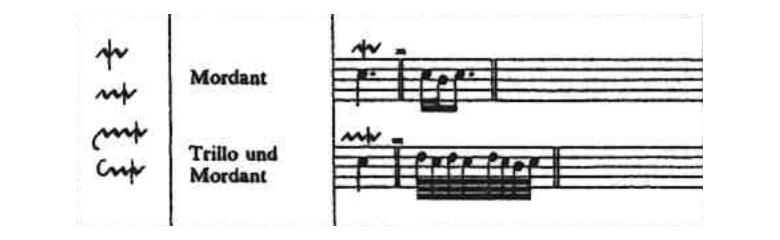
Untranscribed visual witness from Brändle’s chart, source row 10. The image preserves the printed marks in this cell but does not provide a text or machine-readable transcription of its musical contents. Open it to inspect the original-size facsimile. 4 individually catalogued examples show descriptions
These diplomatic descriptions make every audited item addressable and searchable. The chart-cell image above remains the notation witness; only entries explicitly labelled MEI are independent digital engravings.
-
Mordant
r10-f05-a1Source sign: Vertical/fork-like mordent sign.
Contour: M,L1,M
Rhythm: Two short notes plus a lengthened/dotted final principal.
Reading note: H. Shares realization with a2.
-
Mordant
r10-f05-a2Source sign: Horizontal wavy sign crossed by a vertical stroke.
Contour: Same M,L1,M.
Rhythm: Same.
Reading note: H graphical alternative.
-
Trillo und Mordant
r10-f05-b1Source sign: Upper-start wavy trill ending in a vertical mordent stroke.
Contour: Approximately (U1,M)x3,L1,M
Rhythm: One continuous rapid group with lower-neighbor termination.
Reading note: H contour; M exact number of pre-terminal alternations. Shares realization with b2.
-
Trillo und Mordant
r10-f05-b2Source sign: Lower/left-hooked wavy form ending in the same vertical stroke.
Contour: Same realization as b1.
Rhythm: Same.
Reading note: H graphical alternative.
Mordant
下波音Encoded source sign
Written-out realization
Main note - lower neighbor - main note.
Modern treble-clef transcription. Bach's crossed sign is encoded semantically as a lower mordent.
Checked against autograph ornament table, fol. 3v. View autograph Catalogue record
Johann Sebastian Bach, Beinecke Rare Book and Manuscript Library, Yale University, Music Deposit 31 (public domain)
Johann Sebastian Bach (1685–1750)
Clavierbüchlein für Wilhelm Friedemann Bach, Köthen, 1720
The ornament explanation is in the autograph Clavier-Büchlein, folio 3v.
4 variants catalogued · source-verified MEI available
-
-
Mordent mit Vorhalt · Schneller · Battement Compound mordent / battement
Accent und Mordant
PDF chart-cell facsimile untranscribed visual witness · all printed material in this cell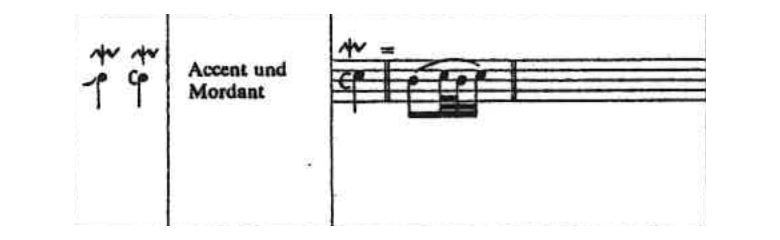
Untranscribed visual witness from Brändle’s chart, source row 10. The image preserves the printed marks in this cell but does not provide a text or machine-readable transcription of its musical contents. Open it to inspect the original-size facsimile. 2 individually catalogued examples show descriptions
These diplomatic descriptions make every audited item addressable and searchable. The chart-cell image above remains the notation witness; only entries explicitly labelled MEI are independent digital engravings.
-
Accent und Mordant
r10-f06-a1Source sign: Accent hook combined with a crossed wavy mordent.
Contour: Probably U1,M,L1,M
Rhythm: Accented/appoggiatura onset followed by a three-note lower mordent; the last principal is sustained.
Reading note: M. Shares realization with a2.
-
Accent und Mordant
r10-f06-a2Source sign: Alternate orientation of the accent hook attached to the same crossed-wavy mordent.
Contour: Same realization as a1.
Rhythm: Same.
Reading note: H graphical alternative; M pitch sequence.
Johann Sebastian Bach (1685–1750)
Clavierbüchlein für Wilhelm Friedemann Bach, Köthen, 1720
The ornament explanation is in the autograph Clavier-Büchlein, folio 3v.
2 variants catalogued · complete facsimile witness · MEI pending
-
-
Schleifer Slide
Schleifer
PDF chart-cell facsimile untranscribed visual witness · all printed material in this cell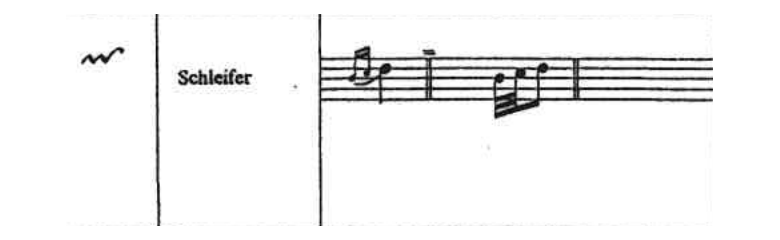
Untranscribed visual witness from Brändle’s chart, source row 10. The image preserves the printed marks in this cell but does not provide a text or machine-readable transcription of its musical contents. Open it to inspect the original-size facsimile. 1 individually catalogued example show descriptions
These diplomatic descriptions make every audited item addressable and searchable. The chart-cell image above remains the notation witness; only entries explicitly labelled MEI are independent digital engravings.
-
Schleifer
r10-f07-aSource sign: Short wavy line with an upward-curving right tail.
Contour: L2,L1,M
Rhythm: Three rising notes; first two are short/rapid and the arrival is longer.
Reading note: H contour.
Johann Sebastian Bach (1685–1750)
Clavierbüchlein für Wilhelm Friedemann Bach, Köthen, 1720
The ornament explanation is in the autograph Clavier-Büchlein, folio 3v.
1 variants catalogued · complete facsimile witness · MEI pending
-
-
Vorschlag Appoggiatura / grace note
[term not printed]
PDF chart-cell facsimile untranscribed visual witness · all printed material in this cell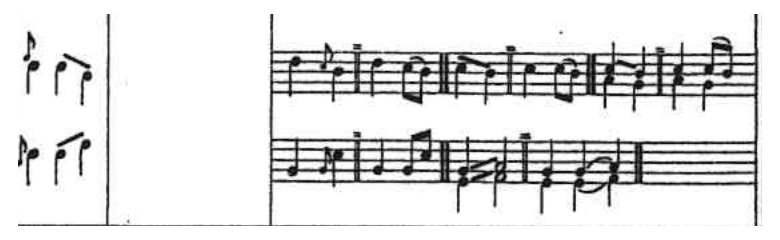
Untranscribed visual witness from Brändle’s chart, source row 11. The image preserves the printed marks in this cell but does not provide a text or machine-readable transcription of its musical contents. Open it to inspect the original-size facsimile. 6 individually catalogued examples show descriptions
These diplomatic descriptions make every audited item addressable and searchable. The chart-cell image above remains the notation witness; only entries explicitly labelled MEI are independent digital engravings.
-
Upper-row form 1: small flagged auxiliary attached immediately before/above a main stem.
r11-f01-aSource sign: Upper-row form 1: small flagged auxiliary attached immediately before/above a main stem.
Contour: Stepwise appoggiatura into M; direction is probably from U1.
Rhythm: Short auxiliary resolving into a longer note inside the upper contextual line.
Reading note: L-M pitch; H that the sign exists as a distinct form.
-
Upper-row form 2: main stem with an oblique rising stroke to the right.
r11-f01-bSource sign: Upper-row form 2: main stem with an oblique rising stroke to the right.
Contour: Stepwise approach into or away from M; likely L1 -> M.
Rhythm: Two-note slurred/appoggiatura gesture in the upper context.
Reading note: L pitch/direction.
-
Upper-row form 3: oblique falling stroke joining a main stem to a lower following note.
r11-f01-cSource sign: Upper-row form 3: oblique falling stroke joining a main stem to a lower following note.
Contour: Clearly descending stepwise gesture, approximately U1 -> M or M -> L1 depending normalization.
Rhythm: Two-note fall under a slur, embedded in the upper context.
Reading note: M contour, L principal assignment.
-
Lower-row form 1: small flagged note immediately left of a main stem/note.
r11-f01-dSource sign: Lower-row form 1: small flagged note immediately left of a main stem/note.
Contour: Stepwise lower approach into M, likely L1 -> M.
Rhythm: Short pre-note into a longer principal in the lower contextual line.
Reading note: M.
-
Lower-row form 2: main stem with a rising oblique stroke.
r11-f01-eSource sign: Lower-row form 2: main stem with a rising oblique stroke.
Contour: Rising stepwise approach or release around M.
Rhythm: Two-note slurred gesture in the lower context.
Reading note: L pitch assignment.
-
Lower-row form 3: plain/short main-stem form paired with the preceding oblique form in the printed sign cluster.
r11-f01-fSource sign: Lower-row form 3: plain/short main-stem form paired with the preceding oblique form in the printed sign cluster.
Contour: Context shows another stepwise appoggiatura/resolution in the lower voice.
Rhythm: Embedded in a polyphonic/chordal example rather than isolated.
Reading note: L. Keep the complete lower contextual line until source verification allows segmentation.
Gottlieb Muffat (1690–1770)
Componimenti Musicali per il Cembalo, Wien, 1727
Chart citation retained literally; modern cataloguing places the publication in Augsburg, undated [c. 1739], rather than Vienna 1727.
6 variants catalogued · complete facsimile witness · MEI pending
-
-
Triller Trill
[term not printed]
PDF chart-cell facsimile untranscribed visual witness · all printed material in this cell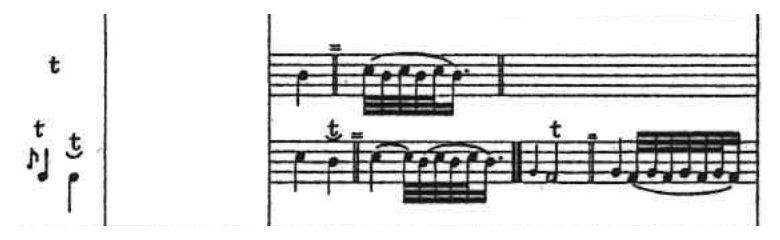
Untranscribed visual witness from Brändle’s chart, source row 11. The image preserves the printed marks in this cell but does not provide a text or machine-readable transcription of its musical contents. Open it to inspect the original-size facsimile. 3 individually catalogued examples show descriptions
These diplomatic descriptions make every audited item addressable and searchable. The chart-cell image above remains the notation witness; only entries explicitly labelled MEI are independent digital engravings.
-
Lowercase t above the principal.
r11-f02-aSource sign: Lowercase t above the principal.
Contour: (U1,M)x3, ending on M
Rhythm: Compact rapid group under a long slur after a sustained onset.
Reading note: M-H.
-
Composite: t plus small-note/main-note figures in the sign column.
r11-f02-bSource sign: Composite: t plus small-note/main-note figures in the sign column.
Contour: Upper or lower appoggiatura into a trill; approximately U1 held -> M,(U1,M)x2
Rhythm: Long supported onset followed by a rapid alternation.
Reading note: M contour; exact appoggiatura direction should be source-checked.
-
t with a curved-underlined form beside a main-note stem.
r11-f02-cSource sign: t with a curved-underlined form beside a main-note stem.
Contour: Repeated neighbor oscillation around M, possibly lower-neighbor (M,L1)x4
Rhythm: Long, even rapid group under an under-slur/tie after a sustained attack.
Reading note: L-M; direction of the neighbor is not fully secure in the table scan.
Gottlieb Muffat (1690–1770)
Componimenti Musicali per il Cembalo, Wien, 1727
Chart citation retained literally; modern cataloguing places the publication in Augsburg, undated [c. 1739], rather than Vienna 1727.
3 variants catalogued · complete facsimile witness · MEI pending
-
-
Trillervarianten Trill variants
[term not printed]
PDF chart-cell facsimile untranscribed visual witness · all printed material in this cell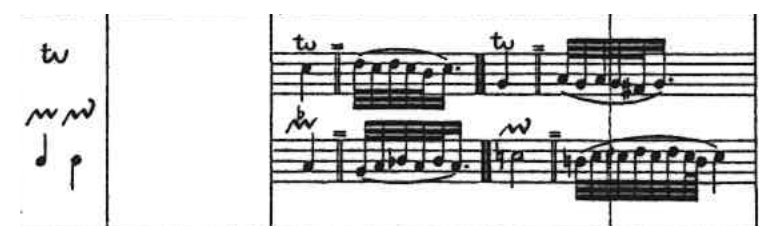
Untranscribed visual witness from Brändle’s chart, source row 11. The image preserves the printed marks in this cell but does not provide a text or machine-readable transcription of its musical contents. Open it to inspect the original-size facsimile. 4 individually catalogued examples show descriptions
These diplomatic descriptions make every audited item addressable and searchable. The chart-cell image above remains the notation witness; only entries explicitly labelled MEI are independent digital engravings.
-
tw ligature.
r11-f03-aSource sign: tw ligature.
Contour: Cadential/trill figure, approximately U1,M,U1,M,L1,M
Rhythm: Rapid equal group under a broad slur, closing on a longer principal.
Reading note: L-M exact order.
-
Same tw ligature in a second context.
r11-f03-bSource sign: Same tw ligature in a second context.
Contour: Trill with turned/lower-neighbor termination around M.
Rhythm: Longer rapid group, under-slurred, with a clearly different terminal contour from a.
Reading note: L exact order; retain full panel.
-
Two wavy strokes, one with an initial/lower hook, paired with a note-stem sign.
r11-f03-cSource sign: Two wavy strokes, one with an initial/lower hook, paired with a note-stem sign.
Contour: Lower-start double-cadence-like figure, likely L1,M,U1,M,L1,M.
Rhythm: One dense equal rapid group under a slur.
Reading note: M contour family, L exact count.
-
Wavy sign with upward-curved tail paired with a second note-stem form.
r11-f03-dSource sign: Wavy sign with upward-curved tail paired with a second note-stem form.
Contour: Upper-neighbor trill/cadence with extended alternation and closing return to M.
Rhythm: Longest dense equal-note group of this Muffat cell, under a broad slur.
Reading note: L-M exact sequence/count.
Gottlieb Muffat (1690–1770)
Componimenti Musicali per il Cembalo, Wien, 1727
Chart citation retained literally; modern cataloguing places the publication in Augsburg, undated [c. 1739], rather than Vienna 1727.
4 variants catalogued · complete facsimile witness · MEI pending
-
-
Doppelschlag Turn / double cadence
[term not printed]
PDF chart-cell facsimile untranscribed visual witness · all printed material in this cell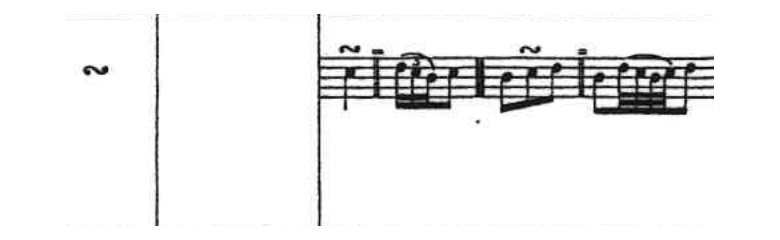
Untranscribed visual witness from Brändle’s chart, source row 11. The image preserves the printed marks in this cell but does not provide a text or machine-readable transcription of its musical contents. Open it to inspect the original-size facsimile. 2 individually catalogued examples show descriptions
These diplomatic descriptions make every audited item addressable and searchable. The chart-cell image above remains the notation witness; only entries explicitly labelled MEI are independent digital engravings.
-
Small horizontal ~ turn sign.
r11-f04-aSource sign: Small horizontal ~ turn sign.
Contour: U1,M,L1,M
Rhythm: Compact four-note rapid turn under a slur.
Reading note: H contour.
-
Same sign in a prepared melodic context.
r11-f04-bSource sign: Same sign in a prepared melodic context.
Contour: Contextual approach -> U1,M,L1,M -> following M/ctx
Rhythm: Turn is embedded after two preparatory notes; four rapid notes under a long slur.
Reading note: M-H.
Gottlieb Muffat (1690–1770)
Componimenti Musicali per il Cembalo, Wien, 1727
Chart citation retained literally; modern cataloguing places the publication in Augsburg, undated [c. 1739], rather than Vienna 1727.
2 variants catalogued · complete facsimile witness · MEI pending
-
-
Mordent Mordent
[term not printed]
PDF chart-cell facsimile untranscribed visual witness · all printed material in this cell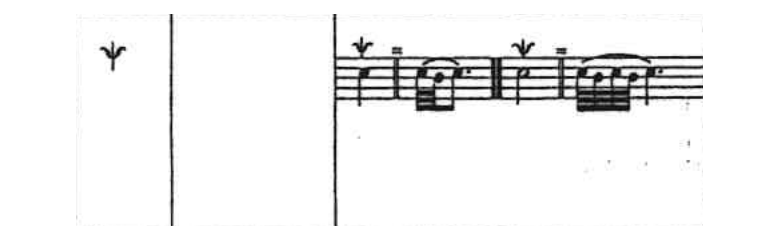
Untranscribed visual witness from Brändle’s chart, source row 11. The image preserves the printed marks in this cell but does not provide a text or machine-readable transcription of its musical contents. Open it to inspect the original-size facsimile. 2 individually catalogued examples show descriptions
These diplomatic descriptions make every audited item addressable and searchable. The chart-cell image above remains the notation witness; only entries explicitly labelled MEI are independent digital engravings.
-
Fork/vertical-mordent sign.
r11-f05-aSource sign: Fork/vertical-mordent sign.
Contour: M,L1,M
Rhythm: Short three-note lower mordent under a slur.
Reading note: H.
-
Same sign in a longer form.
r11-f05-bSource sign: Same sign in a longer form.
Contour: M,L1,M,L1,M
Rhythm: Five-note/double lower mordent under a longer slur.
Reading note: H contour; M exact note count.
Gottlieb Muffat (1690–1770)
Componimenti Musicali per il Cembalo, Wien, 1727
Chart citation retained literally; modern cataloguing places the publication in Augsburg, undated [c. 1739], rather than Vienna 1727.
2 variants catalogued · complete facsimile witness · MEI pending
-
-
Mordent mit Vorhalt · Schneller · Battement Compound mordent / battement
[term not printed]
PDF chart-cell facsimile untranscribed visual witness · all printed material in this cell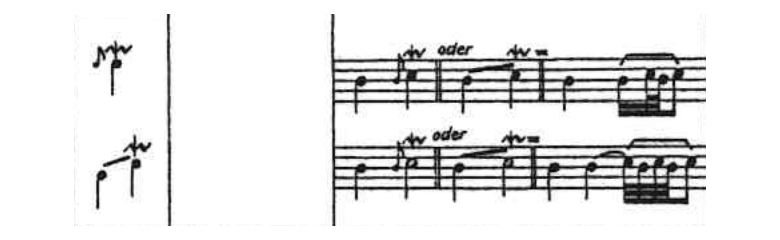
Untranscribed visual witness from Brändle’s chart, source row 11. The image preserves the printed marks in this cell but does not provide a text or machine-readable transcription of its musical contents. Open it to inspect the original-size facsimile. 4 individually catalogued examples show descriptions
These diplomatic descriptions make every audited item addressable and searchable. The chart-cell image above remains the notation witness; only entries explicitly labelled MEI are independent digital engravings.
-
Upper compound: small upper appoggiatura with mordent sign placed on the small note.
r11-f06-a1Source sign: Upper compound: small upper appoggiatura with mordent sign placed on the small note.
Contour: Probably U1,M,L1,M
Rhythm: Appoggiatura followed immediately by a short lower mordent, under a slur.
Reading note: M. Shares realization with a2.
-
Upper compound oder: same melodic source, mordent sign moved to the principal note.
r11-f06-a2Source sign: Upper compound oder: same melodic source, mordent sign moved to the principal note.
Contour: Same as a1.
Rhythm: Same.
Reading note: H as a distinct sign-placement alternative; M pitches.
-
Lower compound: oblique rising approach into a principal, mordent sign on the approach/small note.
r11-f06-b1Source sign: Lower compound: oblique rising approach into a principal, mordent sign on the approach/small note.
Contour: Probably L1,M,L1,M,L1,M
Rhythm: Rising appoggiatura/slide followed by a longer or double mordent.
Reading note: L-M exact count. Shares realization with b2.
-
Lower compound oder: same source contour, sign moved to the principal.
r11-f06-b2Source sign: Lower compound oder: same source contour, sign moved to the principal.
Contour: Same as b1.
Rhythm: Same.
Reading note: H sign-placement alternative; L-M exact count.
Gottlieb Muffat (1690–1770)
Componimenti Musicali per il Cembalo, Wien, 1727
Chart citation retained literally; modern cataloguing places the publication in Augsburg, undated [c. 1739], rather than Vienna 1727.
4 variants catalogued · complete facsimile witness · MEI pending
-
-
Schleifer Slide
[term not printed]
PDF chart-cell facsimile untranscribed visual witness · all printed material in this cell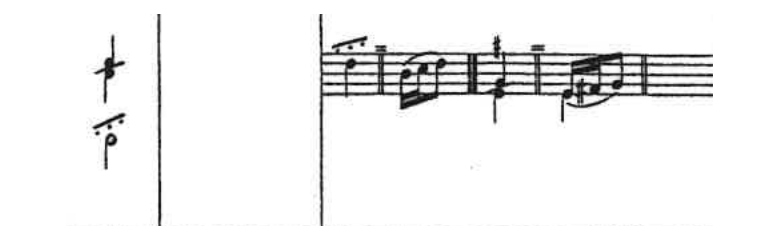
Untranscribed visual witness from Brändle’s chart, source row 11. The image preserves the printed marks in this cell but does not provide a text or machine-readable transcription of its musical contents. Open it to inspect the original-size facsimile. 2 individually catalogued examples show descriptions
These diplomatic descriptions make every audited item addressable and searchable. The chart-cell image above remains the notation witness; only entries explicitly labelled MEI are independent digital engravings.
-
Tall stem crossed by a short oblique/looped stroke.
r11-f07-aSource sign: Tall stem crossed by a short oblique/looped stroke.
Contour: L2,L1,M
Rhythm: Two short rising notes into a longer arrival, under a slur.
Reading note: M-H.
-
Oblique beam-like stroke with two small dots above a stemmed note.
r11-f07-bSource sign: Oblique beam-like stroke with two small dots above a stemmed note.
Contour: Rising three-step fill into M, likely L2,L1,M; one auxiliary may be chromatically altered.
Rhythm: Longer beamed rising figure under a slur, in a second register/context.
Reading note: M contour; L accidental and exact number of preparatory notes.
Gottlieb Muffat (1690–1770)
Componimenti Musicali per il Cembalo, Wien, 1727
Chart citation retained literally; modern cataloguing places the publication in Augsburg, undated [c. 1739], rather than Vienna 1727.
2 variants catalogued · complete facsimile witness · MEI pending
-
-
Vorschlag Appoggiatura / grace note
Port de voix · Coulez
PDF chart-cell facsimile untranscribed visual witness · all printed material in this cell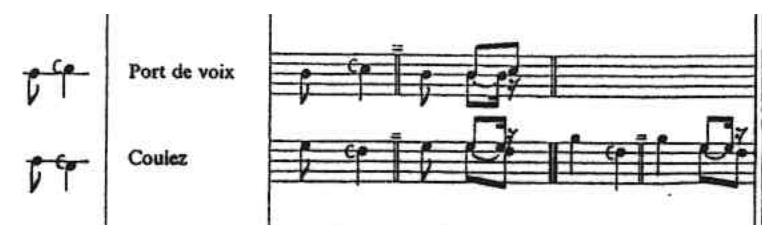
Untranscribed visual witness from Brändle’s chart, source row 12. The image preserves the printed marks in this cell but does not provide a text or machine-readable transcription of its musical contents. Open it to inspect the original-size facsimile. 3 individually catalogued examples show descriptions
These diplomatic descriptions make every audited item addressable and searchable. The chart-cell image above remains the notation witness; only entries explicitly labelled MEI are independent digital engravings.
-
Port de voix
r12-f01-aSource sign: Small lower-hook/appoggiatura form attached before a main stem.
Contour: L1 -> M
Rhythm: Lower appoggiatura in context; the realization is a short beamed/slurred approach into the principal.
Reading note: H contour; M exact duration.
-
Coulez
r12-f01-b1Source sign: Oblique rising line joining two contextual noteheads, first placement.
Contour: Ascending filled third, likely L2,L1,M
Rhythm: Passing middle degree is inserted as a short beamed note into the arrival.
Reading note: M-H.
-
Coulez
r12-f01-b2Source sign: Same oblique joined-note sign repeated after the internal double bar in a second context/register.
Contour: Same ascending stepwise fill, transposed/contextualized.
Rhythm: Same passing-note realization in a second placement.
Reading note: M-H. This second panel is visibly separate and should not be dropped.
Jean-Philippe Rameau (1683–1764)
Pièces de Clavecin, deuxième livre, Paris, 1731
3 variants catalogued · complete facsimile witness · MEI pending
-
-
Triller Trill
Cadence · Cadence appuyée
PDF chart-cell facsimile untranscribed visual witness · all printed material in this cell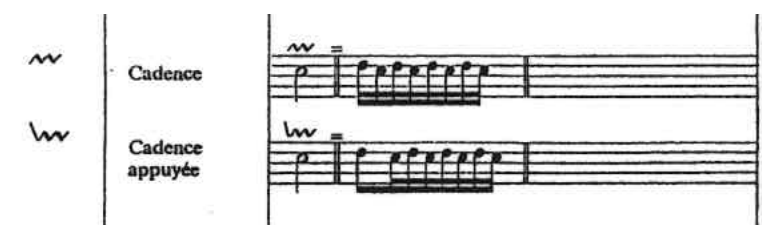
Untranscribed visual witness from Brändle’s chart, source row 12. The image preserves the printed marks in this cell but does not provide a text or machine-readable transcription of its musical contents. Open it to inspect the original-size facsimile. 2 individually catalogued examples show descriptions
These diplomatic descriptions make every audited item addressable and searchable. The chart-cell image above remains the notation witness; only entries explicitly labelled MEI are independent digital engravings.
-
Cadence
r12-f02-aSource sign: Short horizontal wavy line.
Contour: (U1,M)x4, ending on M
Rhythm: Even rapid group of about eight notes after the principal/source sign.
Reading note: H alternation; M exact count.
-
Cadence appuyée
r12-f02-bSource sign: Wavy line with a pronounced descending initial hook.
Contour: U1 held/supported, then approximately (M,U1)x3, ending on M
Rhythm: Long appoggiatura/support note followed by rapid equal trill notes.
Reading note: M-H.
Jean-Philippe Rameau (1683–1764)
Pièces de Clavecin, deuxième livre, Paris, 1731
2 variants catalogued · complete facsimile witness · MEI pending
-
-
Trillervarianten Trill variants
Double Cadence
PDF chart-cell facsimile untranscribed visual witness · all printed material in this cell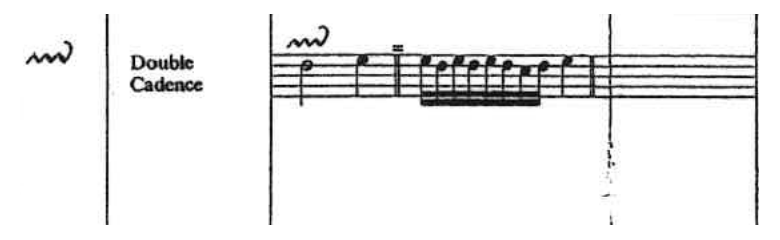
Untranscribed visual witness from Brändle’s chart, source row 12. The image preserves the printed marks in this cell but does not provide a text or machine-readable transcription of its musical contents. Open it to inspect the original-size facsimile. 1 individually catalogued example show descriptions
These diplomatic descriptions make every audited item addressable and searchable. The chart-cell image above remains the notation witness; only entries explicitly labelled MEI are independent digital engravings.
-
Double Cadence
r12-f03-aSource sign: Wavy line with an upward-curved terminal hook.
Contour: Likely U1,M,L1,M,(U1,M)x2
Rhythm: Continuous rapid equal-note group combining turn and trill.
Reading note: M exact order/count.
Jean-Philippe Rameau (1683–1764)
Pièces de Clavecin, deuxième livre, Paris, 1731
1 variants catalogued · complete facsimile witness · MEI pending
-
-
Doppelschlag Turn / double cadence
Double
PDF chart-cell facsimile untranscribed visual witness · all printed material in this cell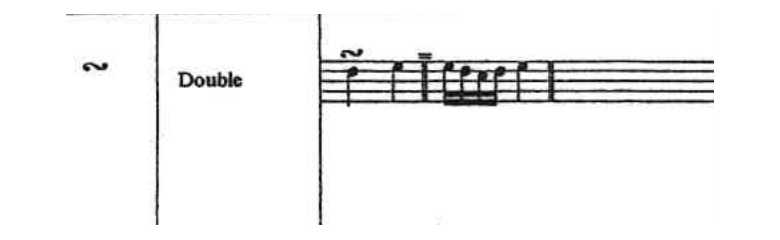
Untranscribed visual witness from Brändle’s chart, source row 12. The image preserves the printed marks in this cell but does not provide a text or machine-readable transcription of its musical contents. Open it to inspect the original-size facsimile. 1 individually catalogued example show descriptions
These diplomatic descriptions make every audited item addressable and searchable. The chart-cell image above remains the notation witness; only entries explicitly labelled MEI are independent digital engravings.
-
Double
r12-f04-aSource sign: Small horizontal ~ turn sign.
Contour: U1,M,L1,M
Rhythm: Compact four-note rapid turn between contextual notes.
Reading note: H.
Jean-Philippe Rameau (1683–1764)
Pièces de Clavecin, deuxième livre, Paris, 1731
1 variants catalogued · complete facsimile witness · MEI pending
-
-
Mordent Mordent
Pincé
PDF chart-cell facsimile untranscribed visual witness · all printed material in this cell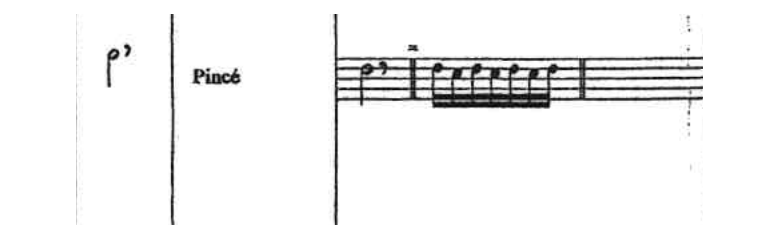
Untranscribed visual witness from Brändle’s chart, source row 12. The image preserves the printed marks in this cell but does not provide a text or machine-readable transcription of its musical contents. Open it to inspect the original-size facsimile. 1 individually catalogued example show descriptions
These diplomatic descriptions make every audited item addressable and searchable. The chart-cell image above remains the notation witness; only entries explicitly labelled MEI are independent digital engravings.
-
Pincé
r12-f05-aSource sign: Main-note stem with a small right-facing curled mark (p-like).
Contour: (M,L1)x4, ending on M
Rhythm: Extended rapid lower-neighbor pincé, about eight notes in one dense beamed group.
Reading note: M-H; exact count from scan is about eight.
Jean-Philippe Rameau (1683–1764)
Pièces de Clavecin, deuxième livre, Paris, 1731
1 variants catalogued · complete facsimile witness · MEI pending
-
-
Mordent mit Vorhalt · Schneller · Battement Compound mordent / battement
Pincé et port de voix
PDF chart-cell facsimile untranscribed visual witness · all printed material in this cell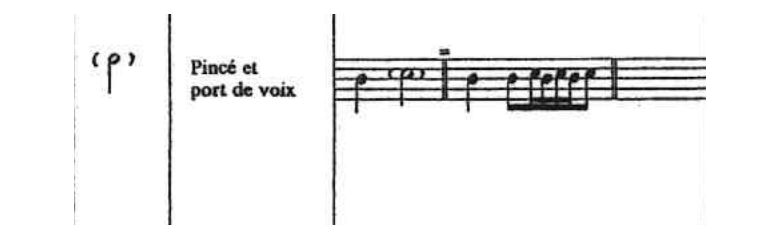
Untranscribed visual witness from Brändle’s chart, source row 12. The image preserves the printed marks in this cell but does not provide a text or machine-readable transcription of its musical contents. Open it to inspect the original-size facsimile. 1 individually catalogued example show descriptions
These diplomatic descriptions make every audited item addressable and searchable. The chart-cell image above remains the notation witness; only entries explicitly labelled MEI are independent digital engravings.
-
Pincé et port de voix
r12-f06-aSource sign: Pincé stem/sign enclosed by small parentheses/hooks.
Contour: Likely L1,M,(L1,M)x3
Rhythm: Lower appoggiatura followed by an extended rapid lower-neighbor pincé.
Reading note: M; preserve the contextual lead-in and full rapid group.
Jean-Philippe Rameau (1683–1764)
Pièces de Clavecin, deuxième livre, Paris, 1731
1 variants catalogued · complete facsimile witness · MEI pending
-
-
Vorschlag Appoggiatura / grace note
[term not printed]
PDF chart-cell facsimile untranscribed visual witness · all printed material in this cell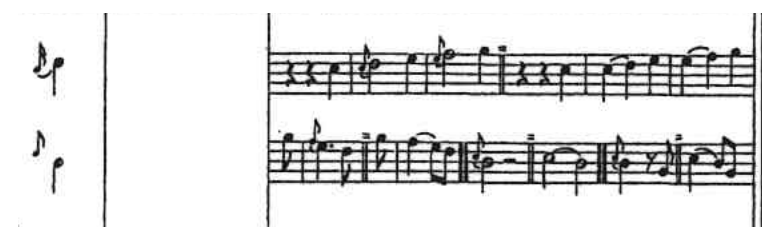
Untranscribed visual witness from Brändle’s chart, source row 13. The image preserves the printed marks in this cell but does not provide a text or machine-readable transcription of its musical contents. Open it to inspect the original-size facsimile. 2 individually catalogued examples show descriptions
These diplomatic descriptions make every audited item addressable and searchable. The chart-cell image above remains the notation witness; only entries explicitly labelled MEI are independent digital engravings.
-
Unslashed small note above the main-note head, slurred into it
Q13-F1-ASource sign: Unslashed small note above the main-note head, slurred into it
Contour: Upper appoggiatura +1 -> 0; four applications appear across the upper excerpt (A1-A4)
Rhythm: Value-bearing appoggiatura; duration changes with the surrounding note
Reading note: High for contour, medium for the exact number/duration of contextual applications
-
Unslashed small note below the main-note head, slurred into it
Q13-F1-BSource sign: Unslashed small note below the main-note head, slurred into it
Contour: Lower appoggiatura -1 -> 0; four applications appear across the lower excerpt (B1-B4)
Rhythm: Value-bearing appoggiatura; mixed long/short contexts
Reading note: High for contour, medium for exact durations
Johann Joachim Quantz (1697–1773)
Versuch einer Anweisung die Flöte traversiere zu spielen, Berlin, 1752
Consult source — Deutsches Textarchiv / SUB Göttingen (1752 first edition)
2 variants catalogued · complete facsimile witness · MEI pending
-
-
Triller Trill
Triller · halber Triller
PDF chart-cell facsimile untranscribed visual witness · all printed material in this cell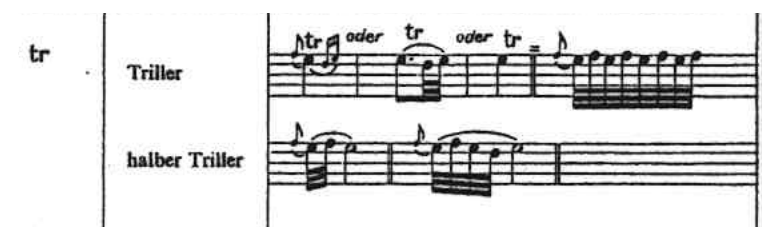
Untranscribed visual witness from Brändle’s chart, source row 13. The image preserves the printed marks in this cell but does not provide a text or machine-readable transcription of its musical contents. Open it to inspect the original-size facsimile. 5 individually catalogued examples show descriptions
These diplomatic descriptions make every audited item addressable and searchable. The chart-cell image above remains the notation witness; only entries explicitly labelled MEI are independent digital engravings.
-
Triller
Q13-F2-ASource sign: Small upper preparation note followed by tr over the principal
Contour: Preparation into ordinary upper-neighbor alternation: +1 -> (0,+1)xN -> 0
Rhythm: Grace/preparation plus rapid even diminution
Reading note: Medium; the first two pitches are tightly printed
-
Triller
Q13-F2-BSource sign: tr over a short slurred/tied two-note notation, introduced as oder
Contour: Same ordinary trill family, beginning from the upper neighbor
Rhythm: Short rapid group
Reading note: Medium
-
Triller
Q13-F2-CSource sign: Plain tr, followed by equals sign
Contour: Explicit long realization alternating +1,0,+1,0..., ending on the principal
Rhythm: Long chain of very rapid equal notes
Reading note: High for alternating contour; beam count uncertain
-
halber Triller
Q13-F2-DSource sign: First lower-line example with a short slurred beamed group
Contour: Compact half-trill, visually 0,+1,0 or +1,0,+1,0?
Rhythm: Three-note rapid group before resolution
Reading note: Low-medium; onset notehead is obscured
-
halber Triller
Q13-F2-ESource sign: Second lower-line example with a longer beamed group
Contour: Extended half-trill, upper/principal alternation ending on 0
Rhythm: About five rapid notes under one slur
Reading note: Medium
Johann Joachim Quantz (1697–1773)
Versuch einer Anweisung die Flöte traversiere zu spielen, Berlin, 1752
Consult source — Deutsches Textarchiv / SUB Göttingen (1752 first edition)
5 variants catalogued · complete facsimile witness · MEI pending
-
-
Doppelschlag Turn / double cadence
Doublé oder Doppelschlag
PDF chart-cell facsimile untranscribed visual witness · all printed material in this cell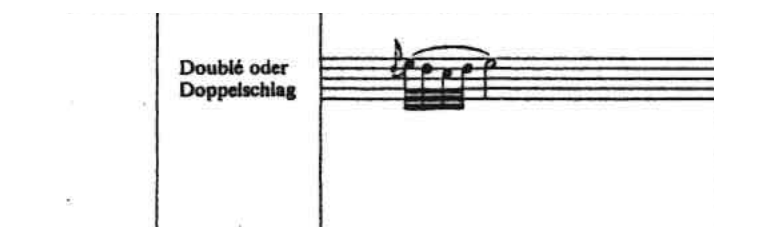
Untranscribed visual witness from Brändle’s chart, source row 13. The image preserves the printed marks in this cell but does not provide a text or machine-readable transcription of its musical contents. Open it to inspect the original-size facsimile. 1 individually catalogued example show descriptions
These diplomatic descriptions make every audited item addressable and searchable. The chart-cell image above remains the notation witness; only entries explicitly labelled MEI are independent digital engravings.
-
Doublé oder Doppelschlag
Q13-F4-ASource sign: No abstract glyph; tiny pickup note leading to a slurred four-note group
Contour: Standard turn contour +1,0,-1,0
Rhythm: Four rapid equal notes, slurred; pickup-like placement
Reading note: High for formula, medium for the printed anacrusis
Johann Joachim Quantz (1697–1773)
Versuch einer Anweisung die Flöte traversiere zu spielen, Berlin, 1752
Consult source — Deutsches Textarchiv / SUB Göttingen (1752 first edition)
1 variants catalogued · complete facsimile witness · MEI pending
-
-
Mordent Mordent
Pincé (Mordant)
PDF chart-cell facsimile untranscribed visual witness · all printed material in this cell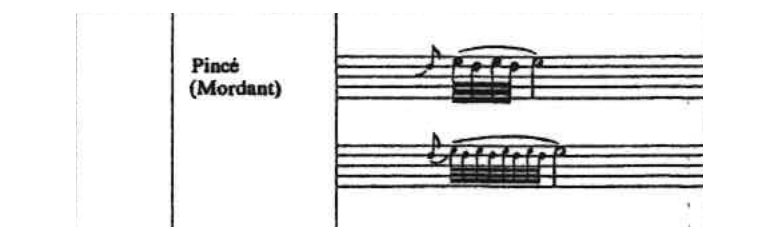
Untranscribed visual witness from Brändle’s chart, source row 13. The image preserves the printed marks in this cell but does not provide a text or machine-readable transcription of its musical contents. Open it to inspect the original-size facsimile. 2 individually catalogued examples show descriptions
These diplomatic descriptions make every audited item addressable and searchable. The chart-cell image above remains the notation witness; only entries explicitly labelled MEI are independent digital engravings.
-
Pincé (Mordant)
Q13-F5-ASource sign: No separate glyph; first slurred group
Contour: Short lower-neighbor mordent 0,-1,0
Rhythm: Compact three/four-note rapid group
Reading note: High for ornament family, medium for whether the opening pickup is counted in the group
-
Pincé (Mordant)
Q13-F5-BSource sign: Same notation, longer lower excerpt
Contour: Long mordent (0,-1)xN -> 0
Rhythm: Longer chain of rapid equal notes under one slur
Reading note: High
Johann Joachim Quantz (1697–1773)
Versuch einer Anweisung die Flöte traversiere zu spielen, Berlin, 1752
Consult source — Deutsches Textarchiv / SUB Göttingen (1752 first edition)
2 variants catalogued · complete facsimile witness · MEI pending
-
-
Mordent mit Vorhalt · Schneller · Battement Compound mordent / battement
Battement
PDF chart-cell facsimile untranscribed visual witness · all printed material in this cell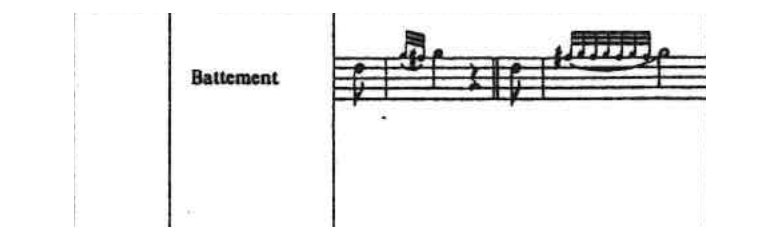
Untranscribed visual witness from Brändle’s chart, source row 13. The image preserves the printed marks in this cell but does not provide a text or machine-readable transcription of its musical contents. Open it to inspect the original-size facsimile. 2 individually catalogued examples show descriptions
These diplomatic descriptions make every audited item addressable and searchable. The chart-cell image above remains the notation witness; only entries explicitly labelled MEI are independent digital engravings.
-
Battement
Q13-F6-ASource sign: First passage placement: tiny beamed lower-neighbor figure before/around a principal
Contour: Lower-neighbor shake 0,-1,0?
Rhythm: Very short beamed figure
Reading note: Medium-low; noteheads overlap
-
Battement
Q13-F6-BSource sign: Second passage placement: extended beamed figure under a slur
Contour: Repeated lower-neighbor alternation (0,-1)xN -> 0
Rhythm: Long rapid group
Reading note: Medium-high for contour
Johann Joachim Quantz (1697–1773)
Versuch einer Anweisung die Flöte traversiere zu spielen, Berlin, 1752
Consult source — Deutsches Textarchiv / SUB Göttingen (1752 first edition)
2 variants catalogued · complete facsimile witness · MEI pending
-
-
Schleifer Slide
Schleifer
PDF chart-cell facsimile untranscribed visual witness · all printed material in this cell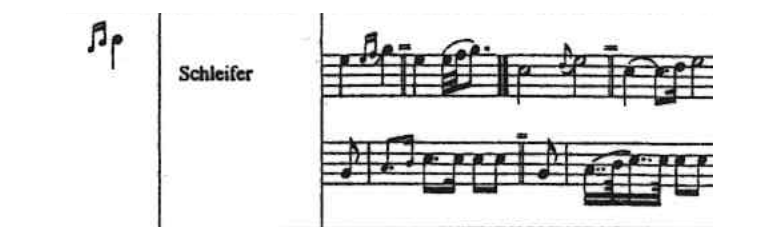
Untranscribed visual witness from Brändle’s chart, source row 13. The image preserves the printed marks in this cell but does not provide a text or machine-readable transcription of its musical contents. Open it to inspect the original-size facsimile. 4 individually catalogued examples show descriptions
These diplomatic descriptions make every audited item addressable and searchable. The chart-cell image above remains the notation witness; only entries explicitly labelled MEI are independent digital engravings.
-
Schleifer
Q13-F7-ASource sign: Two small beamed ascending notes slurred to the principal; upper excerpt, first placement
Contour: Rising slide -2,-1,0
Rhythm: Two grace-sized notes into the beat
Reading note: High
-
Schleifer
Q13-F7-BSource sign: Same sign in a second upper-excerpt context
Contour: Rising slide -2,-1,0, transposed
Rhythm: Two grace-sized notes; surrounding value differs
Reading note: High
-
Schleifer
Q13-F7-CSource sign: First lower-excerpt written-out placement
Contour: Rising three-note approach into the principal
Rhythm: Faster beamed realization in running notes
Reading note: Medium-high
-
Schleifer
Q13-F7-DSource sign: Second lower-excerpt placement
Contour: Rising approach, possibly extended by one contextual note: -2,-1,0,(ctx)
Rhythm: Rapid beamed group
Reading note: Medium; right edge is crowded
Johann Joachim Quantz (1697–1773)
Versuch einer Anweisung die Flöte traversiere zu spielen, Berlin, 1752
Consult source — Deutsches Textarchiv / SUB Göttingen (1752 first edition)
4 variants catalogued · complete facsimile witness · MEI pending
-
-
Vorschlag Appoggiatura / grace note
Vorschläge
PDF chart-cell facsimile untranscribed visual witness · all printed material in this cell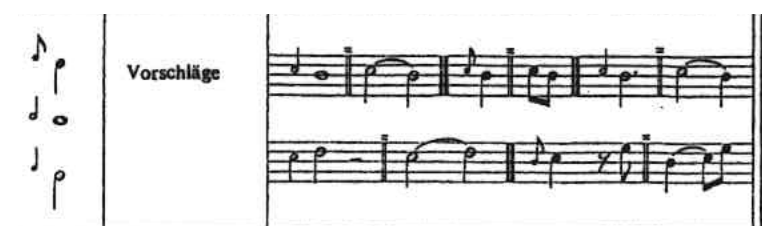
Untranscribed visual witness from Brändle’s chart, source row 14. The image preserves the printed marks in this cell but does not provide a text or machine-readable transcription of its musical contents. Open it to inspect the original-size facsimile. 5 individually catalogued examples show descriptions
These diplomatic descriptions make every audited item addressable and searchable. The chart-cell image above remains the notation witness; only entries explicitly labelled MEI are independent digital engravings.
-
Upper staff, first small-note/main pair
CPE14-F1-ASource sign: Upper staff, first small-note/main pair
Contour: Adjacent appoggiatura into 0; likely lower-to-main
Rhythm: Appoggiatura takes a substantial portion of the long main value
Reading note: Medium; direction is not fully secure without the omitted clef
-
Upper staff, first equals-sign realization
CPE14-F1-BSource sign: Upper staff, first equals-sign realization
Contour: Same adjacent-note pair written as two full-size notes
Rhythm: Near-equal division of the notated value
Reading note: High for the notated-versus-realized relationship
-
Upper staff, central small-note example and equality
CPE14-F1-CSource sign: Upper staff, central small-note example and equality
Contour: Adjacent appoggiatura into 0
Rhythm: Shorter pair, approximately eighth-note division
Reading note: Medium-high
-
Upper staff, right-hand long-note example and equality
CPE14-F1-DSource sign: Upper staff, right-hand long-note example and equality
Contour: Adjacent appoggiatura into 0, tied/slurred
Rhythm: Long appoggiatura with sustained resolution
Reading note: Medium-high
-
Lower staff: two applications, one before a sustained note and one in a shorter cadence
CPE14-F1-ESource sign: Lower staff: two applications, one before a sustained note and one in a shorter cadence
Contour: Direction changes with context; both are one-step appoggiaturas into 0
Rhythm: One long and one short division
Reading note: Medium; preserve both placements (E1, E2) in a source-faithful excerpt if possible
Carl Philipp Emanuel Bach (1714–1788)
Versuch über die wahre Art das Clavier zu spielen, Berlin, 1753
5 variants catalogued · complete facsimile witness · MEI pending
-
-
Triller Trill
ordentlicher Triller, kurz und lang · halber oder Pralltriller
PDF chart-cell facsimile untranscribed visual witness · all printed material in this cell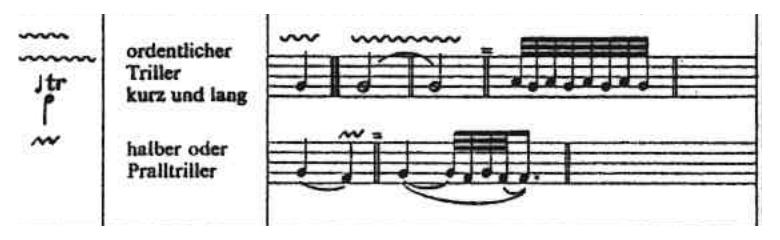
Untranscribed visual witness from Brändle’s chart, source row 14. The image preserves the printed marks in this cell but does not provide a text or machine-readable transcription of its musical contents. Open it to inspect the original-size facsimile. 3 individually catalogued examples show descriptions
These diplomatic descriptions make every audited item addressable and searchable. The chart-cell image above remains the notation witness; only entries explicitly labelled MEI are independent digital engravings.
-
ordentlicher Triller kurz
CPE14-F2-ASource sign: Short wavy line over principal, also represented by grace-note plus tr
Contour: Upper-neighbor trill (+1,0)xN -> 0
Rhythm: Short rapid alternation
Reading note: High
-
ordentlicher Triller lang
CPE14-F2-BSource sign: Long wavy line over a longer/tied principal
Contour: Same formula with more repetitions
Rhythm: Long rapid chain
Reading note: High
-
halber oder Pralltriller
CPE14-F2-CSource sign: Short wavy/prall sign over the second of a slurred pair
Contour: Main-start shake 0,+1,0,+1,0
Rhythm: Five rapid equal notes, ending on 0
Reading note: Medium-high
Carl Philipp Emanuel Bach (1714–1788)
Versuch über die wahre Art das Clavier zu spielen, Berlin, 1753
3 variants catalogued · complete facsimile witness · MEI pending
-
-
Trillervarianten Trill variants
Triller von oben · Triller von unten
PDF chart-cell facsimile untranscribed visual witness · all printed material in this cell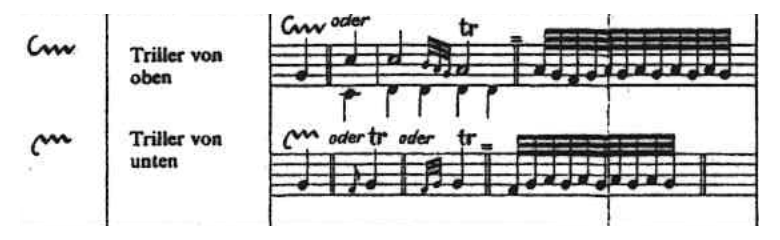
Untranscribed visual witness from Brändle’s chart, source row 14. The image preserves the printed marks in this cell but does not provide a text or machine-readable transcription of its musical contents. Open it to inspect the original-size facsimile. 5 individually catalogued examples show descriptions
These diplomatic descriptions make every audited item addressable and searchable. The chart-cell image above remains the notation witness; only entries explicitly labelled MEI are independent digital engravings.
-
Triller von oben
CPE14-F3-ASource sign: Hooked wavy glyph rising into the trill
Contour: Approach from above into upper-neighbor alternation: +1,0,(+1,0)xN
Rhythm: Rapid even chain
Reading note: High for direction, medium for exact pickup count
-
Triller von oben
CPE14-F3-BSource sign: Alternative written preparation notes followed by tr (oder)
Contour: Same as A, preparation written as notes
Rhythm: Short beamed preparation plus rapid trill
Reading note: High
-
Triller von unten
CPE14-F3-CSource sign: Hooked wavy glyph rising from below
Contour: Lower approach -1,0,+1,0,(+1,0)xN
Rhythm: Rapid even chain
Reading note: High for direction
-
Triller von unten
CPE14-F3-DSource sign: Lower grace note plus tr (oder)
Contour: Same lower-start formula
Rhythm: Grace pickup plus trill
Reading note: High
-
Triller von unten
CPE14-F3-ESource sign: Short beamed lower approach plus plain tr (oder)
Contour: Same formula with the approach rhythm explicitly written
Rhythm: Beamed pickup plus long rapid chain
Reading note: High
Carl Philipp Emanuel Bach (1714–1788)
Versuch über die wahre Art das Clavier zu spielen, Berlin, 1753
5 variants catalogued · complete facsimile witness · MEI pending
-
-
Doppelschlag Turn / double cadence
Doppelschlag · prallender Doppelschlag · geschnellter Doppelschlag
PDF chart-cell facsimile untranscribed visual witness · all printed material in this cell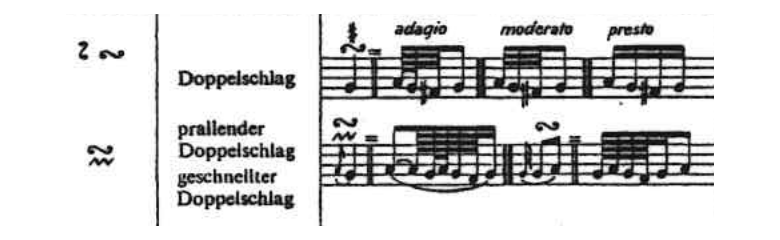
Untranscribed visual witness from Brändle’s chart, source row 14. The image preserves the printed marks in this cell but does not provide a text or machine-readable transcription of its musical contents. Open it to inspect the original-size facsimile. 5 individually catalogued examples show descriptions
These diplomatic descriptions make every audited item addressable and searchable. The chart-cell image above remains the notation witness; only entries explicitly labelled MEI are independent digital engravings.
-
Doppelschlag - adagio
CPE14-F4-ASource sign: Horizontal turn sign, with a small vertical modifier visible above
Contour: +1,0,-1,0
Rhythm: Unequal/expressive four-note turn, slower values
Reading note: High for contour
-
Doppelschlag - moderato
CPE14-F4-BSource sign: Same sign
Contour: +1,0,-1,0
Rhythm: Four more even, faster notes
Reading note: High
-
Doppelschlag - presto
CPE14-F4-CSource sign: Same sign
Contour: +1,0,-1,0
Rhythm: Compressed rapid group
Reading note: High
-
prallender Doppelschlag
CPE14-F4-DSource sign: Stacked/combined prall plus turn glyph
Contour: Main-start turn: 0,+1,0,-1,0
Rhythm: Rapid five-note group
Reading note: Medium-high
-
geschnellter Doppelschlag
CPE14-F4-ESource sign: Combined lower-shake/turn glyph
Contour: Lower-start/inverted five-note turn: 0,-1,0,+1,0?
Rhythm: Rapid five-note group
Reading note: Medium; source contour should be rechecked at encoding time
Carl Philipp Emanuel Bach (1714–1788)
Versuch über die wahre Art das Clavier zu spielen, Berlin, 1753
5 variants catalogued · complete facsimile witness · MEI pending
-
-
Mordent Mordent
Mordent kurz · Mordent lang
PDF chart-cell facsimile untranscribed visual witness · all printed material in this cell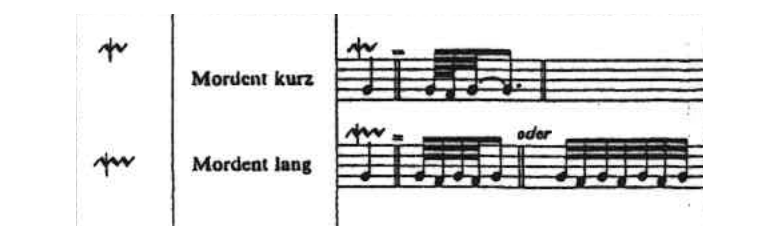
Untranscribed visual witness from Brändle’s chart, source row 14. The image preserves the printed marks in this cell but does not provide a text or machine-readable transcription of its musical contents. Open it to inspect the original-size facsimile. 3 individually catalogued examples show descriptions
These diplomatic descriptions make every audited item addressable and searchable. The chart-cell image above remains the notation witness; only entries explicitly labelled MEI are independent digital engravings.
-
Mordent kurz
CPE14-F5-ASource sign: Short wavy glyph crossed by a vertical stroke
Contour: 0,-1,0
Rhythm: Three rapid notes then sustained 0
Reading note: High
-
Mordent lang
CPE14-F5-BSource sign: Longer crossed wavy glyph
Contour: (0,-1)xN -> 0
Rhythm: First long realization, compact rapid chain
Reading note: High
-
Mordent lang
CPE14-F5-CSource sign: Same sign, alternative introduced by oder
Contour: Same pitch formula
Rhythm: Longer/more even subdivision
Reading note: High
Carl Philipp Emanuel Bach (1714–1788)
Versuch über die wahre Art das Clavier zu spielen, Berlin, 1753
3 variants catalogued · complete facsimile witness · MEI pending
-
-
Mordent mit Vorhalt · Schneller · Battement Compound mordent / battement
Mordent mit Vorhalt · Schneller
PDF chart-cell facsimile untranscribed visual witness · all printed material in this cell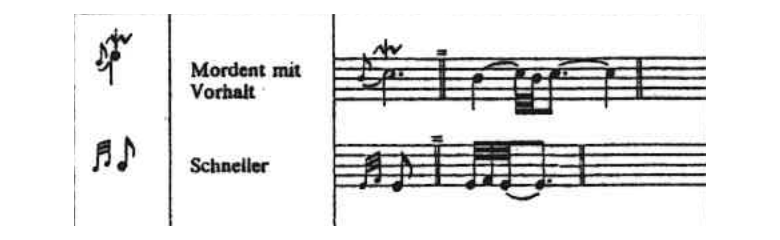
Untranscribed visual witness from Brändle’s chart, source row 14. The image preserves the printed marks in this cell but does not provide a text or machine-readable transcription of its musical contents. Open it to inspect the original-size facsimile. 2 individually catalogued examples show descriptions
These diplomatic descriptions make every audited item addressable and searchable. The chart-cell image above remains the notation witness; only entries explicitly labelled MEI are independent digital engravings.
-
Mordent mit Vorhalt
CPE14-F6-ASource sign: Preparation note plus crossed mordent sign
Contour: Held adjacent preparation into 0,-1,0, then sustained principal
Rhythm: Long preparation followed by a compact three-note mordent
Reading note: Medium-high; preparation direction depends on local staff reading
-
Schneller
CPE14-F6-BSource sign: Small two-note grace-like sign
Contour: Lower-neighbor snap around the principal, approximately 0,-1,0
Rhythm: Very short beamed group before sustained 0
Reading note: Medium
Carl Philipp Emanuel Bach (1714–1788)
Versuch über die wahre Art das Clavier zu spielen, Berlin, 1753
2 variants catalogued · complete facsimile witness · MEI pending
-
-
Schleifer Slide
Schleifer
PDF chart-cell facsimile untranscribed visual witness · all printed material in this cell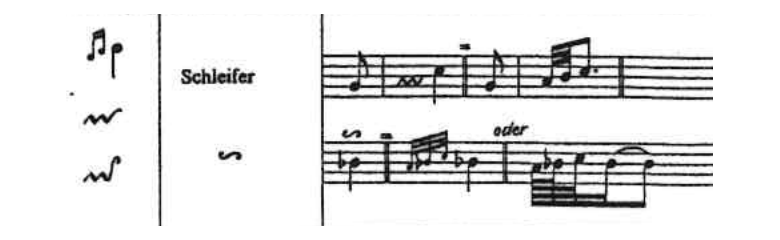
Untranscribed visual witness from Brändle’s chart, source row 14. The image preserves the printed marks in this cell but does not provide a text or machine-readable transcription of its musical contents. Open it to inspect the original-size facsimile. 3 individually catalogued examples show descriptions
These diplomatic descriptions make every audited item addressable and searchable. The chart-cell image above remains the notation witness; only entries explicitly labelled MEI are independent digital engravings.
-
Two small beamed rising notes before main
CPE14-F7-ASource sign: Two small beamed rising notes before main
Contour: -2,-1,0
Rhythm: Two grace notes into the beat
Reading note: High
-
S-shaped Schleifer glyph over a principal
CPE14-F7-BSource sign: S-shaped Schleifer glyph over a principal
Contour: Rising slide -2,-1,0
Rhythm: Three rapid written notes
Reading note: High for contour
-
Same S glyph, alternative after oder
CPE14-F7-CSource sign: Same S glyph, alternative after oder
Contour: Same rising contour but spread across a different rhythmic placement
Rhythm: Longer unequal group with tied/sustained main
Reading note: Medium-high
Carl Philipp Emanuel Bach (1714–1788)
Versuch über die wahre Art das Clavier zu spielen, Berlin, 1753
3 variants catalogued · complete facsimile witness · MEI pending
-
-
Vorschlag Appoggiatura / grace note
Vorschlag · Vorhalt
PDF chart-cell facsimile untranscribed visual witness · all printed material in this cell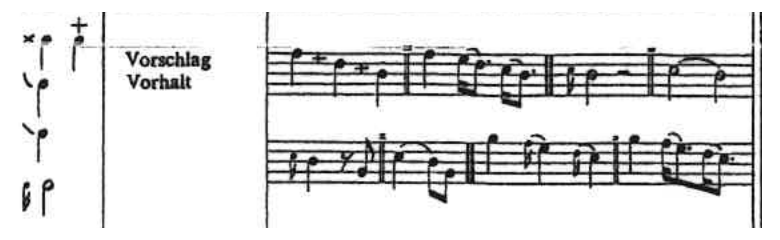
Untranscribed visual witness from Brändle’s chart, source row 15. The image preserves the printed marks in this cell but does not provide a text or machine-readable transcription of its musical contents. Open it to inspect the original-size facsimile. 8 individually catalogued examples show descriptions
These diplomatic descriptions make every audited item addressable and searchable. The chart-cell image above remains the notation witness; only entries explicitly labelled MEI are independent digital engravings.
-
Upper excerpt, left to right (M15-F1-A1)
M15-F1-A1Source sign: Upper excerpt, left to right
Contour: Each is an adjacent appoggiatura into 0; the excerpt alternates upper and lower approaches as the melody descends
Rhythm: Mix of long split values and short beamed resolutions
Reading note: Medium. Preserve the source contour graphically; exact degree labels should be checked against the treatise plate
-
Upper excerpt, left to right (M15-F1-A2)
M15-F1-A2Source sign: Upper excerpt, left to right
Contour: Each is an adjacent appoggiatura into 0; the excerpt alternates upper and lower approaches as the melody descends
Rhythm: Mix of long split values and short beamed resolutions
Reading note: Medium. Preserve the source contour graphically; exact degree labels should be checked against the treatise plate
-
Upper excerpt, left to right (M15-F1-A3)
M15-F1-A3Source sign: Upper excerpt, left to right
Contour: Each is an adjacent appoggiatura into 0; the excerpt alternates upper and lower approaches as the melody descends
Rhythm: Mix of long split values and short beamed resolutions
Reading note: Medium. Preserve the source contour graphically; exact degree labels should be checked against the treatise plate
-
Upper excerpt, left to right (M15-F1-A4)
M15-F1-A4Source sign: Upper excerpt, left to right
Contour: Each is an adjacent appoggiatura into 0; the excerpt alternates upper and lower approaches as the melody descends
Rhythm: Mix of long split values and short beamed resolutions
Reading note: Medium. Preserve the source contour graphically; exact degree labels should be checked against the treatise plate
-
Lower excerpt, left to right (M15-F1-B1)
M15-F1-B1Source sign: Lower excerpt, left to right
Contour: Adjacent appoggiaturas into successive principals, including a clearly rising lower approach at B1/B2 and descending approaches later
Rhythm: One short pickup, two sustained/tied resolutions, one beamed cadence
Reading note: Medium
-
Lower excerpt, left to right (M15-F1-B2)
M15-F1-B2Source sign: Lower excerpt, left to right
Contour: Adjacent appoggiaturas into successive principals, including a clearly rising lower approach at B1/B2 and descending approaches later
Rhythm: One short pickup, two sustained/tied resolutions, one beamed cadence
Reading note: Medium
-
Lower excerpt, left to right (M15-F1-B3)
M15-F1-B3Source sign: Lower excerpt, left to right
Contour: Adjacent appoggiaturas into successive principals, including a clearly rising lower approach at B1/B2 and descending approaches later
Rhythm: One short pickup, two sustained/tied resolutions, one beamed cadence
Reading note: Medium
-
Lower excerpt, left to right (M15-F1-B4)
M15-F1-B4Source sign: Lower excerpt, left to right
Contour: Adjacent appoggiaturas into successive principals, including a clearly rising lower approach at B1/B2 and descending approaches later
Rhythm: One short pickup, two sustained/tied resolutions, one beamed cadence
Reading note: Medium
Friedrich Wilhelm Marpurg (1718–1795)
Die Kunst das Clavier zu spielen, Berlin, 1750
The chart prints Berlin 1750; the linked BSB catalogue dates Part I to 1751.
8 variants catalogued · complete facsimile witness · MEI pending
-
-
Triller Trill
Tremblement détaché · Tremblement appuyé ou préparé · Tremblement lié
PDF chart-cell facsimile untranscribed visual witness · all printed material in this cell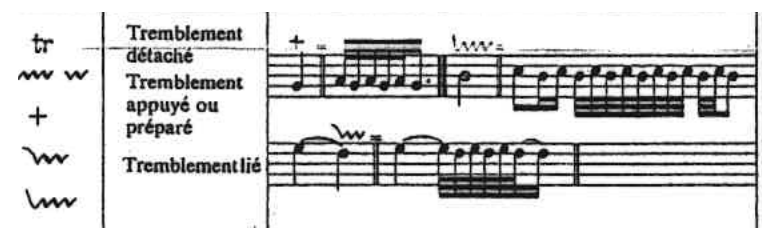
Untranscribed visual witness from Brändle’s chart, source row 15. The image preserves the printed marks in this cell but does not provide a text or machine-readable transcription of its musical contents. Open it to inspect the original-size facsimile. 3 individually catalogued examples show descriptions
These diplomatic descriptions make every audited item addressable and searchable. The chart-cell image above remains the notation witness; only entries explicitly labelled MEI are independent digital engravings.
-
Tremblement détaché
M15-F2-ASource sign: Plus sign over principal
Contour: Detached/main-start trill 0,(+1,0)xN
Rhythm: Short compact rapid chain
Reading note: Medium-high
-
Tremblement appuyé ou préparé
M15-F2-BSource sign: Wavy sign preceded by a held preparation
Contour: Upper auxiliary is held, then (+1,0)xN -> 0
Rhythm: Long preparation plus rapid alternation and a short ending
Reading note: High
-
Tremblement lié
M15-F2-CSource sign: Wavy sign spanning a slurred/tied arrival
Contour: Legato prepared trill, held approach into (+1,0)xN -> 0
Rhythm: Slurred preparation, compact six-note-looking chain
Reading note: Medium-high
Friedrich Wilhelm Marpurg (1718–1795)
Die Kunst das Clavier zu spielen, Berlin, 1750
The chart prints Berlin 1750; the linked BSB catalogue dates Part I to 1751.
3 variants catalogued · complete facsimile witness · MEI pending
-
-
Trillervarianten Trill variants
Triller
PDF chart-cell facsimile untranscribed visual witness · all printed material in this cell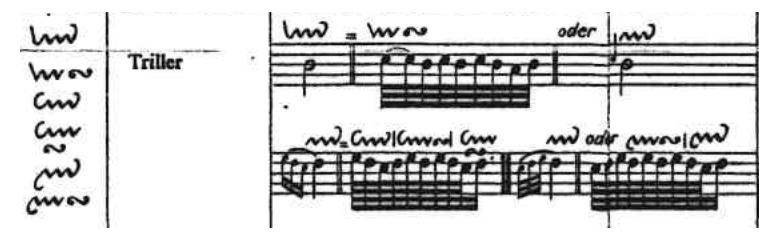
Untranscribed visual witness from Brändle’s chart, source row 15. The image preserves the printed marks in this cell but does not provide a text or machine-readable transcription of its musical contents. Open it to inspect the original-size facsimile. 7 individually catalogued examples show descriptions
These diplomatic descriptions make every audited item addressable and searchable. The chart-cell image above remains the notation witness; only entries explicitly labelled MEI are independent digital engravings.
-
Wavy line bracketed by an upward hook at both ends
M15-F3-ASource sign: Wavy line bracketed by an upward hook at both ends
Contour: Top realization: ordinary upper-neighbor trill (+1,0)xN -> 0
Rhythm: Long rapid even chain
Reading note: High
-
Wavy line with a left descending stroke and terminal loop
M15-F3-BSource sign: Wavy line with a left descending stroke and terminal loop
Contour: Same ordinary trill, alternate source spelling
Rhythm: Same
Reading note: High for glyph distinction
-
C-shaped left hook, wavy middle, upturned right hook
M15-F3-CSource sign: C-shaped left hook, wavy middle, upturned right hook
Contour: Compound/prepared trill in lower-left example
Rhythm: Short entrance plus long rapid alternation
Reading note: Medium-high
-
C-shaped left hook and wavy continuation without right hook
M15-F3-DSource sign: C-shaped left hook and wavy continuation without right hook
Contour: Compound/prepared trill, alternate termination
Rhythm: Same core alternation
Reading note: Medium-high
-
Small plain turn-like wave
M15-F3-ESource sign: Small plain turn-like wave
Contour: Short turn/prall component within the combined trill signs
Rhythm: Compact local turn
Reading note: Medium
-
C-shaped left hook, wavy line, strong upward terminal hook
M15-F3-FSource sign: C-shaped left hook, wavy line, strong upward terminal hook
Contour: Lower-right compound trill. Written pickup, then (+1,0)xN, with ending figure
Rhythm: Rapid chain plus cadential notes
Reading note: Medium-high
-
C-shaped left hook, wavy line, terminal loop
M15-F3-GSource sign: C-shaped left hook, wavy line, terminal loop
Contour: Alternative lower-right combined sign introduced by oder. Same family with a different end/continuation
Rhythm: Rapid chain
Reading note: Medium-high
Friedrich Wilhelm Marpurg (1718–1795)
Die Kunst das Clavier zu spielen, Berlin, 1750
The chart prints Berlin 1750; the linked BSB catalogue dates Part I to 1751.
7 variants catalogued · complete facsimile witness · MEI pending
-
-
Doppelschlag Turn / double cadence
Doublé · Doppelschlag · Groppo
PDF chart-cell facsimile untranscribed visual witness · all printed material in this cell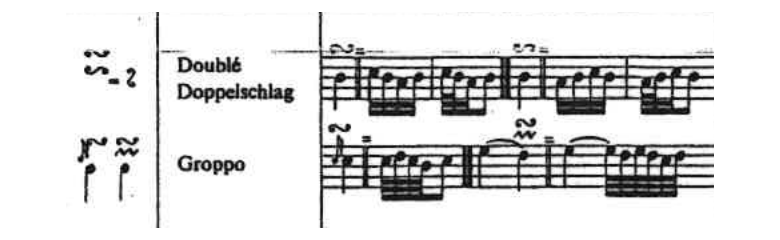
Untranscribed visual witness from Brändle’s chart, source row 15. The image preserves the printed marks in this cell but does not provide a text or machine-readable transcription of its musical contents. Open it to inspect the original-size facsimile. 4 individually catalogued examples show descriptions
These diplomatic descriptions make every audited item addressable and searchable. The chart-cell image above remains the notation witness; only entries explicitly labelled MEI are independent digital engravings.
-
Doublé / Doppelschlag
M15-F4-ASource sign: First horizontal turn glyph
Contour: +1,0,-1,0
Rhythm: First four-note rapid group
Reading note: High
-
Doublé / Doppelschlag
M15-F4-BSource sign: Second glyph with a dot/short mark
Contour: Same turn formula in a second context
Rhythm: Four rapid notes
Reading note: High
-
Groppo
M15-F4-CSource sign: Turn glyph attached to a note stem on the left
Contour: Main-start turn, approximately 0,+1,0,-1,0
Rhythm: Five rapid notes
Reading note: Medium-high
-
Groppo
M15-F4-DSource sign: Turn glyph over a later held/slurred note
Contour: Same groppo family, delayed/after-note placement
Rhythm: Sustained approach then rapid group
Reading note: Medium
Friedrich Wilhelm Marpurg (1718–1795)
Die Kunst das Clavier zu spielen, Berlin, 1750
The chart prints Berlin 1750; the linked BSB catalogue dates Part I to 1751.
4 variants catalogued · complete facsimile witness · MEI pending
-
-
Mordent Mordent
Mordant · Pincé
PDF chart-cell facsimile untranscribed visual witness · all printed material in this cell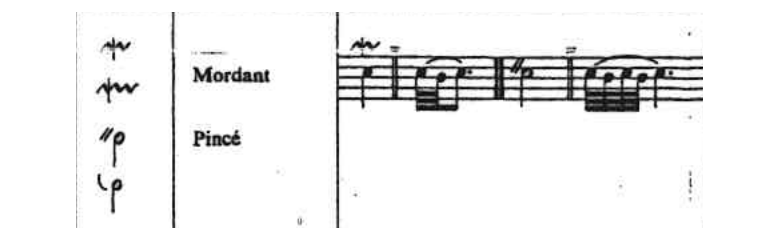
Untranscribed visual witness from Brändle’s chart, source row 15. The image preserves the printed marks in this cell but does not provide a text or machine-readable transcription of its musical contents. Open it to inspect the original-size facsimile. 4 individually catalogued examples show descriptions
These diplomatic descriptions make every audited item addressable and searchable. The chart-cell image above remains the notation witness; only entries explicitly labelled MEI are independent digital engravings.
-
Mordant
M15-F5-ASource sign: Short crossed wavy sign
Contour: 0,-1,0
Rhythm: Short rapid group
Reading note: High
-
Mordant
M15-F5-BSource sign: Longer crossed wavy sign
Contour: (0,-1)xN -> 0
Rhythm: Longer rapid group
Reading note: High
-
Pincé
M15-F5-CSource sign: First curved-stroke sign beside a main note
Contour: Lower-neighbor pincé, expected 0,-1,0; no separate equality is printed
Rhythm: Unspecified
Reading note: Medium-low; sign-only variant
-
Pincé
M15-F5-DSource sign: Mirrored/alternate curved-stroke sign
Contour: Same pincé family
Rhythm: Unspecified
Reading note: Medium-low; sign-only variant
Friedrich Wilhelm Marpurg (1718–1795)
Die Kunst das Clavier zu spielen, Berlin, 1750
The chart prints Berlin 1750; the linked BSB catalogue dates Part I to 1751.
4 variants catalogued · complete facsimile witness · MEI pending
-
-
Mordent mit Vorhalt · Schneller · Battement Compound mordent / battement
Mordant · Pincé
PDF chart-cell facsimile untranscribed visual witness · all printed material in this cell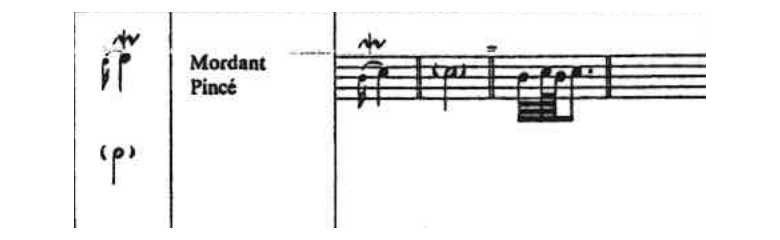
Untranscribed visual witness from Brändle’s chart, source row 15. The image preserves the printed marks in this cell but does not provide a text or machine-readable transcription of its musical contents. Open it to inspect the original-size facsimile. 1 individually catalogued example show descriptions
These diplomatic descriptions make every audited item addressable and searchable. The chart-cell image above remains the notation witness; only entries explicitly labelled MEI are independent digital engravings.
-
Mordant / Pincé
M15-F6-ASource sign: Crossed mordent over the first note of a short suspension-like phrase
Contour: Principal-lower-principal figure 0,-1,0, followed by contextual resolution
Rhythm: Compact three-note mordent after a held/slurred onset
Reading note: Medium-high
Friedrich Wilhelm Marpurg (1718–1795)
Die Kunst das Clavier zu spielen, Berlin, 1750
The chart prints Berlin 1750; the linked BSB catalogue dates Part I to 1751.
1 variants catalogued · complete facsimile witness · MEI pending
-
-
Schleifer Slide
Schleifer · Flatté
PDF chart-cell facsimile untranscribed visual witness · all printed material in this cell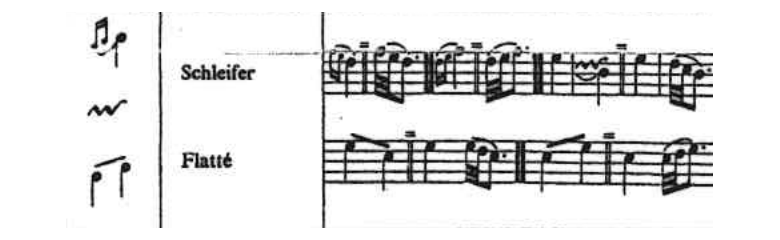
Untranscribed visual witness from Brändle’s chart, source row 15. The image preserves the printed marks in this cell but does not provide a text or machine-readable transcription of its musical contents. Open it to inspect the original-size facsimile. 6 individually catalogued examples show descriptions
These diplomatic descriptions make every audited item addressable and searchable. The chart-cell image above remains the notation witness; only entries explicitly labelled MEI are independent digital engravings.
-
Schleifer (M15-F7-A1)
M15-F7-A1Printed term: Schleifer
Source sign: Four placements across the upper excerpt: beamed double-grace sign and wavy Schleifer sign both occur
Contour: Predominantly rising -2,-1,0; at least one placement appears descending and should preserve the source contour rather than be normalized blindly
Rhythm: Short beamed approaches in varied note values
Reading note: Medium; four placements are visually distinct
-
Schleifer (M15-F7-A2)
M15-F7-A2Printed term: Schleifer
Source sign: Four placements across the upper excerpt: beamed double-grace sign and wavy Schleifer sign both occur
Contour: Predominantly rising -2,-1,0; at least one placement appears descending and should preserve the source contour rather than be normalized blindly
Rhythm: Short beamed approaches in varied note values
Reading note: Medium; four placements are visually distinct
-
Schleifer (M15-F7-A3)
M15-F7-A3Printed term: Schleifer
Source sign: Four placements across the upper excerpt: beamed double-grace sign and wavy Schleifer sign both occur
Contour: Predominantly rising -2,-1,0; at least one placement appears descending and should preserve the source contour rather than be normalized blindly
Rhythm: Short beamed approaches in varied note values
Reading note: Medium; four placements are visually distinct
-
Schleifer (M15-F7-A4)
M15-F7-A4Printed term: Schleifer
Source sign: Four placements across the upper excerpt: beamed double-grace sign and wavy Schleifer sign both occur
Contour: Predominantly rising -2,-1,0; at least one placement appears descending and should preserve the source contour rather than be normalized blindly
Rhythm: Short beamed approaches in varied note values
Reading note: Medium; four placements are visually distinct
-
Flatté (M15-F7-B1)
M15-F7-B1Printed term: Flatté
Source sign: Diagonal/curved stroke between two notes, twice in the lower excerpt
Contour: Neighbor inflection into 0; exact direction follows each written interval
Rhythm: Appoggiatura-like two-note gesture
Reading note: Medium-low; no clef and the stroke partly hides the first pitch
-
Flatté (M15-F7-B2)
M15-F7-B2Printed term: Flatté
Source sign: Diagonal/curved stroke between two notes, twice in the lower excerpt
Contour: Neighbor inflection into 0; exact direction follows each written interval
Rhythm: Appoggiatura-like two-note gesture
Reading note: Medium-low; no clef and the stroke partly hides the first pitch
Friedrich Wilhelm Marpurg (1718–1795)
Die Kunst das Clavier zu spielen, Berlin, 1750
The chart prints Berlin 1750; the linked BSB catalogue dates Part I to 1751.
6 variants catalogued · complete facsimile witness · MEI pending
-
-
Vorschlag Appoggiatura / grace note
lange Vorschläge · durchgehende Vorschläge · anschlagende kurze Vorschläge
PDF chart-cell facsimile untranscribed visual witness · all printed material in this cell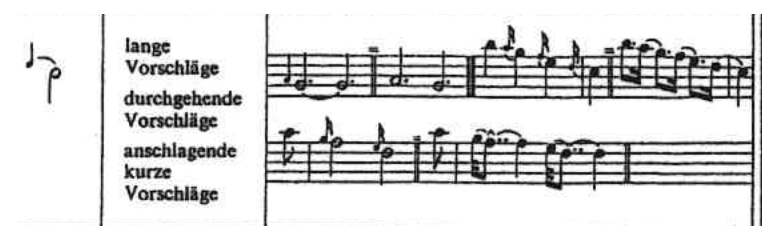
Untranscribed visual witness from Brändle’s chart, source row 16. The image preserves the printed marks in this cell but does not provide a text or machine-readable transcription of its musical contents. Open it to inspect the original-size facsimile. 3 individually catalogued examples show descriptions
These diplomatic descriptions make every audited item addressable and searchable. The chart-cell image above remains the notation witness; only entries explicitly labelled MEI are independent digital engravings.
-
lange Vorschläge
LM16-F1-ASource sign: Unslashed small note slurred to a long principal; two placements at the left of the upper excerpt
Contour: Adjacent appoggiatura into 0
Rhythm: Takes half or more of the written principal value
Reading note: High for category, medium for exact divisions
-
durchgehende Vorschläge
LM16-F1-BSource sign: Chain of appoggiaturas through the right half of the upper excerpt
Contour: Repeated adjacent suspensions, each resolving by step to its local 0
Rhythm: Continuous sequence of short/medium appoggiaturas
Reading note: Medium-high
-
anschlagende kurze Vorschläge
LM16-F1-CSource sign: Lower excerpt, two explicitly short attacked examples
Contour: Adjacent grace note into 0
Rhythm: Very short pre-beat/on-beat grace followed by sustained principal
Reading note: High
Leopold Mozart (1719–1787)
Versuch einer gründlichen Violinschule, Augsburg, 1755/56
3 variants catalogued · complete facsimile witness · MEI pending
-
-
Triller Trill
Triller · Trillet (Pralltriller) · vorbereiteter Triller
PDF chart-cell facsimile untranscribed visual witness · all printed material in this cell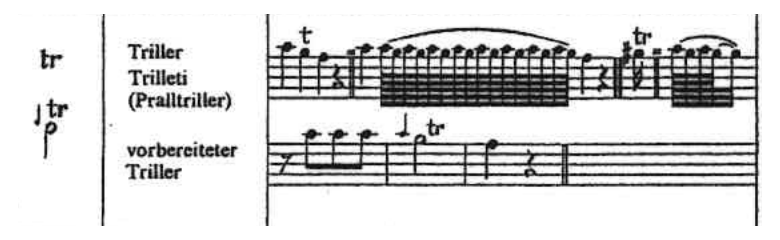
Untranscribed visual witness from Brändle’s chart, source row 16. The image preserves the printed marks in this cell but does not provide a text or machine-readable transcription of its musical contents. Open it to inspect the original-size facsimile. 3 individually catalogued examples show descriptions
These diplomatic descriptions make every audited item addressable and searchable. The chart-cell image above remains the notation witness; only entries explicitly labelled MEI are independent digital engravings.
-
Triller
LM16-F2-ASource sign: tr over long note; first upper example
Contour: Upper-neighbor alternation (+1,0)xN, with written termination
Rhythm: Very long rapid chain
Reading note: High
-
Trilletti (Pralltriller)
LM16-F2-BSource sign: tr over short note; second upper example
Contour: Short main/upper shake ending on 0
Rhythm: Four-to-six rapid notes
Reading note: High
-
vorbereiteter Triller
LM16-F2-CSource sign: Small preparation note joined to tr over the following principal
Contour: Held/prepared upper note into trill, then resolution
Rhythm: Written preparation before the trill; no full alternation is expanded in this cell
Reading note: Medium-high
Leopold Mozart (1719–1787)
Versuch einer gründlichen Violinschule, Augsburg, 1755/56
3 variants catalogued · complete facsimile witness · MEI pending
-
-
Trillervarianten Trill variants
Triller mit Nachschlag und mit Auszierung
PDF chart-cell facsimile untranscribed visual witness · all printed material in this cell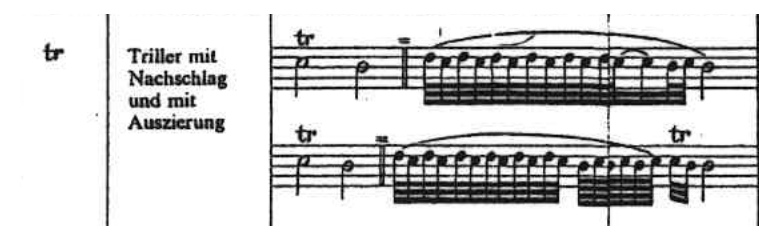
Untranscribed visual witness from Brändle’s chart, source row 16. The image preserves the printed marks in this cell but does not provide a text or machine-readable transcription of its musical contents. Open it to inspect the original-size facsimile. 2 individually catalogued examples show descriptions
These diplomatic descriptions make every audited item addressable and searchable. The chart-cell image above remains the notation witness; only entries explicitly labelled MEI are independent digital engravings.
-
Triller mit Nachschlag und mit Ausziehung
LM16-F3-ASource sign: Upper example, one long slur covering trill plus termination
Contour: (+1,0)xN, then lower-neighbor turn ending -1,0
Rhythm: Long rapid chain plus short terminal group
Reading note: High
-
Triller mit Nachschlag und mit Ausziehung
LM16-F3-BSource sign: Lower example, trill chain followed by a separately grouped extension and another marked tr
Contour: (+1,0)xN, extended ending/aftershake, then resolution
Rhythm: Long chain plus grouped cadential suffix
Reading note: Medium-high; exact suffix has overlapping beams
Leopold Mozart (1719–1787)
Versuch einer gründlichen Violinschule, Augsburg, 1755/56
2 variants catalogued · complete facsimile witness · MEI pending
-
-
Doppelschlag Turn / double cadence
Zirkel (8 Noten) · Halbzirkel (4 Noten) · Doppelschlag · Halbtriller
PDF chart-cell facsimile untranscribed visual witness · all printed material in this cell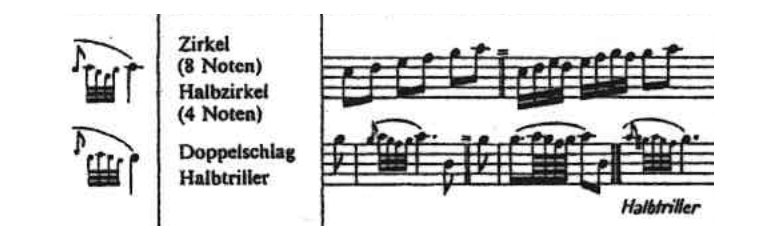
Untranscribed visual witness from Brändle’s chart, source row 16. The image preserves the printed marks in this cell but does not provide a text or machine-readable transcription of its musical contents. Open it to inspect the original-size facsimile. 5 individually catalogued examples show descriptions
These diplomatic descriptions make every audited item addressable and searchable. The chart-cell image above remains the notation witness; only entries explicitly labelled MEI are independent digital engravings.
-
Zirkel (8 Noten)
LM16-F4-ASource sign: Large arched sign over an eight-note beamed figure
Contour: Eight-note scalar/circular approach ending on local 0; approximate contour -3,-2,-1,0,+1,+2,+1,0?
Rhythm: Eight even rapid notes
Reading note: Low for exact degrees; high for eight-note count
-
Halbzirkel (4 Noten)
LM16-F4-BSource sign: Same family with four-note beamed figure
Contour: Four-note half-circle, likely +1,0,-1,0
Rhythm: Four rapid notes
Reading note: Medium
-
Doppelschlag
LM16-F4-CSource sign: First lower-excerpt slurred turn group
Contour: +1,0,-1,0
Rhythm: Rapid four-note group
Reading note: High
-
Doppelschlag
LM16-F4-DSource sign: Second lower-excerpt turn, with approach note
Contour: Same turn after a written approach
Rhythm: Approach plus rapid four-note group
Reading note: Medium-high
-
Halbtriller
LM16-F4-ESource sign: Rightmost lower-excerpt compact group explicitly labelled *Halbtriller*
Contour: Short upper/principal shake ending on 0
Rhythm: Compact rapid group
Reading note: High for family, medium for onset pitch
Leopold Mozart (1719–1787)
Versuch einer gründlichen Violinschule, Augsburg, 1755/56
5 variants catalogued · complete facsimile witness · MEI pending
-
-
Mordent Mordent
Mordent (Beisser) · Anschlag
PDF chart-cell facsimile untranscribed visual witness · all printed material in this cell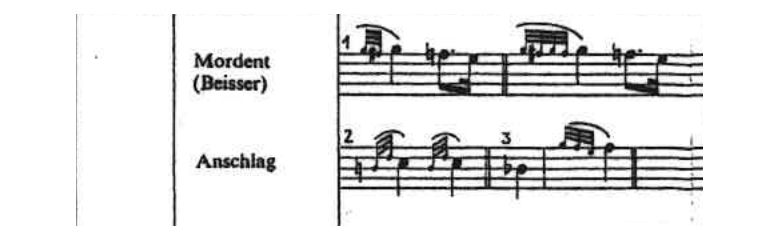
Untranscribed visual witness from Brändle’s chart, source row 16. The image preserves the printed marks in this cell but does not provide a text or machine-readable transcription of its musical contents. Open it to inspect the original-size facsimile. 5 individually catalogued examples show descriptions
These diplomatic descriptions make every audited item addressable and searchable. The chart-cell image above remains the notation witness; only entries explicitly labelled MEI are independent digital engravings.
-
Mordent (Beisser), example 1a
LM16-F5-A1Source sign: First upper-line mordent group
Contour: 0,-1,0
Rhythm: Rapid group before sustained context note
Reading note: High
-
Mordent (Beisser), example 1b
LM16-F5-A2Source sign: Second upper-line mordent group
Contour: Longer (0,-1)xN -> 0
Rhythm: Longer rapid beamed group
Reading note: High
-
Anschlag, example 2a
LM16-F5-B1Source sign: First double-note/grace chord before principal
Contour: Two-note appoggiatura/chordal strike into 0; interval contents uncertain
Rhythm: Short chordal grace
Reading note: Medium-low
-
Anschlag, example 2b
LM16-F5-B2Source sign: Second chordal strike in the same numbered example
Contour: Same family, transposed or revoiced
Rhythm: Short chordal grace
Reading note: Medium-low
-
Anschlag, example 3
LM16-F5-CSource sign: Single lower approach followed by a beamed upper figure and principal
Contour: Compound strike/approach into 0; exact relative chord tones uncertain
Rhythm: Short beamed attack
Reading note: Low-medium
Leopold Mozart (1719–1787)
Versuch einer gründlichen Violinschule, Augsburg, 1755/56
5 variants catalogued · complete facsimile witness · MEI pending
-
-
Mordent mit Vorhalt · Schneller · Battement Compound mordent / battement
Battement
PDF chart-cell facsimile untranscribed visual witness · all printed material in this cell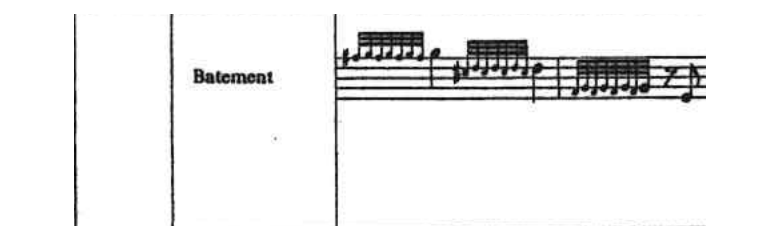
Untranscribed visual witness from Brändle’s chart, source row 16. The image preserves the printed marks in this cell but does not provide a text or machine-readable transcription of its musical contents. Open it to inspect the original-size facsimile. 3 individually catalogued examples show descriptions
These diplomatic descriptions make every audited item addressable and searchable. The chart-cell image above remains the notation witness; only entries explicitly labelled MEI are independent digital engravings.
-
First, high-register group
LM16-F6-ASource sign: First, high-register group
Contour: Lower-neighbor alternation (0,-1)xN -> 0
Rhythm: Rapid six-ish-note group
Reading note: Medium-high
-
Second, middle-register group
LM16-F6-BSource sign: Second, middle-register group
Contour: Same pattern, transposed
Rhythm: Rapid group
Reading note: Medium-high
-
Third, lower-register group
LM16-F6-CSource sign: Third, lower-register group
Contour: Same pattern, transposed, followed by a written contextual leap/rest
Rhythm: Rapid group
Reading note: Medium-high
Leopold Mozart (1719–1787)
Versuch einer gründlichen Violinschule, Augsburg, 1755/56
3 variants catalogued · complete facsimile witness · MEI pending
-
-
Schleifer Slide
Schleifer
PDF chart-cell facsimile untranscribed visual witness · all printed material in this cell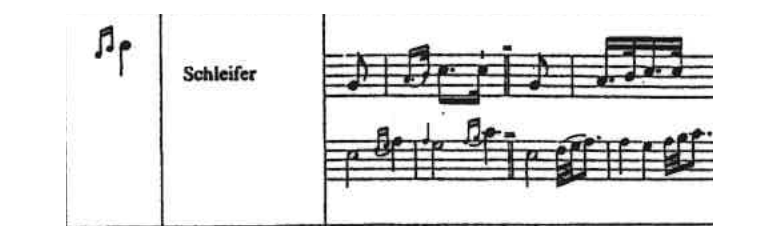
Untranscribed visual witness from Brändle’s chart, source row 16. The image preserves the printed marks in this cell but does not provide a text or machine-readable transcription of its musical contents. Open it to inspect the original-size facsimile. 6 individually catalogued examples show descriptions
These diplomatic descriptions make every audited item addressable and searchable. The chart-cell image above remains the notation witness; only entries explicitly labelled MEI are independent digital engravings.
-
Upper excerpt, two placements (LM16-F7-A1)
LM16-F7-A1Source sign: Upper excerpt, two placements
Contour: Rising slide -2,-1,0, second instance more compressed
Rhythm: First as small-note sign, second as rapid written notes
Reading note: High
-
Upper excerpt, two placements (LM16-F7-A2)
LM16-F7-A2Source sign: Upper excerpt, two placements
Contour: Rising slide -2,-1,0, second instance more compressed
Rhythm: First as small-note sign, second as rapid written notes
Reading note: High
-
Lower excerpt, four placements (LM16-F7-B1)
LM16-F7-B1Source sign: Lower excerpt, four placements
Contour: Four rising double-grace approaches into successive principals; one begins below by a wider interval
Rhythm: Two rapid grace notes into each main note
Reading note: Medium-high; preserve each local transposition
-
Lower excerpt, four placements (LM16-F7-B2)
LM16-F7-B2Source sign: Lower excerpt, four placements
Contour: Four rising double-grace approaches into successive principals; one begins below by a wider interval
Rhythm: Two rapid grace notes into each main note
Reading note: Medium-high; preserve each local transposition
-
Lower excerpt, four placements (LM16-F7-B3)
LM16-F7-B3Source sign: Lower excerpt, four placements
Contour: Four rising double-grace approaches into successive principals; one begins below by a wider interval
Rhythm: Two rapid grace notes into each main note
Reading note: Medium-high; preserve each local transposition
-
Lower excerpt, four placements (LM16-F7-B4)
LM16-F7-B4Source sign: Lower excerpt, four placements
Contour: Four rising double-grace approaches into successive principals; one begins below by a wider interval
Rhythm: Two rapid grace notes into each main note
Reading note: Medium-high; preserve each local transposition
Leopold Mozart (1719–1787)
Versuch einer gründlichen Violinschule, Augsburg, 1755/56
6 variants catalogued · complete facsimile witness · MEI pending
-
-
Vorschlag Appoggiatura / grace note
lange Vorschläge · kurze Vorschläge
PDF chart-cell facsimile untranscribed visual witness · all printed material in this cell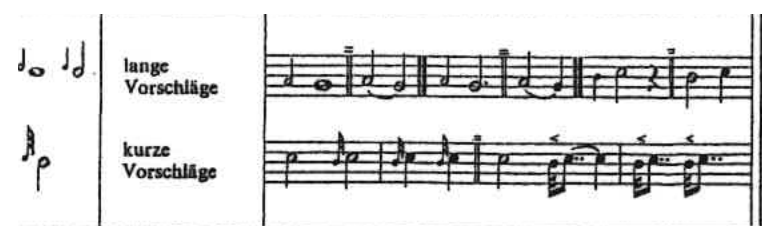
Untranscribed visual witness from Brändle’s chart, source row 17. The image preserves the printed marks in this cell but does not provide a text or machine-readable transcription of its musical contents. Open it to inspect the original-size facsimile. 8 individually catalogued examples show descriptions
These diplomatic descriptions make every audited item addressable and searchable. The chart-cell image above remains the notation witness; only entries explicitly labelled MEI are independent digital engravings.
-
lange Vorschläge (T17-F1-A1)
T17-F1-A1Printed term: lange Vorschläge
Source sign: Four paired examples across the upper staff
Contour: Each is an adjacent appoggiatura into local 0; directions alternate with the melody
Rhythm: Long values divided between appoggiatura and resolution; includes tied/syncopated contexts
Reading note: Medium-high
-
lange Vorschläge (T17-F1-A2)
T17-F1-A2Printed term: lange Vorschläge
Source sign: Four paired examples across the upper staff
Contour: Each is an adjacent appoggiatura into local 0; directions alternate with the melody
Rhythm: Long values divided between appoggiatura and resolution; includes tied/syncopated contexts
Reading note: Medium-high
-
lange Vorschläge (T17-F1-A3)
T17-F1-A3Printed term: lange Vorschläge
Source sign: Four paired examples across the upper staff
Contour: Each is an adjacent appoggiatura into local 0; directions alternate with the melody
Rhythm: Long values divided between appoggiatura and resolution; includes tied/syncopated contexts
Reading note: Medium-high
-
lange Vorschläge (T17-F1-A4)
T17-F1-A4Printed term: lange Vorschläge
Source sign: Four paired examples across the upper staff
Contour: Each is an adjacent appoggiatura into local 0; directions alternate with the melody
Rhythm: Long values divided between appoggiatura and resolution; includes tied/syncopated contexts
Reading note: Medium-high
-
kurze Vorschläge (T17-F1-B1)
T17-F1-B1Printed term: kurze Vorschläge
Source sign: Four written small-note placements across the lower staff, with three explicit realized pairs at right
Contour: Adjacent grace into local 0
Rhythm: Very short grace followed by nearly full-value principal; right side shows compact beamed realizations
Reading note: High for category; medium for exact onset placement
-
kurze Vorschläge (T17-F1-B2)
T17-F1-B2Printed term: kurze Vorschläge
Source sign: Four written small-note placements across the lower staff, with three explicit realized pairs at right
Contour: Adjacent grace into local 0
Rhythm: Very short grace followed by nearly full-value principal; right side shows compact beamed realizations
Reading note: High for category; medium for exact onset placement
-
kurze Vorschläge (T17-F1-B3)
T17-F1-B3Printed term: kurze Vorschläge
Source sign: Four written small-note placements across the lower staff, with three explicit realized pairs at right
Contour: Adjacent grace into local 0
Rhythm: Very short grace followed by nearly full-value principal; right side shows compact beamed realizations
Reading note: High for category; medium for exact onset placement
-
kurze Vorschläge (T17-F1-B4)
T17-F1-B4Printed term: kurze Vorschläge
Source sign: Four written small-note placements across the lower staff, with three explicit realized pairs at right
Contour: Adjacent grace into local 0
Rhythm: Very short grace followed by nearly full-value principal; right side shows compact beamed realizations
Reading note: High for category; medium for exact onset placement
Daniel Gottlob Türk (1750–1813)
Klavierschule oder Anweisung zum Klavierspielen für Lehrer und Lernende mit kritischen Anmerkungen, Leipzig und Halle, 1789
8 variants catalogued · complete facsimile witness · MEI pending
-
-
Triller Trill
Triller
PDF chart-cell facsimile untranscribed visual witness · all printed material in this cell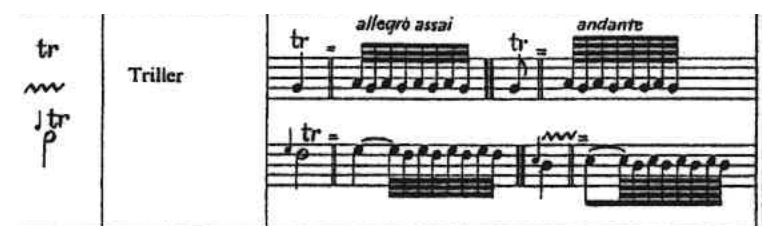
Untranscribed visual witness from Brändle’s chart, source row 17. The image preserves the printed marks in this cell but does not provide a text or machine-readable transcription of its musical contents. Open it to inspect the original-size facsimile. 4 individually catalogued examples show descriptions
These diplomatic descriptions make every audited item addressable and searchable. The chart-cell image above remains the notation witness; only entries explicitly labelled MEI are independent digital engravings.
-
tr, *allegro assai*
T17-F2-ASource sign: tr, *allegro assai*
Contour: (+1,0)xN -> 0
Rhythm: Fast, relatively few broad rapid notes
Reading note: High
-
tr, *andante*
T17-F2-BSource sign: tr, *andante*
Contour: Same alternation
Rhythm: More closely spaced/more numerous notes over the same value
Reading note: High; tempo-specific realization must remain separate
-
Grace/preparation note plus tr
T17-F2-CSource sign: Grace/preparation note plus tr
Contour: Prepared trill: adjacent preparation into (+1,0)xN -> 0
Rhythm: Held/slurred preparation then rapid chain
Reading note: High
-
Long wavy trill sign
T17-F2-DSource sign: Long wavy trill sign
Contour: Trill beginning after a tied/held onset, then alternation
Rhythm: Sustained onset followed by rapid chain
Reading note: Medium-high
Daniel Gottlob Türk (1750–1813)
Klavierschule oder Anweisung zum Klavierspielen für Lehrer und Lernende mit kritischen Anmerkungen, Leipzig und Halle, 1789
4 variants catalogued · complete facsimile witness · MEI pending
-
-
Trillervarianten Trill variants
Triller mit Zusatz von unten · Triller mit Zusatz von oben
PDF chart-cell facsimile untranscribed visual witness · all printed material in this cell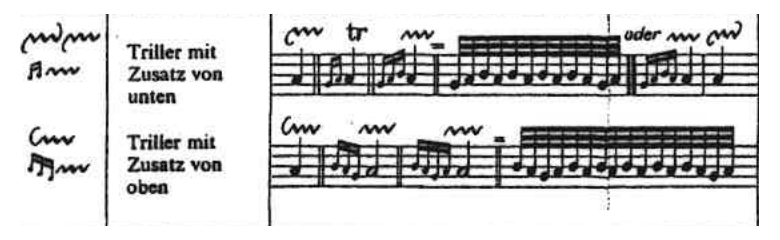
Untranscribed visual witness from Brändle’s chart, source row 17. The image preserves the printed marks in this cell but does not provide a text or machine-readable transcription of its musical contents. Open it to inspect the original-size facsimile. 5 individually catalogued examples show descriptions
These diplomatic descriptions make every audited item addressable and searchable. The chart-cell image above remains the notation witness; only entries explicitly labelled MEI are independent digital engravings.
-
Triller mit Zusatz von unten
T17-F3-ASource sign: Hooked compound glyph
Contour: Lower approach -1,0, then (+1,0)xN, with turn-like ending
Rhythm: Rapid chain with short prefix/suffix
Reading note: High for direction
-
Triller mit Zusatz von unten
T17-F3-BSource sign: Written lower grace-note approach plus tr
Contour: Same formula, onset explicitly notated
Rhythm: Beamed lower pickup plus rapid chain
Reading note: High
-
Triller mit Zusatz von unten
T17-F3-CSource sign: Alternative after oder, with a different terminal hook
Contour: Same lower-added trill with alternate ending
Rhythm: Rapid chain plus suffix
Reading note: Medium-high
-
Triller mit Zusatz von oben
T17-F3-DSource sign: Hooked-above compound glyph
Contour: Upper approach, then (+1,0)xN, with upper/turn suffix
Rhythm: Rapid chain
Reading note: High for direction
-
Triller mit Zusatz von oben
T17-F3-ESource sign: Written upper beamed approach plus wavy continuation
Contour: Same formula, notes explicit
Rhythm: Beamed approach plus long rapid alternation
Reading note: High
Daniel Gottlob Türk (1750–1813)
Klavierschule oder Anweisung zum Klavierspielen für Lehrer und Lernende mit kritischen Anmerkungen, Leipzig und Halle, 1789
5 variants catalogued · complete facsimile witness · MEI pending
-
-
Doppelschlag Turn / double cadence
Doppelschlag · umgekehrter Doppelschlag · prallender Doppelschlag · geschnellter Doppelschlag
PDF chart-cell facsimile untranscribed visual witness · all printed material in this cell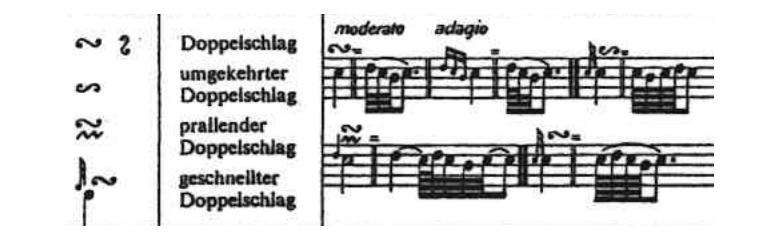
Untranscribed visual witness from Brändle’s chart, source row 17. The image preserves the printed marks in this cell but does not provide a text or machine-readable transcription of its musical contents. Open it to inspect the original-size facsimile. 5 individually catalogued examples show descriptions
These diplomatic descriptions make every audited item addressable and searchable. The chart-cell image above remains the notation witness; only entries explicitly labelled MEI are independent digital engravings.
-
Doppelschlag - moderato
T17-F4-ASource sign: Standard horizontal turn sign
Contour: +1,0,-1,0
Rhythm: Even four-note turn
Reading note: High
-
Doppelschlag - adagio
T17-F4-BSource sign: Same sign
Contour: +1,0,-1,0
Rhythm: Unequal/slower turn
Reading note: High
-
umgekehrter Doppelschlag
T17-F4-CSource sign: Reversed S-like turn glyph
Contour: -1,0,+1,0
Rhythm: Rapid four-note inverted turn
Reading note: High
-
prallender Doppelschlag
T17-F4-DSource sign: Combined prall/turn glyph
Contour: 0,+1,0,-1,0
Rhythm: Rapid five-note group after/within a slur
Reading note: Medium-high
-
geschnellter Doppelschlag
T17-F4-ESource sign: Small grace-note plus turn glyph
Contour: 0,-1,0,+1,0?
Rhythm: Rapid five-note group
Reading note: Medium; verify exact direction against Türk before publication
Daniel Gottlob Türk (1750–1813)
Klavierschule oder Anweisung zum Klavierspielen für Lehrer und Lernende mit kritischen Anmerkungen, Leipzig und Halle, 1789
5 variants catalogued · complete facsimile witness · MEI pending
-
-
Mordent Mordent
Mordent
PDF chart-cell facsimile untranscribed visual witness · all printed material in this cell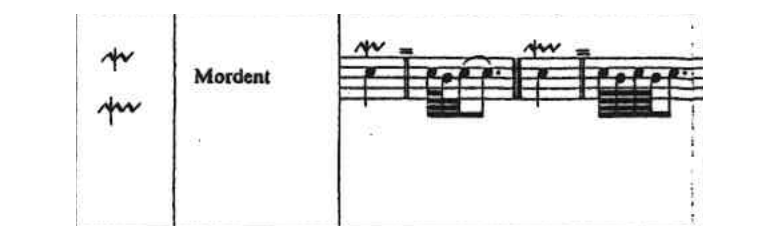
Untranscribed visual witness from Brändle’s chart, source row 17. The image preserves the printed marks in this cell but does not provide a text or machine-readable transcription of its musical contents. Open it to inspect the original-size facsimile. 2 individually catalogued examples show descriptions
These diplomatic descriptions make every audited item addressable and searchable. The chart-cell image above remains the notation witness; only entries explicitly labelled MEI are independent digital engravings.
Daniel Gottlob Türk (1750–1813)
Klavierschule oder Anweisung zum Klavierspielen für Lehrer und Lernende mit kritischen Anmerkungen, Leipzig und Halle, 1789
2 variants catalogued · complete facsimile witness · MEI pending
-
Mordent mit Vorhalt · Schneller · Battement Compound mordent / battement
Battement · Schneller
PDF chart-cell facsimile untranscribed visual witness · all printed material in this cell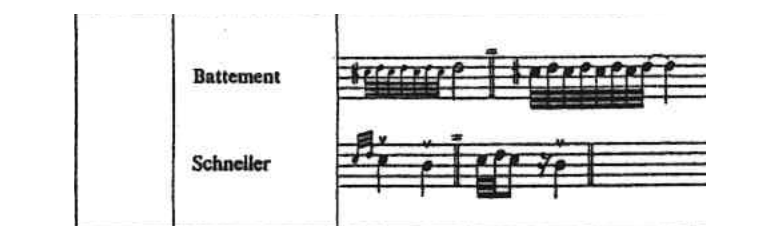
Untranscribed visual witness from Brändle’s chart, source row 17. The image preserves the printed marks in this cell but does not provide a text or machine-readable transcription of its musical contents. Open it to inspect the original-size facsimile. 4 individually catalogued examples show descriptions
These diplomatic descriptions make every audited item addressable and searchable. The chart-cell image above remains the notation witness; only entries explicitly labelled MEI are independent digital engravings.
-
Battement
T17-F6-ASource sign: First upper-line occurrence
Contour: Lower-neighbor alternation around local 0
Rhythm: Rapid repeated group
Reading note: Medium-high
-
Battement
T17-F6-BSource sign: Second upper-line occurrence, rising into a final note
Contour: Same pattern transposed, then contextual ascent
Rhythm: Rapid group plus final longer note
Reading note: Medium-high
-
Schneller
T17-F6-CSource sign: First lower-line sign/equality
Contour: Short lower-neighbor snap 0,-1,0
Rhythm: Compact beamed group
Reading note: Medium-high
-
Schneller
T17-F6-DSource sign: Second lower-line placement
Contour: Same snap in a later context
Rhythm: Compact beamed group
Reading note: Medium-high
Daniel Gottlob Türk (1750–1813)
Klavierschule oder Anweisung zum Klavierspielen für Lehrer und Lernende mit kritischen Anmerkungen, Leipzig und Halle, 1789
4 variants catalogued · complete facsimile witness · MEI pending
-
-
Schleifer Slide
Schleifer
PDF chart-cell facsimile untranscribed visual witness · all printed material in this cell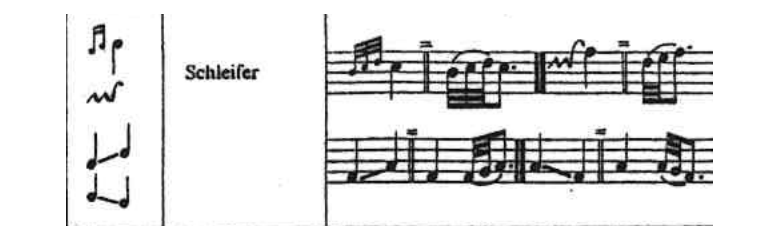
Untranscribed visual witness from Brändle’s chart, source row 17. The image preserves the printed marks in this cell but does not provide a text or machine-readable transcription of its musical contents. Open it to inspect the original-size facsimile. 4 individually catalogued examples show descriptions
These diplomatic descriptions make every audited item addressable and searchable. The chart-cell image above remains the notation witness; only entries explicitly labelled MEI are independent digital engravings.
-
Two small rising notes before a main, followed by equality
T17-F7-ASource sign: Two small rising notes before a main, followed by equality
Contour: -2,-1,0
Rhythm: Two grace notes become a rapid written triplet-like group
Reading note: High
-
Wavy Schleifer sign before a main, followed by equality
T17-F7-BSource sign: Wavy Schleifer sign before a main, followed by equality
Contour: Rising slide into 0
Rhythm: Compact rapid group
Reading note: High for contour
-
Lower excerpt, slur/line-shaped sign between lower notes
T17-F7-CSource sign: Lower excerpt, slur/line-shaped sign between lower notes
Contour: Rising two-step approach to 0
Rhythm: Grace-like lead-in then sustained main
Reading note: Medium
-
Lower excerpt, second line-shaped placement
T17-F7-DSource sign: Lower excerpt, second line-shaped placement
Contour: Same, transposed and rhythmically compressed
Rhythm: Two fast notes into main
Reading note: Medium-high
Daniel Gottlob Türk (1750–1813)
Klavierschule oder Anweisung zum Klavierspielen für Lehrer und Lernende mit kritischen Anmerkungen, Leipzig und Halle, 1789
4 variants catalogued · complete facsimile witness · MEI pending
-
-
Vorschlag Appoggiatura / grace note
lange oder accentuirte Vorschläge · kurze oder accentuirende Vorschläge
PDF chart-cell facsimile untranscribed visual witness · all printed material in this cell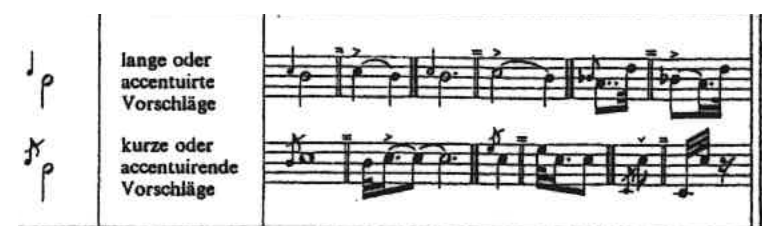
Untranscribed visual witness from Brändle’s chart, source row 18. The image preserves the printed marks in this cell but does not provide a text or machine-readable transcription of its musical contents. Open it to inspect the original-size facsimile. 8 individually catalogued examples show descriptions
These diplomatic descriptions make every audited item addressable and searchable. The chart-cell image above remains the notation witness; only entries explicitly labelled MEI are independent digital engravings.
-
lange oder accentuirte Vorschläge (H18-F1-A1)
H18-F1-A1Printed term: lange oder accentuirte Vorschläge
Source sign: Four upper-line placements
Contour: Adjacent appoggiaturas into local 0; accent marks are integral to the examples
Rhythm: Long appoggiaturas, generally taking a substantial share of the principal; includes tied and dotted contexts
Reading note: Medium-high
-
lange oder accentuirte Vorschläge (H18-F1-A2)
H18-F1-A2Printed term: lange oder accentuirte Vorschläge
Source sign: Four upper-line placements
Contour: Adjacent appoggiaturas into local 0; accent marks are integral to the examples
Rhythm: Long appoggiaturas, generally taking a substantial share of the principal; includes tied and dotted contexts
Reading note: Medium-high
-
lange oder accentuirte Vorschläge (H18-F1-A3)
H18-F1-A3Printed term: lange oder accentuirte Vorschläge
Source sign: Four upper-line placements
Contour: Adjacent appoggiaturas into local 0; accent marks are integral to the examples
Rhythm: Long appoggiaturas, generally taking a substantial share of the principal; includes tied and dotted contexts
Reading note: Medium-high
-
lange oder accentuirte Vorschläge (H18-F1-A4)
H18-F1-A4Printed term: lange oder accentuirte Vorschläge
Source sign: Four upper-line placements
Contour: Adjacent appoggiaturas into local 0; accent marks are integral to the examples
Rhythm: Long appoggiaturas, generally taking a substantial share of the principal; includes tied and dotted contexts
Reading note: Medium-high
-
kurze oder accentuirende Vorschläge (H18-F1-B1)
H18-F1-B1Printed term: kurze oder accentuirende Vorschläge
Source sign: Four lower-line placements
Contour: Adjacent short attacks into local 0; includes an octave-displaced bass/grace context at the right
Rhythm: Short accented grace groups, some explicitly beamed
Reading note: Medium; the final low note is contextual rather than part of a simple neighbor formula
-
kurze oder accentuirende Vorschläge (H18-F1-B2)
H18-F1-B2Printed term: kurze oder accentuirende Vorschläge
Source sign: Four lower-line placements
Contour: Adjacent short attacks into local 0; includes an octave-displaced bass/grace context at the right
Rhythm: Short accented grace groups, some explicitly beamed
Reading note: Medium; the final low note is contextual rather than part of a simple neighbor formula
-
kurze oder accentuirende Vorschläge (H18-F1-B3)
H18-F1-B3Printed term: kurze oder accentuirende Vorschläge
Source sign: Four lower-line placements
Contour: Adjacent short attacks into local 0; includes an octave-displaced bass/grace context at the right
Rhythm: Short accented grace groups, some explicitly beamed
Reading note: Medium; the final low note is contextual rather than part of a simple neighbor formula
-
kurze oder accentuirende Vorschläge (H18-F1-B4)
H18-F1-B4Printed term: kurze oder accentuirende Vorschläge
Source sign: Four lower-line placements
Contour: Adjacent short attacks into local 0; includes an octave-displaced bass/grace context at the right
Rhythm: Short accented grace groups, some explicitly beamed
Reading note: Medium; the final low note is contextual rather than part of a simple neighbor formula
Johann Nepomuk Hummel (1778–1837)
Ausführliche theoretisch-practische Anweisung zum Piano-Forte-Spiel, Wien, 1828
8 variants catalogued · complete facsimile witness · MEI pending
-
-
Triller Trill
Triller · uneigentliche oder getrillte Noten
PDF chart-cell facsimile untranscribed visual witness · all printed material in this cell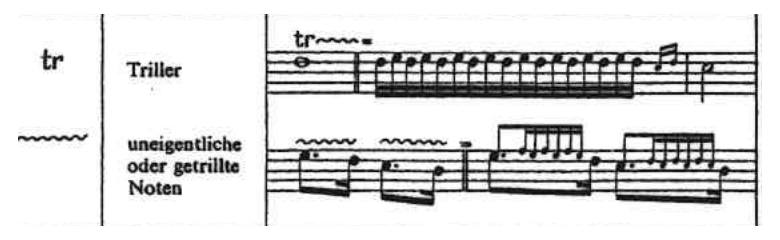
Untranscribed visual witness from Brändle’s chart, source row 18. The image preserves the printed marks in this cell but does not provide a text or machine-readable transcription of its musical contents. Open it to inspect the original-size facsimile. 3 individually catalogued examples show descriptions
These diplomatic descriptions make every audited item addressable and searchable. The chart-cell image above remains the notation witness; only entries explicitly labelled MEI are independent digital engravings.
-
Triller
H18-F2-ASource sign: tr plus long extension line over an open principal
Contour: Long upper-neighbor trill (+1,0)xN, ending with written two-note termination and principal
Rhythm: Very long even rapid chain
Reading note: High
-
uneigentliche oder getrillte Noten
H18-F2-BSource sign: First pair of wavy-marked descending notes
Contour: Rearticulated/tremulated principal and neighbor within each notated value; contour follows the descending line
Rhythm: Each long note subdivided into a short repeated-note/neighbor group
Reading note: Medium
-
uneigentliche oder getrillte Noten
H18-F2-CSource sign: Second descending pair after equality
Contour: Same effect, explicitly written as two local rapid groups
Rhythm: Beamed repeated-note/neighbor figures
Reading note: Medium-high
Johann Nepomuk Hummel (1778–1837)
Ausführliche theoretisch-practische Anweisung zum Piano-Forte-Spiel, Wien, 1828
3 variants catalogued · complete facsimile witness · MEI pending
-
-
Doppelschlag Turn / double cadence
Doppelschlag
PDF chart-cell facsimile untranscribed visual witness · all printed material in this cell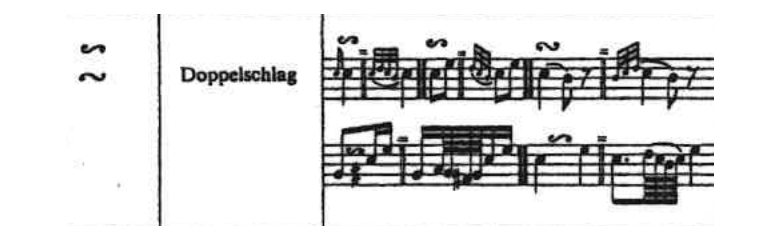
Untranscribed visual witness from Brändle’s chart, source row 18. The image preserves the printed marks in this cell but does not provide a text or machine-readable transcription of its musical contents. Open it to inspect the original-size facsimile. 5 individually catalogued examples show descriptions
These diplomatic descriptions make every audited item addressable and searchable. The chart-cell image above remains the notation witness; only entries explicitly labelled MEI are independent digital engravings.
-
Standard S-like turn sign over first upper-line placement
H18-F4-ASource sign: Standard S-like turn sign over first upper-line placement
Contour: +1,0,-1,0
Rhythm: Very compact group before the resolution
Reading note: High
-
Same sign over second upper-line placement
H18-F4-BSource sign: Same sign over second upper-line placement
Contour: Standard turn, transposed and after an approach
Rhythm: Rapid group
Reading note: High
-
Reversed turn sign over third upper-line placement
H18-F4-CSource sign: Reversed turn sign over third upper-line placement
Contour: Inverted turn -1,0,+1,0
Rhythm: Compact group
Reading note: High
-
Lower-line first placement, longer beamed approach plus turn
H18-F4-DSource sign: Lower-line first placement, longer beamed approach plus turn
Contour: Turn embedded in a longer approach; core +1,0,-1,0
Rhythm: Extended rapid group
Reading note: Medium
-
Lower-line second placement with equality
H18-F4-ESource sign: Lower-line second placement with equality
Contour: Standard turn expanded after a held/approach note
Rhythm: Four rapid notes ending on 0
Reading note: Medium-high
Johann Nepomuk Hummel (1778–1837)
Ausführliche theoretisch-practische Anweisung zum Piano-Forte-Spiel, Wien, 1828
5 variants catalogued · complete facsimile witness · MEI pending
-
-
Mordent mit Vorhalt · Schneller · Battement Compound mordent / battement
Schneller
PDF chart-cell facsimile untranscribed visual witness · all printed material in this cell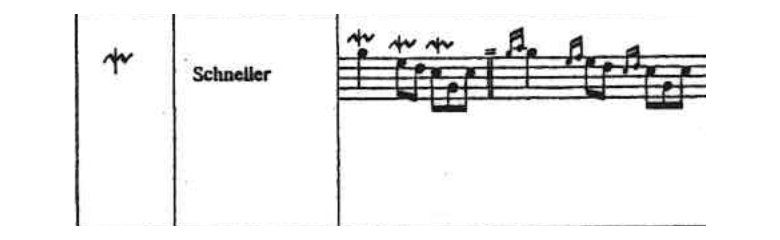
Untranscribed visual witness from Brändle’s chart, source row 18. The image preserves the printed marks in this cell but does not provide a text or machine-readable transcription of its musical contents. Open it to inspect the original-size facsimile. 3 individually catalogued examples show descriptions
These diplomatic descriptions make every audited item addressable and searchable. The chart-cell image above remains the notation witness; only entries explicitly labelled MEI are independent digital engravings.
-
Crossed/wavy Schneller over first descending principal
H18-F6-ASource sign: Crossed/wavy Schneller over first descending principal
Contour: Lower-neighbor snap 0,-1,0
Rhythm: Short beamed realization
Reading note: Medium-high
-
Same sign over second descending principal
H18-F6-BSource sign: Same sign over second descending principal
Contour: Same, transposed
Rhythm: Short beamed realization
Reading note: Medium-high
-
Same sign over third descending principal
H18-F6-CSource sign: Same sign over third descending principal
Contour: Same, transposed
Rhythm: Short beamed realization
Reading note: Medium-high
Johann Nepomuk Hummel (1778–1837)
Ausführliche theoretisch-practische Anweisung zum Piano-Forte-Spiel, Wien, 1828
3 variants catalogued · complete facsimile witness · MEI pending
-
-
Schleifer Slide
Schleifer
PDF chart-cell facsimile untranscribed visual witness · all printed material in this cell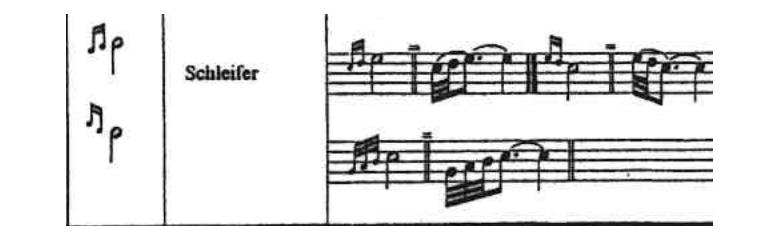
Untranscribed visual witness from Brändle’s chart, source row 18. The image preserves the printed marks in this cell but does not provide a text or machine-readable transcription of its musical contents. Open it to inspect the original-size facsimile. 3 individually catalogued examples show descriptions
These diplomatic descriptions make every audited item addressable and searchable. The chart-cell image above remains the notation witness; only entries explicitly labelled MEI are independent digital engravings.
-
Upper excerpt, first two-small-note sign plus equality
H18-F7-ASource sign: Upper excerpt, first two-small-note sign plus equality
Contour: Rising slide -2,-1,0
Rhythm: Two grace notes realized as a rapid beamed approach
Reading note: High
-
Upper excerpt, second placement
H18-F7-BSource sign: Upper excerpt, second placement
Contour: Same family in a descending/local transposition; preserve source direction
Rhythm: Rapid beamed approach into tied principal
Reading note: Medium-high
-
Lower excerpt, wider/longer rising sign plus equality
H18-F7-CSource sign: Lower excerpt, wider/longer rising sign plus equality
Contour: Extended rising slide, approximately -3,-2,-1,0
Rhythm: Three rapid notes into a sustained principal
Reading note: Medium; exact starting degree uncertain
Johann Nepomuk Hummel (1778–1837)
Ausführliche theoretisch-practische Anweisung zum Piano-Forte-Spiel, Wien, 1828
3 variants catalogued · complete facsimile witness · MEI pending
-

Source register (18 works; 17 digital links)
- Tomás de Santa María, Arte de tañer fantasía (Valladolid, 1565) Biblioteca Nacional de España
- Girolamo Diruta, Il Transilvano (Venezia, 1593) Library of Congress (1593 first edition)
- Michael Praetorius, Syntagma Musicum (Wolfenbüttel, 1619) The chart's source is Syntagmatis musici tomus tertius (1619). Universitätsbibliothek Freiburg
- John Playford, An Introduction to the Skill of Musick (London, first published 1654) Library of Congress (1667 edition)
- Jacques Champion de Chambonnières, Pièces de Clavecin (Paris, 1670) Bibliothèque nationale de France — Gallica
- Jean-Henry d’Anglebert, Pièces de Clavecin — Marques des Agréments et leur signification (Paris, 1689) Bibliothèque nationale de France — Gallica
- Henry Purcell, Lessons for the Harpsichord or Spinet — Rules for Graces (London, 1696) Library of Congress
- Jacques-Martin Hotteterre le Romain, Premier livre de pièces pour la flûte traversière et autres instruments avec la basse, œuvre 2 (Paris, 1708) The chart cites the work's 1708 date; the ornament table appears in the revised 1715 edition linked here. Bibliothèque nationale de France — Gallica
- François Couperin, Pièces de Clavecin, Livre premier (Paris, 1713) IMSLP (1713 edition scan)
- Johann Sebastian Bach, Clavierbüchlein für Wilhelm Friedemann Bach (Köthen, 1720) The ornament explanation is in the autograph Clavier-Büchlein, folio 3v. Yale University Library — Beinecke
- Gottlieb Muffat, Componimenti Musicali per il Cembalo (Wien, 1727) Chart citation retained literally; modern cataloguing places the publication in Augsburg, undated [c. 1739], rather than Vienna 1727. IMSLP (library-source scans)
- Jean-Philippe Rameau, Pièces de Clavecin, deuxième livre (Paris, 1731) Bibliothèque nationale de France — Gallica
- Johann Joachim Quantz, Versuch einer Anweisung die Flöte traversiere zu spielen (Berlin, 1752) Deutsches Textarchiv / SUB Göttingen (1752 first edition)
- Carl Philipp Emanuel Bach, Versuch über die wahre Art das Clavier zu spielen (Berlin, 1753) Library of Congress
- Friedrich Wilhelm Marpurg, Die Kunst das Clavier zu spielen (Berlin, 1750) The chart prints Berlin 1750; the linked BSB catalogue dates Part I to 1751. Bayerische Staatsbibliothek
- Leopold Mozart, Versuch einer gründlichen Violinschule (Augsburg, 1755/56) Deutsches Textarchiv
- Daniel Gottlob Türk, Klavierschule oder Anweisung zum Klavierspielen für Lehrer und Lernende mit kritischen Anmerkungen (Leipzig und Halle, 1789) IMSLP
- Johann Nepomuk Hummel, Ausführliche theoretisch-practische Anweisung zum Piano-Forte-Spiel (Wien, 1828)
Starting concordance: Liselotte Brändle, Die „Wesentlichen Manieren“ (Ornamente in der Musik): ihre Zeichen, Namen und Ausführung, Wien: Österreichischer Bundesverlag für Unterricht, Wissenschaft und Kunst, 1974 (consulted printing 1985; ISBN 3-215-01547-1). National Repository Library catalogue record